
Intel has already rolled out its Core Ultra 300 processors for laptops, with market availability expected soon. On the desktop front, the next release is believed to be the Arrow Lake refresh, branded as Core Ultra 200 Plus, which rumours suggest could arrive as early as April.
Looking further ahead, Intel has now officially confirmed that its next major desktop processor generation, Nova Lake, is planned for launch toward the end of 2026.
During a recent shareholder meeting, Intel CEO Lip-Bu Tan confirmed this timeline and shared Intel’s long-term vision:
“Together with our next-generation Nova Lake, which will arrive in late 2026, we now have a roadmap for customers that combines best-in-class performance with cost-optimised solutions.
This gives me confidence that we are moving in the right direction to strengthen our market position and profitability across both notebook and desktop segments in the coming years.”
What we know so far about Core Ultra 400 “Nova Lake”
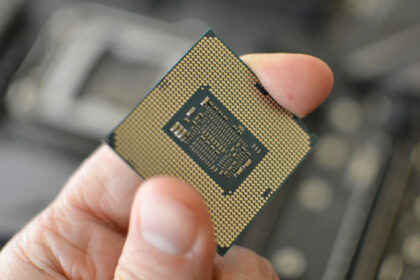
For PC enthusiasts keeping a close eye on upcoming hardware, early leaks and industry chatter already point to some major changes. Starting with the platform, Nova Lake is expected to use a new LGA-1954 socket.
The good news is that its physical size is rumoured to match the current LGA-1700, meaning most existing air and liquid coolers should remain compatible-great news for users who’ve invested in high-end cooling setups.
When it comes to raw performance, Intel appears ready to push boundaries. Top-tier Nova Lake chips are said to feature as many as 52 cores. This includes 16 performance cores based on the “Coyote Cove” design, 32 efficiency cores using the “Arctic Wolf” architecture, and an additional 4 low-power cores.
That kind of muscle won’t come cheap in terms of energy use, though, as base power ratings for flagship models could climb to around 150W, making strong power supplies and well-designed motherboard VRMs a necessity.
The rivalry with AMD’s 3D V-Cache technology is also expected to heat up. Reports suggest Intel may significantly increase cache capacity, potentially offering up to 144 MB even on mainstream desktop processors. Integrated graphics are also shaping up to be more than just a fallback option.
An Xe3P-based iGPU with 12 cores is rumoured to deliver up to 25% better performance than the graphics found in Panther Lake mobile chips.
To fully embrace the rise of AI-focused desktop PCs, Intel is expected to go beyond the NPU5 used in laptops. Nova Lake is rumoured to feature a brand-new neural processing unit with a fresh architecture, designed to deliver stronger on-device AI performance and keep Intel competitive in this rapidly evolving space.
- Intel Arc B770 Still Missing as New Battlemage Firmware Surfaces
- Intel Reaffirms Confidence in 14A Process as Foundry Ambitions
- Intel’s Core Ultra 400K CPUs Target AMD X3D with Expanded bLLC Cache