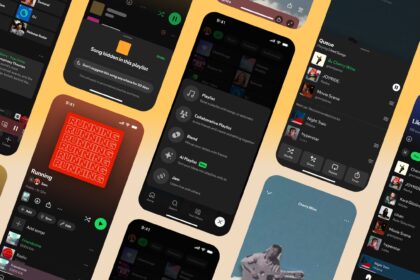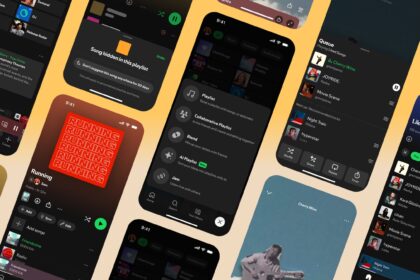


Music streaming giant Spotify has signaled a major shift in how software is built internally, revealing that some of its most experienced developers have not written code manually for months, as artificial intelligence takes over much of the work.
Speaking during the company’s fourth-quarter earnings call, co-CEO Gustav Söderström said the firm’s strongest engineers “have not written a single line of code since December,” highlighting how deeply AI tools are now integrated into product development.
AI driving faster releases
Spotify told analysts that it delivered more than 50 new features and improvements across its platform in 2025. Recent launches include AI-powered capabilities such as Prompted Playlists, Page Match for audiobooks, and the new “About This Song” feature.
The company attributes much of this acceleration to an internal system called Honk, which enables engineers to generate, test, and deploy code using generative AI.
According to Söderström, developers can issue instructions to the AI remotely – even from their phones. For example, an engineer commuting to work can request a bug fix or a new feature via Slack. Once the AI completes the task, a new app build is delivered back to the engineer for review and deployment before they even reach the office.
Spotify said the system has “tremendously” improved coding speed and product delivery.
AI as the new development layer
The internal platform relies on Claude Code, a generative coding assistant, to translate natural language instructions into working software. Instead of writing code line by line, engineers increasingly act as reviewers, decision-makers, and system supervisors.
Company leadership described the current shift as an early stage rather than a peak, suggesting that AI’s role in software development will continue to expand.
Building a unique AI advantage
Beyond engineering productivity, Spotify is also investing heavily in proprietary data to strengthen its AI models. Söderström noted that music preferences are highly subjective and vary by region, culture, and personal taste – making the company’s user behaviour data difficult for competitors or general-purpose models to replicate.
For example, while hip-hop dominates workout playlists in the United States, many European users prefer electronic dance music, and heavy metal is popular among listeners in Scandinavia.
The company believes this evolving dataset will improve recommendations and personalisation each time its models are retrained.
Approach to AI-generated music
During the call, analysts also asked about synthetic music. Spotify said it allows artists and labels to disclose whether a track was created using AI through metadata. At the same time, the platform continues monitoring for spam and low-quality automated uploads.
The developments point to a broader transformation inside the company – where AI is not only shaping user experiences but also redefining how the platform itself is built.
- Ways to Contact Spotify Support
- Check Most Played Songs On Spotify
- Import Spotify Music to Apple Music