

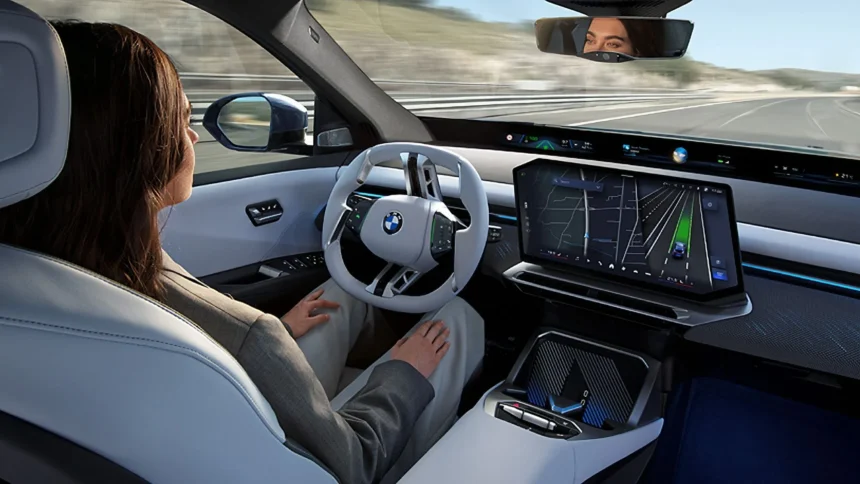
BMW has introduced a new data-driven initiative in Germany aimed at improving its semi-autonomous driving technology by collecting real-world driving scenarios from its electric vehicles.
The program debuts with the BMW iX3, marking a shift toward using live traffic data instead of relying primarily on simulations.
Capturing “Near Miss” Driving Scenarios
At the core of the initiative is the collection of “near miss” events—moments where accidents are narrowly avoided. These include:
- Sudden braking triggered by emergency systems
- Abrupt lane changes or evasive maneuvers
- Interventions by driver assistance features
BMW clarified that data collection is event-based, not continuous. The vehicle’s cameras and sensors activate recording only when specific incidents occur, ensuring that routine driving is not constantly monitored.
Building a “Living Learning Network”
The automaker aims to create what it describes as a “living learning network”, where real-world driving behavior feeds directly into the development of its AI systems.
By analyzing how drivers and vehicles respond to unpredictable road conditions, BMW hopes to:
- Improve decision-making in driver assistance systems
- Enhance safety features such as automatic emergency braking
- Refine semi-autonomous driving performance in complex environments
This approach allows AI models to learn from authentic traffic situations that are difficult to replicate in controlled simulations.
Participation in the program is voluntary, with vehicle owners required to explicitly consent before any data is collected.
BMW emphasized that drivers maintain control over whether their vehicle contributes to the dataset.
Given growing scrutiny around automotive data collection—particularly following similar efforts by Tesla—BMW has introduced multiple privacy protections.
According to the company:
- Faces and license plates captured by cameras are blurred before data transmission
- Vehicle identification numbers (VINs) are removed upon reaching BMW servers
- Data cannot be traced back to individual users
These measures are designed to ensure anonymity while still allowing meaningful data analysis.
The program is currently limited to Germany, but BMW intends to expand the system across Europe over time as more vehicles join the network.
The broader rollout will depend on regulatory approval and user participation in each market.