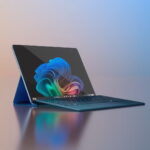

For many users, the promise of Windows on ARM effectively ended in 2012 with the arrival of Windows RT. The platform struggled to justify itself, and confidence in the idea faded quickly. More than a decade later, the landscape has changed significantly.
Advances in ARM processors, combined with a new generation of Copilot+ PCs, have reopened the conversation-this time with quieter designs, thinner chassis, and battery life that finally meets expectations.
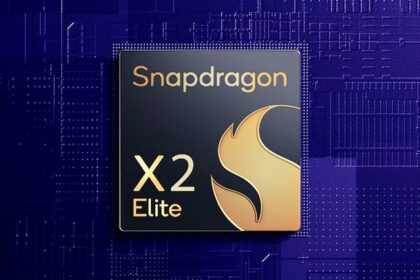
At CES 2026, Lenovo signalled that it intends to push Windows on ARM further into the mainstream. The company announced updates to its Yoga lineup built around Qualcomm’s latest Snapdragon X2 Elite and X2 Plus processors, with the Yoga Slim 7x emerging as the clearest expression of that strategy.
Yoga Slim 7x: Built for Mobility
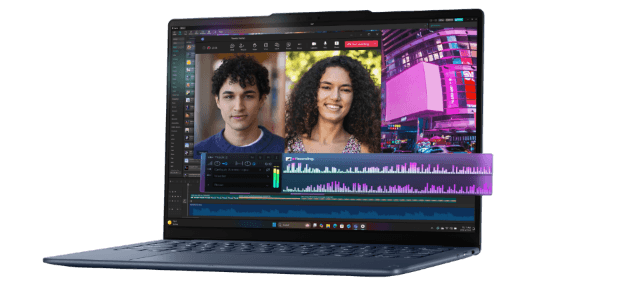
The new Yoga Slim 7x (14”, 11) represents Lenovo’s most serious commitment yet to Qualcomm-powered laptops within the Yoga family. Designed with portability as its priority, the device features a chassis that measures just 13.9 mm in thickness and weighs approximately 1.17 kg. Lenovo is positioning it as a true “backpack laptop”-light enough for daily travel without sacrificing premium materials.
The display reinforces that positioning. The Slim 7x comes equipped with a 2.8K OLED panel capable of reaching up to 1,100 nits of peak HDR brightness. Rather than targeting raw performance alone, Lenovo is clearly aiming at users who value visual quality, silence, and endurance in a compact form factor.
Battery life is the headline figure. Lenovo claims up to 29 hours on a single charge. Real-world usage will naturally vary depending on brightness, connectivity, and workloads, but even conservative estimates place the Slim 7x well ahead of many traditional ultrabooks. For Windows on ARM, autonomy remains the strongest argument-and Lenovo is leaning heavily into it.
Snapdragon X2 Elite and X2 Plus
Lenovo is taking a dual-track approach with its processor options. Systems based on the Snapdragon X2 Plus are designed to lower entry prices and broaden adoption, while configurations built around the Snapdragon X2 Elite are targeted at users who require significantly higher performance.
Early reports suggest that X2 Elite variants could scale up to 18 cores, underscoring the potential for a wide performance spread on Windows on ARM in 2026. That diversity could make comparisons messy, but it also highlights how far the platform has come from its early, constrained days.