
With CES 2026 set to open in Las Vegas, attention across the technology sector is turning to NVIDIA’s keynote, traditionally one of the most closely watched moments of the show. While gamers may be hoping for new graphics cards, industry signals suggest the company’s priorities lie elsewhere-firmly rooted in artificial intelligence and platforms built on its Blackwell architecture.
After making a strong debut in 2025, Blackwell has become the foundation of NVIDIA’s long-term strategy. Throughout 2026, the architecture is expected to underpin everything from data center accelerators to automotive systems, reinforcing the company’s position as a central supplier to the global AI economy.
Desktop GPUs face uncertainty
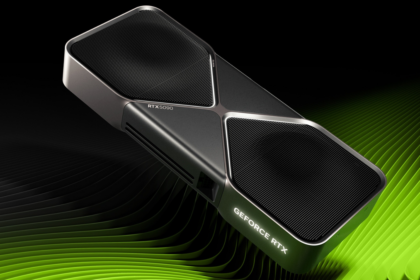
Speculation around new GeForce hardware has accompanied every CES appearance by NVIDIA, but expectations for major desktop GPU announcements this year appear muted. The GeForce RTX 50 series is barely a year old, making a full generational refresh unlikely. Earlier rumours suggested the possibility of RTX 50 “SUPER” variants, but recent industry chatter indicates those plans may have been delayed or shelved.
A key factor is the ongoing shortage of graphics memory. With AI workloads consuming vast quantities of DRAM, manufacturers are struggling to balance supply between data center accelerators and consumer graphics cards. For NVIDIA, the equation is simple: AI demand currently outweighs the business case for incremental gaming refreshes.
Autonomous vehicles and robotics take center stage
Beyond the PC market, CES has become an increasingly prominent showcase for automotive and robotics technology-and NVIDIA is expected to lean heavily into this trend. The company is widely anticipated to highlight its DRIVE Thor system-on-chip, which combines autonomous driving and intelligent cockpit capabilities into a single Blackwell-based platform.
Demonstrations involving real vehicles and robotaxi concepts are expected, underlining NVIDIA’s ambition to be the backbone of next-generation transportation systems.
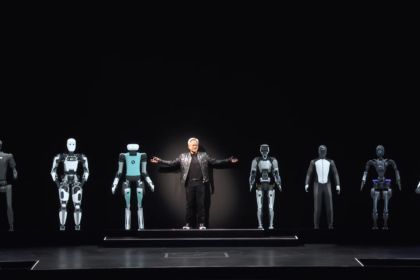
Alongside this, the Jetson Thor platform is likely to feature prominently, with a focus on humanoid robots, industrial automation, and logistics. These systems aim to enable machines to perceive, reason, and interact with the physical world in real time.
AI software and future architectures
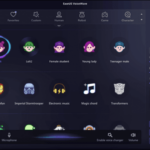
While NVIDIA typically reserves its most detailed data center announcements for its GTC conference in March, CES may still offer a preview of upcoming AI software initiatives. Technologies such as ACE (Avatar Cloud Engine) and Project G-Assist are expected to be demonstrated as examples of how generative AI can enhance gaming experiences and virtual assistants.
There is also growing anticipation around NVIDIA’s next-generation Rubin architecture. Although full details are unlikely at CES, even brief references would signal to partners and competitors that the company’s rapid development cycle remains intact.
RTX 50 expands in mobile systems
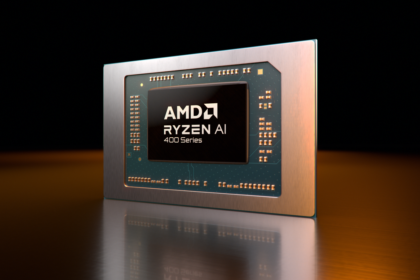
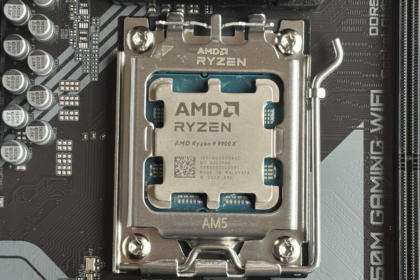
One area where NVIDIA is expected to show tangible momentum is in the laptop market. Notebook makers are preparing new models built around upcoming processors from Intel and AMD, including Intel’s Core Ultra 300 series and AMD’s Ryzen AI 400 lineup.
These systems are widely expected to pair with mobile versions of GeForce RTX 50 GPUs, potentially unveiled or emphasized during NVIDIA’s keynote.
A cautious but strategic CES
CES 2026 arrives at a challenging moment for the broader technology industry, marked by supply constraints and shifting demand. As the world’s most valuable semiconductor company, NVIDIA is not immune to those pressures. Still, the company’s direction appears clear: fewer distractions, tighter focus, and continued investment in AI-driven platforms.
Rather than chasing short-term excitement in consumer graphics, NVIDIA seems poised to use the CES stage to reinforce its long-term vision-one where Blackwell, AI, and autonomous systems define the next chapter of computing.
- GPU Prices Set to Increase in 2026 as AMD and Nvidia Plan Hikes
- NVIDIA’s GeForce Now 100-Hour Monthly Cap Takes Effect for Most Users in January 2026
- Nvidia Loses GPU Market Share to AMD as Intel Breaks 1% for First Time
- Why are my games Slow