
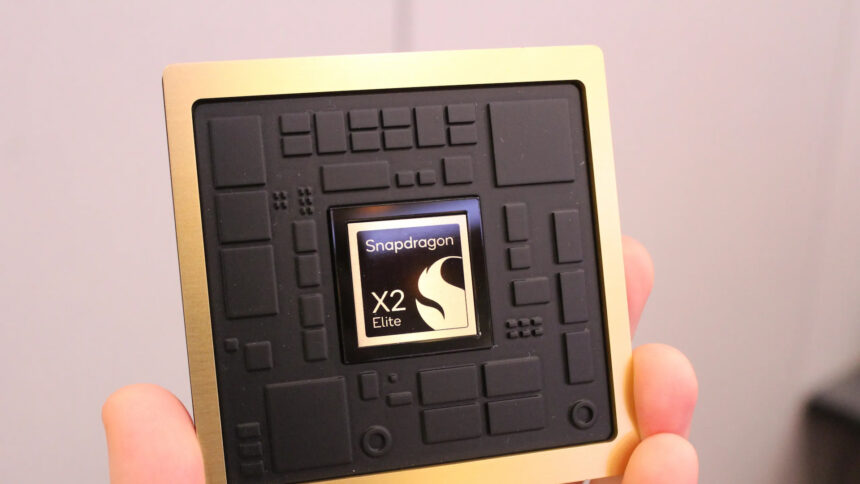
The arrival of the Snapdragon X2 Elite marks a major step forward for the laptop industry. Qualcomm’s latest processor isn’t just another upgrade-it represents a shift in how modern computers balance power, efficiency, and everyday usability.
Instead of relying on bulky hardware that generates heat and drains battery life, this new chip focuses on delivering fast, responsive performance in thinner, cooler, and more energy-efficient devices.
Early reports shared by outlets such as Windows Central and testing from the Canucks Hardware YouTube channel suggest that the processor is already putting strong pressure on competitors. Initial benchmarks indicate that Qualcomm’s new architecture is capable of competing directly with high-end chips from Apple, Intel, and AMD-something that seemed unlikely just a few years ago.
For users considering a new Windows-on-ARM laptop, this could be a good time to watch for early launch offers from official retailers or manufacturers, where introductory pricing and bundled deals are often available.
Strong Cinebench Results
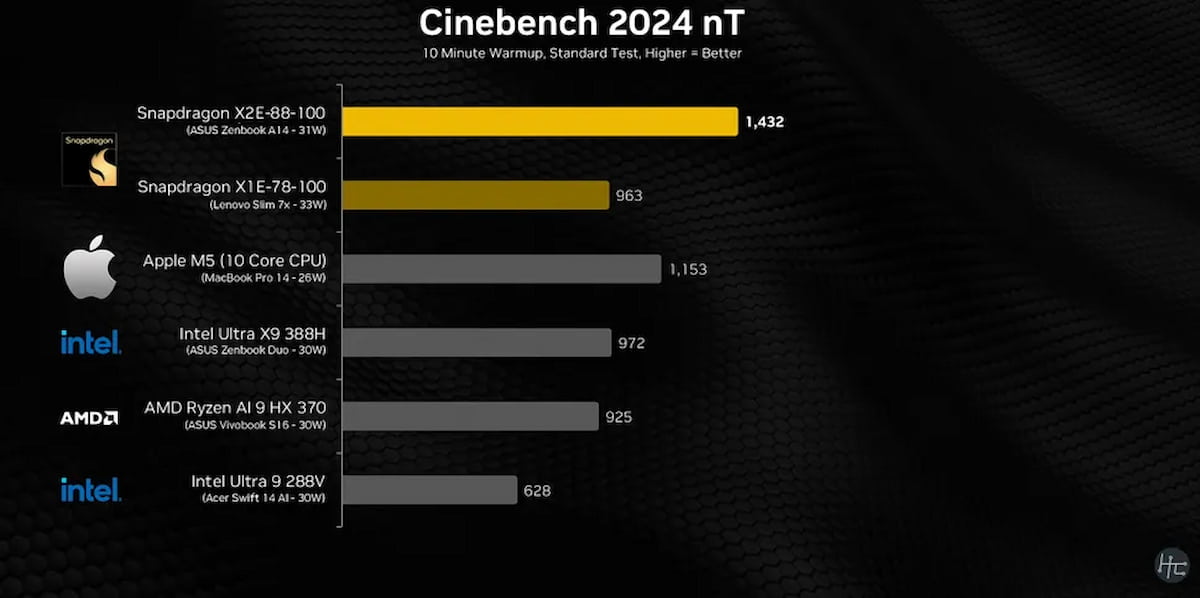
One of the first major performance tests was Cinebench, which evaluates CPU rendering power. In multi-core testing, the Snapdragon X2 Elite scored 1,432 points, outperforming the Apple M5, which recorded 1,153 points.
What makes this result particularly impressive is the chip’s power efficiency. Running at around 31 watts, it delivers high sustained performance without excessive heat or power consumption. This suggests Qualcomm has achieved a strong balance between raw performance and thermal control-an important factor for thin and lightweight laptops.
Faster 3D Rendering in Blender
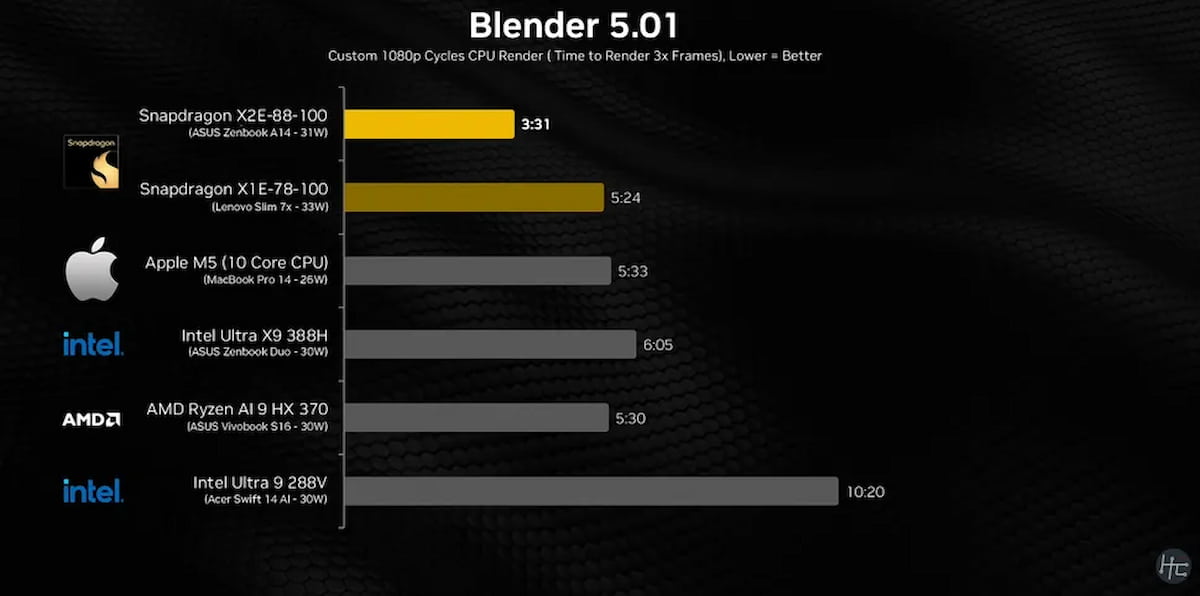
The processor also showed excellent results in creative workloads. In Blender 5.01, a popular 3D rendering tool, the Snapdragon X2 Elite completed the test in about 3.5 minutes. The Apple M5 took more than five minutes to finish the same task.
For designers, video creators, and 3D artists, this difference translates into real productivity gains throughout the workday. The chip also performed consistently with high-end Intel processors such as the Intel Core Ultra X9, highlighting its ability to maintain performance across longer workloads rather than just short bursts.
Video Encoding Efficiency with HandBrake
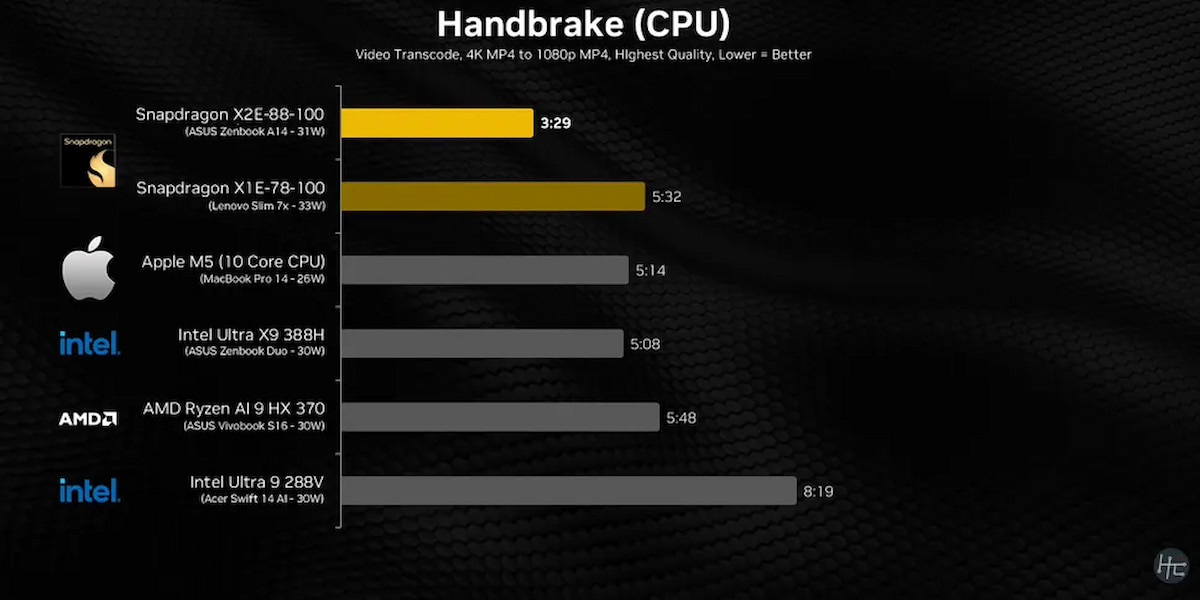
In video processing tests using HandBrake, the Snapdragon X2 Elite once again came out ahead, completing the workload in roughly 3.5 minutes, while the Apple M5 again took over 5 minutes.
This consistency across multiple types of workloads-CPU rendering, 3D graphics, and video encoding-suggests the chip is designed for sustained, real-world performance rather than isolated benchmark wins.
Designed for Heavy Multitasking
The Snapdragon X2 Elite is aimed at professionals who rely on their computers for demanding tasks such as:
- Software development
- Data analysis
- Content creation
- Running multiple applications simultaneously
Its architecture is optimised to handle background processes efficiently while keeping the system responsive, making it suitable for users who cannot afford slowdowns during intensive workflows.
The Role of Windows on ARM
The long-term success of this platform will depend heavily on Windows 11 and the broader Windows-on-ARM ecosystem. Microsoft has been working to improve compatibility and performance, and reports suggest that around 90% of commonly used applications now run natively.
There is also speculation that specific premium devices using this chip may focus exclusively on Windows 11 to ensure the best optimization and performance.
Shift in the Laptop Market
The Snapdragon X2 Elite signals a turning point for ARM-based Windows laptops. By delivering strong performance while maintaining excellent power efficiency, Qualcomm is positioning itself as a serious competitor in a market traditionally dominated by Intel, AMD, and Apple.
If software support continues to improve and manufacturers widely adopt the chip, the next generation of Windows laptops could be faster, quieter, and more battery-efficient than ever. For now, the pressure shifts to competitors, who must respond quickly to keep pace with this new level of performance.