
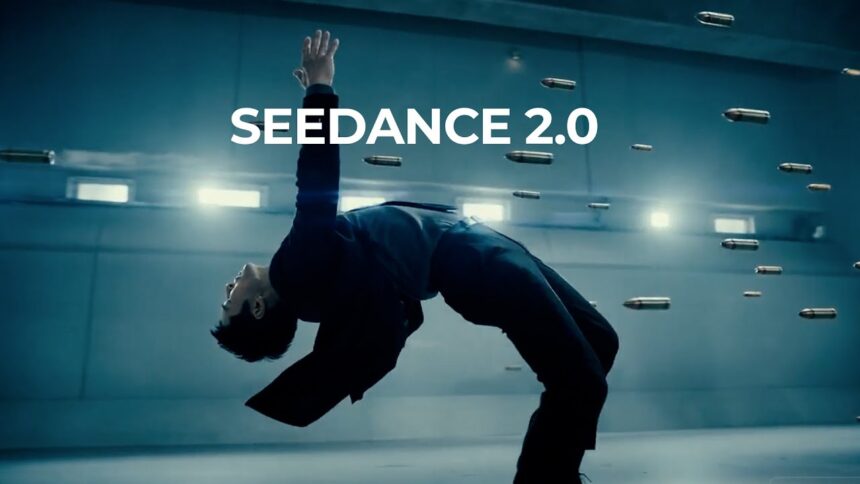
Seedance 2.0 is a next-generation video creation model developed by ByteDance, designed to produce high-quality videos with fully synchronised audio.
What sets it apart is its ability to understand and process text, images, video clips, and sound inputs together in a single command, giving creators far more control over the final result. The output focuses on smooth motion, realistic interactions, and a cinematic look that feels intentional rather than automated.
What is Seedance 2.0?
Seedance 2.0 is the latest video generation system created by ByteDance Seed, the company’s AI research division. It allows users to generate complete video scenes using written prompts, visual references, audio samples, or a mix of all three. The model is built to maintain natural movement, accurate timing between sound and visuals, and visual consistency across scenes.
Unlike earlier video tools that struggled with awkward motion or broken continuity, Seedance 2.0 can keep characters, environments, lighting, and camera behaviour consistent for scenes lasting up to around 15 seconds. This makes the results feel closer to professionally edited footage rather than short, disconnected clips.
What is Seedance 2.0 used for?
Seedance 2.0 is designed for both video creation and video editing, making it useful across several industries. Common use cases include:
- Creating advertising and promotional videos
- Producing cinematic scenes for films or entertainment projects
- Building product showcase videos for e-commerce platforms
- Generating trailers, cutscenes, or promotional content for games
- Making short-form videos for social media with accurate audio sync
Beyond generating new videos, Seedance 2.0 also works as a precise editing tool. Users can modify specific elements—such as replacing a character, changing an action, or adjusting a scene—without affecting the rest of the video. It also includes a scene extension feature that lets creators extend a clip beyond its initial duration while maintaining the same visual style and flow.
How does Seedance 2.0 work?
Seedance 2.0 is built on a unified multimodal system that connects language understanding with visual and audio generation. This means the model doesn’t treat sound and visuals as separate steps. Instead, it understands how audio should match what’s happening on screen—footsteps align with movement, environmental sounds reflect the setting, and dialogue timing follows character actions.
Joint training across different media types helps preserve continuity. Characters remain visually stable, lighting stays consistent, and environments don’t shift unexpectedly—even when camera angles or motion change. This addresses common issues seen in earlier video generators, such as distorted objects, unnatural physics, or movements that ignore gravity.
The model also handles complex scenes involving multiple characters interacting at once. For example, it can realistically portray coordinated movement, physical contact, or activities like skating, dancing, or group motion without visual breakdowns.
Advanced input and audio capabilities
Seedance 2.0 supports multiple references in a single request. Users can combine:
- Up to 9 images
- Up to 3 video clips
- Up to 3 audio files
- Text-based instructions
This allows for very detailed guidance over how a scene should look, feel, and sound.
On the audio side, the system produces stereo sound, which adds depth and immersion. It can recreate fine details such as fabric movement, surface scratches, subtle environmental noise, or small tactile sounds like bubble wrap popping. These details help make scenes feel grounded and believable.
Why Seedance 2.0 stands out
Seedance 2.0 focuses on realism, control, and consistency. Instead of producing flashy but unstable clips, it aims to deliver videos that feel carefully constructed. By combining visual storytelling with accurate sound design and allowing targeted edits, it opens the door for creators who want high-quality results without traditional production pipelines.
Overall, Seedance 2.0 represents a major step forward in AI-assisted video creation, especially for users who care about continuity, realism, and creative precision.