

As the countdown to CES 2026 enters its final days, expectations are building around AMD’s next moves. After a dominant showing in 2025-where the company rolled out RDNA 4 graphics with the Radeon RX 9000 series and cemented its gaming lead with Ryzen 9000X3D processors-AMD appears poised to focus its CES 2026 strategy on consolidating CPU leadership across desktop and mobile platforms.
Industry leaks and supply-chain chatter suggest AMD will emphasise processors built around its cache-stacking technology, known as 3D V-Cache, while also expanding AI-focused CPUs for laptops.
Together, these moves point to a year where AMD prioritises efficiency, gaming performance, and local AI workloads rather than radical architectural overhauls.
Ryzen 9000X3D refresh on the horizon
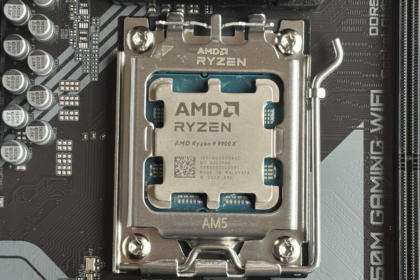
One of the headline expectations is an expansion of the Ryzen 9000X3D lineup. The current flagship Ryzen 9 9950X3D already pushed boundaries with its massive cache, but rumours point to a new variant-often referred to as the Ryzen 9 9950X3D2-that could raise clocks by around 100 MHz and increase power limits to accommodate even more stacked cache.
Unlike previous generations, where only one core complex received 3D V-Cache, this rumoured model is said to feature stacked cache on both CCDs, bringing total L3 cache to an unprecedented 192MB.
If accurate, such a processor would target high-end users who combine demanding creative workloads with top-tier gaming, albeit at a price likely reserved for enthusiasts.
AMD is also expected to refine its gaming-focused lineup. The Ryzen 7 9800X3D already holds a reputation as the strongest gaming CPU on the market, but leaks suggest a Ryzen 7 9850X3D could debut as a higher-clocked, tightly binned version.
With boost frequencies potentially approaching 5.6 GHz while maintaining thermal efficiency, AMD appears intent on extracting even more performance from an already dominant design.
Ryzen 9000G may bring Zen 5 APUs to desktops
On the desktop front, AMD may also revive its APU strategy with a new Ryzen 9000G series. Previous G-series chips introduced integrated graphics to desktop CPUs, utilising Zen 4 and RDNA 3. However, the next iteration is rumoured to combine Zen 5 cores with RDNA 3 graphics for the first time on desktop platforms.
Sources suggest AMD could repurpose silicon originally designed for its mobile Krackan and Strix Point processors, adapting it for socketed desktop systems. While concrete specifications remain scarce, such chips would appeal to compact PC builders and users seeking capable integrated graphics without a discrete GPU.
Ryzen AI 400 targets next-generation laptops
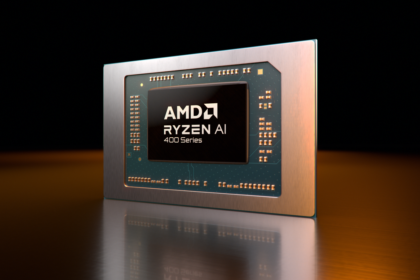
For notebooks, AMD is widely expected to introduce Ryzen AI 400 processors, based on a refreshed version of its Strix Point architecture under the internal codename Gorgon Point.
These chips are not expected to introduce major architectural changes, but instead focus on higher clock speeds, improved power efficiency, and stronger neural processing units (NPUs).
The push aligns closely with Microsoft’s broader efforts to promote local AI processing on PCs. For gamers and power users, the improvements could translate into thinner laptops that run cooler under load while delivering better performance per watt. Integrated graphics are expected to continue using RDNA 3.5 cores, consistent with current Strix Point designs.
What AMD is unlikely to show
Despite the buzz, some major technologies are not expected to appear at CES 2026. AMD has already indicated that next-generation Zen 6 CPUs and RDNA 5 graphics architectures are planned for much later, likely toward the end of 2026 or early 2027.
For now, AMD’s CES strategy appears focused on refinement rather than reinvention-pushing existing strengths further, tightening its grip on gaming performance, and positioning its CPUs at the center of the industry’s growing interest in AI-powered PCs.
- GPU Prices Set to Increase in 2026 as AMD and Nvidia Plan Hikes
- AMD Closes the Gap with Nvidia in Major FSR Redstone Update
- AMD Officially Confirms Zen 7 Architecture with AI Focus