
At CES 2026, AMD used a sit-down interview with PCWorld to clarify its stance on FSR Redstone, the company’s next-generation graphics feature set. While AMD reiterated that Redstone is officially tied to RDNA 4 hardware, its messaging this time struck a more nuanced tone toward users attempting to run the technology on older GPUs.
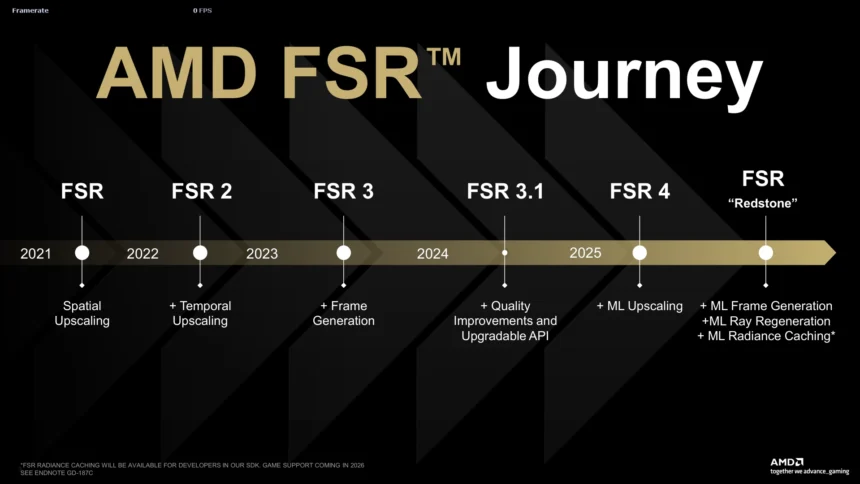
Speaking during the interview, Andrej Zdravkovic, AMD’s chief software officer and head of graphics software, confirmed that the full FSR Redstone feature bundle remains designed specifically for RDNA 4. Redstone combines several machine learning–driven technologies, including upscaling and frame generation, under a single framework optimised for AMD’s latest architecture.
Zdravkovic emphasised that the decision is rooted in technical constraints rather than artificial product segmentation. According to him, AMD evaluates whether a feature can deliver consistent performance and image quality across a broad range of systems and games. If enabling a feature results in reduced responsiveness or visual degradation, the company does not see value in releasing it publicly.
A key concern is timing. Frame generation and similar ML workloads must be completed within a single frame budget. If a GPU cannot process those workloads fast enough, the system may be forced to lower the base frame rate in order to generate additional frames, effectively negating the benefit. Zdravkovic described such scenarios as counterproductive, noting that the technology must improve the experience, not undermine it.
The discussion also touched on the growing number of enthusiasts who are experimenting with Redstone components on RDNA 3 hardware. Zdravkovic acknowledged those efforts without discouragement, saying “all the power to them,” while cautioning that such results are often limited to specific machines or titles. He added that, as a technology enthusiast himself, he understands the appeal of pushing hardware beyond its intended use cases.
When asked whether AMD might offer an official beta or prototype version of Redstone for RDNA 3 users, Zdravkovic said such a release is not currently planned. However, he did not dismiss the idea outright, thanking PCWorld for raising the question and suggesting that it was worth considering how such an approach could work in theory.
AMD also reiterated that it continues to improve older GPU architectures where meaningful gains are possible. Zdravkovic stressed that the company is not interested in withholding improvements that genuinely enhance gameplay or responsiveness, but only in cases where the net result is clearly positive.
For now, FSR Redstone remains an RDNA 4 4-exclusive offering, leaving RDNA 3 users reliant on earlier versions of FidelityFX Super Resolution. Still, AMD’s acknowledgement of community experimentation—and its refusal to shut the door completely—suggests a more flexible attitude than a simple hard no, even if official support remains off the table for the time being.
- Which Graphics Card Brand Wins for Gaming?
- GPU Prices Set to Increase in 2026 as AMD and Nvidia Plan Hikes
- AMD Officially Confirms Zen 7 Architecture with AI Focus