
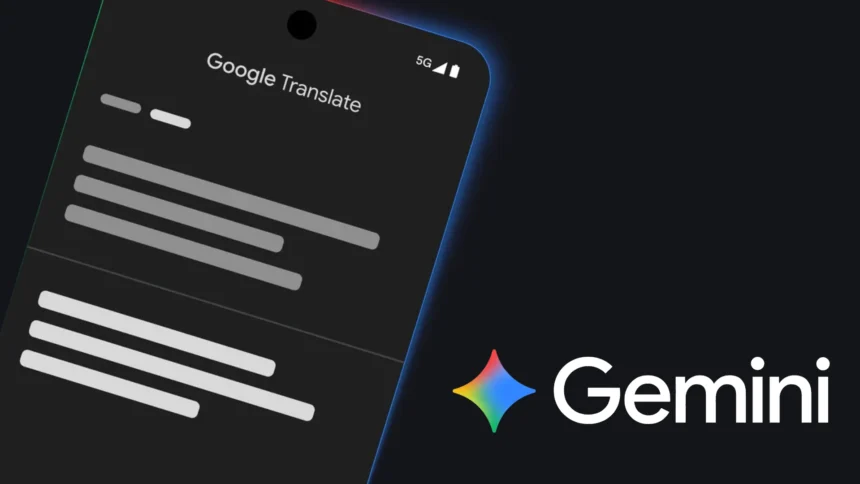
Google has introduced a new live translation feature in Google Translate, enabling users to hear real-time spoken translations through headphones. This feature aims to make multilingual conversations smoother and more natural.
The feature relies on Gemini’s speech-to-speech technology, which is designed to preserve the tone, rhythm, and emphasis of the original speaker rather than delivering flat, mechanical translations.
The new experience is currently available in beta on Android devices in the United States, Mexico, and India. According to Google, support for iOS and additional regions is planned for 2026. The feature works with any standard headset and supports more than 70 languages, positioning it as a practical tool for face-to-face conversations, travel, lectures, and following spoken content in foreign languages.
Unlike traditional text-based or delayed audio translations, the new system focuses on immediacy and natural delivery. By processing speech directly into translated speech, Google aims to reduce the mental friction that often comes with switching between languages during live interactions.
Alongside the rollout of live translation, Google has expanded its language learning tools within Google Translate. These learning features are now available in 20 additional countries, including Germany, India, Sweden, and Taiwan.
New language pairs have also been added, such as English–German and English–Portuguese. The updated tools offer more detailed feedback, daily practice challenges, and situational exercises designed to support steady, long-term learning.
Google has also improved the quality of text translations using Gemini’s enhanced language understanding. The updated system is better at interpreting context, idiomatic expressions, slang, and nuanced meanings. This enhancement is now live in the United States and India, providing translations between English and approximately 20 other languages, including Spanish, Chinese, Japanese, Hindi, and German.
As a result, expressions that previously suffered from literal translations-such as common idioms-are now rendered in ways that better reflect their intended meaning in the target language.
With these updates, Google is signalling a broader shift toward more conversational, context-aware translation tools, moving beyond simple word substitution toward experiences that more closely resemble natural human communication.
- Translate a Web Page in any browser
- How to Transcribe Audios and Calls in Gemini
- Google Docs Tricks and Functions
- Multiple Ways To use Google Translate on Android