
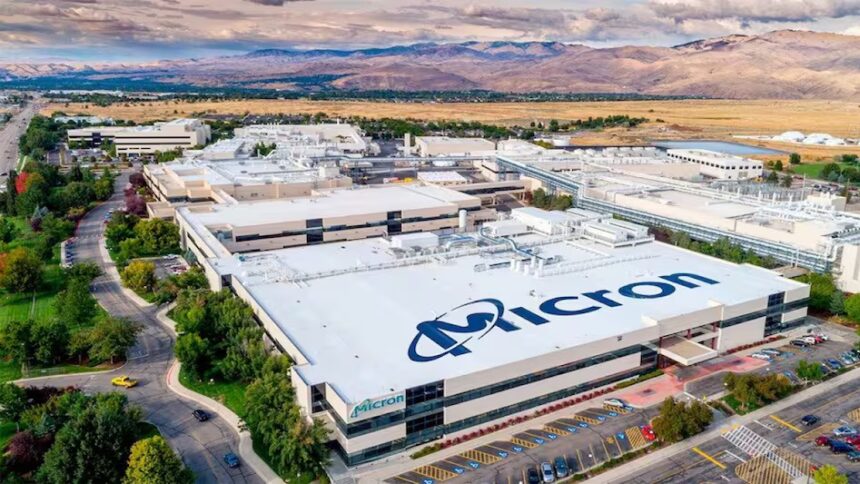
Global memory shortages are unlikely to ease anytime soon, even as manufacturers invest heavily in new capacity, according to senior leadership at Micron. In a recent discussion, Christopher Moore, the company’s vice president of marketing for its Mobile and Client Business Unit, outlined why demand—driven largely by artificial intelligence—continues to outpace supply and why relief for consumers may still be several years away.
Micron, one of the world’s largest suppliers of DRAM, finds itself at the center of a growing backlash from consumers frustrated by rising prices and limited availability. Moore pushed back on the idea that memory makers are abandoning everyday users in favour of data centres, arguing that the reality is more complex.
He said Micron still maintains a substantial presence in client and mobile markets, primarily through original equipment manufacturer (OEM) channels. Rather than selling branded memory directly to consumers, the company supplies components such as LPDDR5 and LPDDR5x to partners, including Dell and ASUS, which then integrate the modules into their own systems.
According to Moore, Micron’s earlier exit from its Crucial-branded consumer business created the perception that it was leaving consumers behind, even though its OEM footprint remains significant.
AI demand reshapes the market
The central challenge, Moore explained, is the explosive growth of the data center and AI markets. Demand for memory in enterprise environments has expanded dramatically, with data centre applications now accounting for as much as 50 to 60 per cent of total memory demand, up from roughly one-third just a few years ago.
This surge has left the entire industry short on supply. Moore emphasized that the shortages are not unique to Micron, but reflect a structural imbalance affecting all major DRAM producers as AI accelerators and large-scale server deployments consume unprecedented volumes of memory.
Companies building AI systems—often alongside partners such as Nvidia and AMD—are requiring more bits than the industry was prepared to deliver on short notice.
Why new fabs won’t help soon
While Micron and its peers are racing to expand manufacturing capacity, Moore cautioned that new fabrication plants are not a quick fix. Increasing output is not as simple as adding machines; it also requires managing a growing variety of memory densities and configurations.
Frequent shifts between different memory specifications—such as moving from 12GB to 16GB or 24GB modules—can reduce overall output because production lines must be reconfigured. To stabilise supply, Micron is working with customers to limit configuration changes and maintain production consistency.
Even with these measures, meaningful gains from new facilities will take time. Micron broke ground on its ID1 fab in Idaho three years ago, and while the project has been accelerated to come online in mid-2027, Moore said the plant is unlikely to deliver significant, qualified output until 2028. The lengthy process of equipment installation, yield optimisation, and customer certification makes rapid relief unrealistic.
Competition and China’s role
Micron is also facing growing competition from Chinese memory suppliers, particularly CXMT, which has been expanding its DDR5 offerings and is reportedly preparing for a major public listing. Reports have suggested that companies such as HP may consider integrating Chinese-made memory into consumer products.
Moore said Micron welcomes competition, regardless of its origin, and views it as a driver of improvement rather than a threat. He acknowledged that Chinese suppliers have become increasingly capable within the markets they target, but stressed that competition ultimately benefits customers and pushes manufacturers to innovate.
A long road ahead
Taken together, Micron’s comments suggest that consumers should brace for continued tightness in the memory market. While manufacturers are investing in new fabs, process improvements, and supply-chain efficiencies, the payoff from those efforts remains years away.
Until then, the combination of relentless AI demand and complex production constraints means DRAM shortages—and elevated prices—are likely to persist well into the latter part of the decade.
- Consumer RAM Could Face Shortages by 2028, SK Hynix Predicts
- Global DRAM Shortage Deepens as AI Demand Strains Supply Chains, Consumer Prices Surge
- Micron Exits Consumer PC Market, Shuts Down Crucial Brand for AI
- What is RAM Bandwidth Bottleneck