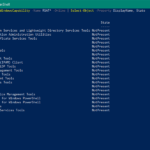

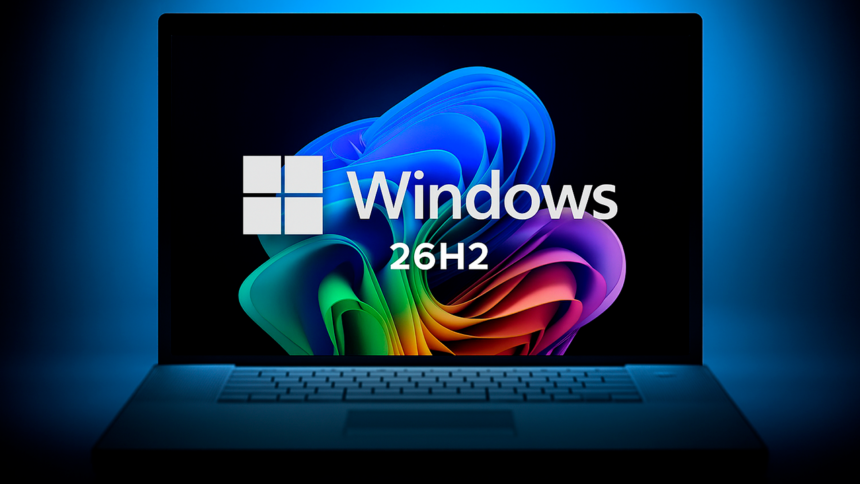
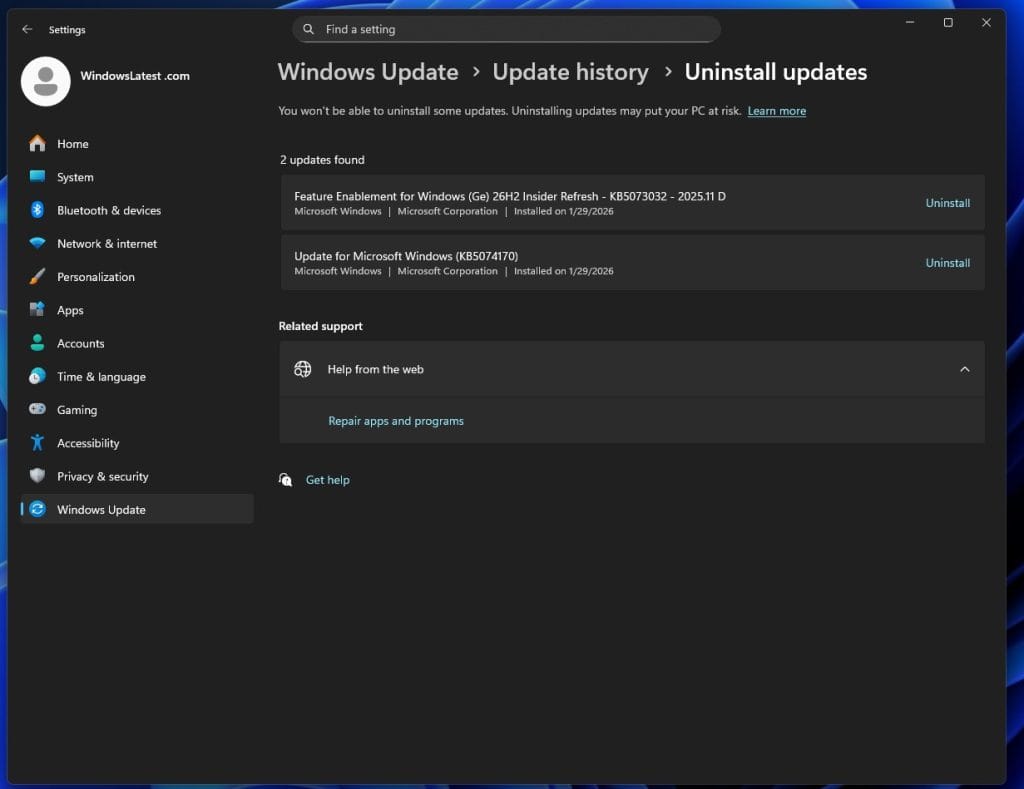
Microsoft has quietly confirmed the existence of Windows 11 version 26H2, signaling that development of the update is already underway. The confirmation did not come through a formal announcement, but rather through technical traces discovered in the Windows Update interface, specifically within the section used to review and uninstall previous updates.
According to findings reported by Windows Latest, recent Dev Channel builds include explicit references to a “Windows 11 26H2 enablement package.” This marks the first time the 26H2 label has appeared clearly and unambiguously within Microsoft’s own update infrastructure, removing any remaining doubt that the release is planned.
Same Foundation as Recent Releases
Windows 11 26H2 is expected to follow the same approach used for versions 24H2 and 25H2. Rather than introducing a new system foundation, the update will rely on the existing Germanium platform. This means it will be delivered as an enablement package-a smaller update that activates features already present in the system through internal configuration switches.
This strategy enables faster installations and reduces the risk associated with large, disruptive upgrades. Microsoft appears to have committed to maintaining a stable core for Windows 11 while layering changes incrementally on top, an approach that has been in place for several release cycles.
As a result, 26H2 is shaping up to be a continuity update focused on internal refinements rather than headline features or major interface changes.
Two Windows 11 Paths in 2026
The confirmation of 26H2 also highlights an emerging split in Microsoft’s Windows 11 roadmap for 2026. Alongside 26H2, Microsoft is developing Windows 11 26H1, a separate release aimed primarily at new ARM-based hardware.
Version 26H1 is expected to support upcoming processors, including next-generation Snapdragon platforms and future Nvidia-designed chips. Reports suggest this branch may introduce platform-specific changes tailored to new silicon, potentially diverging more noticeably from the current Windows 11 experience.
In contrast, Windows 11 26H2 will serve as the standard annual update for the majority of existing PCs, following Microsoft’s traditional second-half release schedule. This dual-track approach effectively creates two “families” of Windows 11: one focused on emerging ARM hardware, and another centred on maintaining and stabilising the experience for current devices.
Signals From the Windows Insider Program
Further confirmation of Microsoft’s direction comes from the official Windows Insider communications. The Windows Insider team has announced that the Dev Channel is transitioning to builds in the 26300 series, which aligns with the internal versioning for the 26H2 timeframe.
While Dev Channel builds are not tied to a single final release, Microsoft has indicated that changes introduced there may eventually flow into the Beta Channel, depending on stability and testing outcomes. This reinforces the view that 26H2 will emphasise under-the-hood work rather than visible changes.