
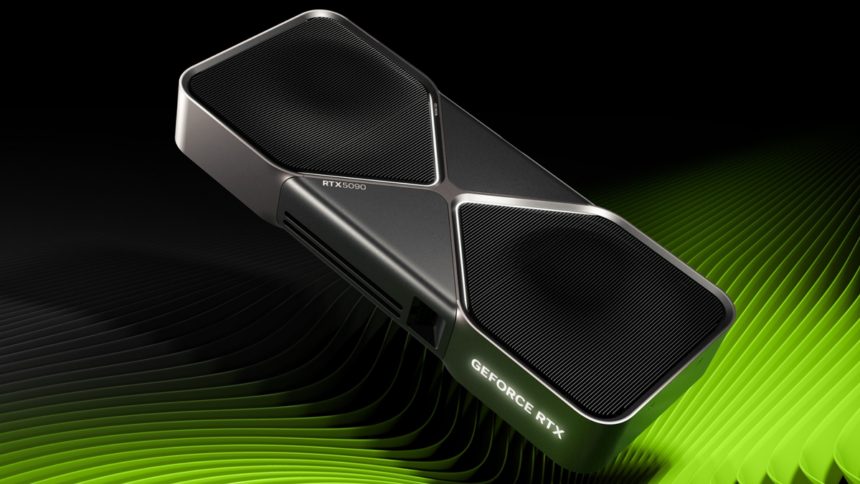
A recently released graphics driver from NVIDIA is causing frustration among PC enthusiasts and gamers. Driver version 595.71 has been linked to performance issues affecting several GPUs from the GeForce RTX 40 series and GeForce RTX 50 series, with the most notable problem involving restricted overclocking performance.
According to multiple reports shared across online forums and social media, the driver appears to reduce the maximum achievable clock speeds by limiting voltage headroom when users attempt to overclock their graphics cards.
Clock Speed Drops Reported by Users
Many users claim that after installing driver 595.71, their GPUs lost roughly 200 MHz of achievable clock speed compared with previous driver versions.
The issue seems tied to new or altered voltage restrictions, which may have been introduced intentionally or accidentally within the driver. However, NVIDIA has not yet issued an official statement confirming the cause.
Early testing suggests that the driver may cap GPU voltage when higher overclocking offsets are applied, preventing the graphics processor from reaching the same boost frequencies seen with earlier drivers.
YouTube Testing Highlights Voltage Limit
Tech YouTuber Bang4BuckPCgamer demonstrated the issue in a test involving an ASUS TUF Gaming GeForce RTX 5090.
In his analysis, the driver reduced the card’s available overclocking voltage margin by around 65 millivolts, effectively locking the GPU below 1 volt.
As a result, the card’s maximum frequency dropped from approximately 3,165 MHz to just under 3,000 MHz.
Further testing indicated that the voltage restriction activates when the GPU core offset exceeds +150 MHz. At offsets of 150 MHz or lower, the card can still reach around 1.060 volts, suggesting the driver is applying a conditional voltage cap tied to higher overclocking settings.
Not All GPUs Affected
Reports indicate that the behaviour is inconsistent across hardware models. While some users are experiencing noticeable performance reductions, others report no problems at all.
Owners of GPUs such as the Gigabyte AORUS Master GeForce RTX 5090 and PNY GeForce RTX 5090 Epic OC have stated that their cards continue to overclock normally.
Similarly, some users with mid-range models, such as the MSI Gaming Trio GeForce RTX 5070, reported no voltage limitations after installing the driver.
This inconsistency suggests the issue may depend on specific board designs, BIOS configurations, or factory overclock profiles.
Second Driver Issue in Two Weeks
The controversy surrounding driver 595.71 comes shortly after another problematic NVIDIA release.
The earlier 595.59 driver reportedly introduced stability problems across several GPUs, prompting the company to withdraw the update entirely and issue a revised version.
Because of these repeated issues, some users are choosing to roll back to earlier drivers while waiting for clarification or a patch.
Awaiting Official Response
At the time of writing, NVIDIA has not publicly confirmed whether the voltage limitation is a bug or a deliberate adjustment to protect hardware.
If the issue is software-related, it could potentially be resolved through a future driver update. For now, affected users continue to share benchmarks and testing results while waiting for guidance from the company.
Until an official fix arrives, enthusiasts attempting to push their GPUs beyond stock speeds may need to remain on older driver versions to maintain full overclocking headroom.