
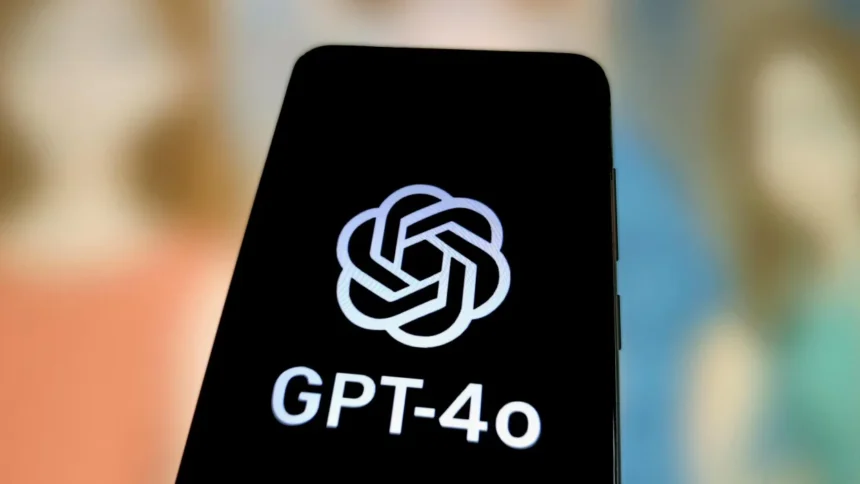
OpenAI will discontinue access to several older ChatGPT models starting Friday, marking a significant step in the company’s transition toward its newer AI systems.
Among the models being retired is the widely used – and widely debated – GPT-4o, along with GPT-5, GPT-4.1, GPT-4.1 mini, and o4-mini.
Low usage, large numbers
OpenAI had originally planned to phase out GPT-4o in August when GPT-5 was introduced. However, strong user reaction at the time led the company to keep the model available for paid subscribers who preferred to select it manually.
In a recent update, the company said only 0.1% of users were still relying on GPT-4o. But with ChatGPT serving roughly 800 million weekly active users, that fraction still represents around 800,000 people.
Controversy around GPT-4o
The model has been at the center of multiple legal challenges and public scrutiny. Lawsuits and complaints have alleged links between user interactions and harmful outcomes, including cases involving self-harm, delusional thinking, and what critics have described as “AI psychosis.”
Researchers have also noted that GPT-4o scored highly on measures of sycophancy – a tendency to overly agree with or validate user statements – which has raised concerns about reinforcement of unhealthy beliefs in certain situations.
Emotional attachment from users
Despite the small share of active usage, the retirement has prompted organized opposition from some users. Online campaigns and petitions have highlighted the strong personal connections people say they developed with the model, with some describing it as uniquely supportive or conversational compared with newer systems.
Shift toward newer architecture
The move reflects OpenAI’s broader strategy of consolidating its platform around newer model families designed to deliver improved reasoning, safety controls, and efficiency.
As the company streamlines its offerings, legacy models that require separate infrastructure and maintenance are being phased out, even as a vocal minority continues to advocate for their return.
The transition underscores a growing reality in the AI industry: rapid model evolution can leave behind communities that formed around earlier systems – even when their usage represents only a small fraction of the total user base.