
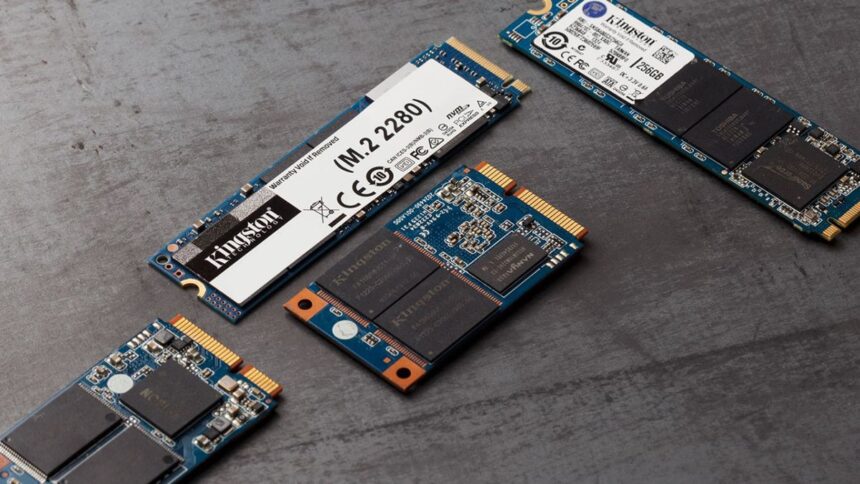
The global hardware market is entering a turbulent phase in 2026, with memory components increasingly strained by shifting manufacturing priorities. While rising RAM prices have already tested consumers, solid-state drives now appear headed in the same direction as major chipmakers reduce NAND flash memory production.
According to a report from Chosun Biz, both Samsung and SK hynix are scaling back NAND output in favour of more profitable DRAM manufacturing. Samsung is expected to cut its NAND production by roughly 4.5%, while SK hynix is reportedly planning a steeper reduction of around 10.5%.
Though the percentage figures may appear modest, their impact is significant. Together, Samsung and SK hynix account for more than 60% of the global memory market. Any coordinated slowdown at that scale is likely to ripple across global supply chains.
DRAM Takes Priority as Margins Widen
The motivation behind the shift is largely financial. DRAM, particularly high-bandwidth memory (HBM) used in data centers and AI servers, currently delivers far higher margins than NAND flash used in consumer storage products. As demand for AI infrastructure continues to surge, manufacturers are reallocating capacity to meet contracts tied to enterprise and hyperscale clients.
The result is a tightening supply of NAND chips, the core component of SSDs. With fewer units reaching the market and demand remaining steady, pricing pressure is expected to intensify in the months ahead. While SSD prices have already been climbing alongside DDR5 memory, analysts now anticipate a sharper upward trend as inventories thin.
AI Demand Reshapes the Consumer Market
Much of the strain can be traced back to the explosive growth of artificial intelligence workloads. Next-generation platforms, including those built around Nvidia’s upcoming Rubin architecture, require massive volumes of fast memory and storage. Large technology firms have secured long-term supply agreements to support their server deployments, leaving consumer-grade products exposed to shortages and higher costs.
For individual buyers—particularly PC builders and gamers—the shift means increased competition for remaining stock and less predictable pricing at retail. Industry observers note that consumer hardware often absorbs the impact when enterprise demand dominates production planning.
Outlook for SSD Buyers
With NAND output constrained and DRAM continuing to attract investment, market watchers expect SSD prices to rise further through 2026. While the pace of increases had previously lagged behind RAM, current conditions suggest that storage costs may soon accelerate more sharply.
As manufacturers prioritise profitability over volume, the memory market appears set for another cycle in which availability—and affordability—becomes increasingly uncertain for end users.
- How to fix RAM Bandwidth Bottleneck
- Why Are My Games Slow? How to Check for CPU Bottlenecks
- Elon Musk Says Tesla Has Restarted Dojo 3 Supercomputer Project After AI5 Chip Progress