
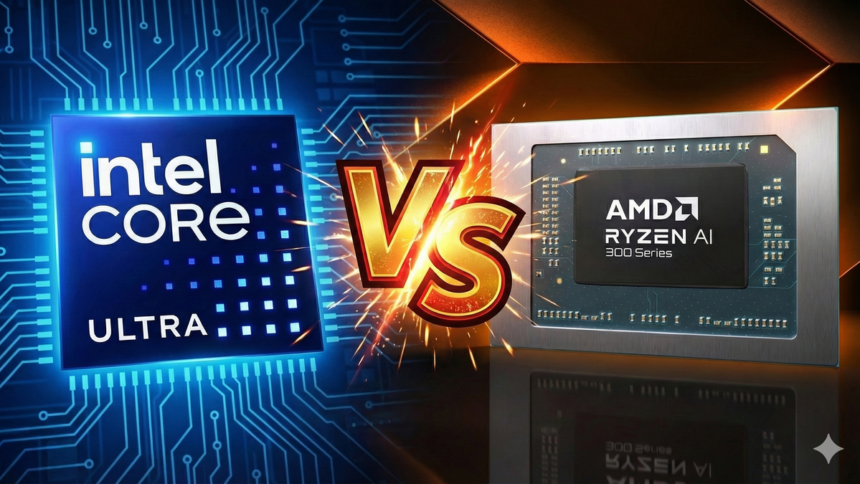
The long-running rivalry between Intel and AMD took another public turn after Intel unveiled its Panther Lake processors at CES 2026. During the event, Intel positioned its new mobile CPUs as outperforming the competition, but AMD did not take the comparison well. The company has now issued a firm response, arguing that Intel’s benchmarks were misleading and that the real competition lies elsewhere.
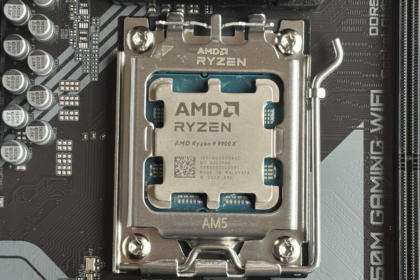
According to AMD, Intel’s comparisons focused on pairing its high-end Panther Lake chips with AMD’s Ryzen AI 300 series-processors designed primarily for entry-level and mainstream notebooks. AMD contends that this creates an uneven matchup, as Panther Lake models unveiled so far target premium, high-performance laptops. In AMD’s view, the correct rivals are the Ryzen AI Max processors, which occupy the same high-end segment.
AMD Reframes the Comparison
In response, AMD released its own slides “correcting” the matchup. The company claims that when comparing like-for-like segments, its processors either outperform or match Intel’s offerings in nearly every scenario. According to AMD, Ryzen AI 300 processors compete evenly with Intel Core counterparts in mainstream use and gaming workloads, conceding ground only in certain AI graphics tasks where GPU strength plays a larger role.
AMD went further, asserting that it expects to lead the market in AI-focused performance overall. As an example, the company highlighted its flagship Ryzen AI Max 395+, claiming up to a 37 percent graphics performance advantage over Intel’s Core Ultra X9 388H, which is currently Panther Lake’s most powerful configuration paired with the Arc B390 integrated GPU.
Radeon vs. Arc
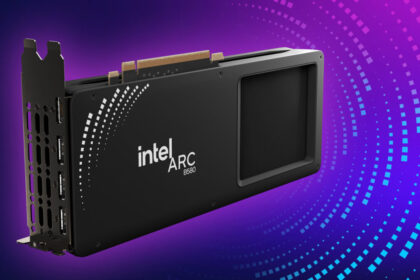
The Ryzen AI Max 395+ features AMD’s most advanced integrated graphics solution to date, the Radeon 8060S based on the RDNA 3.5 architecture. Independent testing cited by AMD suggests that this iGPU delivers gaming performance comparable to a mobile GeForce RTX 4060. Intel, by contrast, positions its Arc B390 integrated graphics as roughly equivalent to a mobile RTX 4050.
AMD also emphasised differences in CPU resources, noting that its top-end Strix Halo processor offers twice as many threads as Intel’s Core Ultra X9 388H. On efficiency, AMD pointed to Intel’s own data, claiming it shows little to no advantage for Panther Lake over Lunar Lake in terms of power consumption and battery life.
Looking Ahead
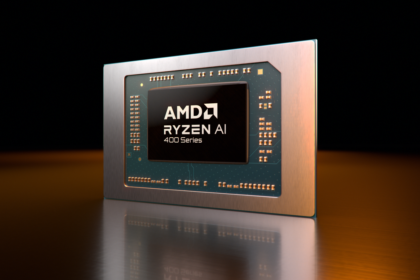
Closing its rebuttal, AMD noted that Intel has yet to make detailed performance claims about the rest of the Panther Lake lineup. On that basis, AMD says it expects to secure a “big win” in both processing and graphics performance with its upcoming Ryzen AI 400 series, which was also announced at CES 2026.
While it is common for chipmakers to highlight gains by comparing new products against a rival’s older generation, it is far less common for the competitor to publicly challenge those claims so directly. AMD’s response underscores how competitive-and increasingly public-the battle for dominance in the next generation of mobile processors has become.