
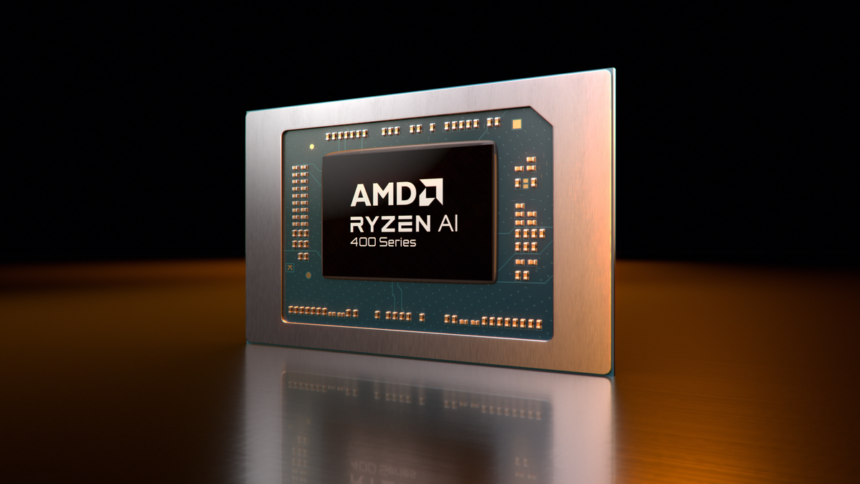
AMD is preparing the next step in its mobile processor roadmap, with early indications pointing to significant upgrades in both graphics and artificial intelligence performance. Recent changes spotted in the Linux AMDGPU driver stack suggest the company is developing a new integrated graphics architecture, informally referred to as RDNA 4m, for its upcoming Ryzen AI 500 series mobile processors.
The chips, internally codenamed Medusa Point, are expected to succeed the current Ryzen AI lineup and further expand AMD’s push into AI-accelerated laptops.
Driver Updates Hint at AI-Focused Graphics
One of the most notable additions identified in the driver updates is support for Matrix ISA instructions. These instructions are designed to accelerate matrix operations, which are widely used in machine learning and neural network workloads.
The addition suggests that AMD is strengthening the AI capabilities of its integrated GPUs, enabling them to handle more advanced tasks, such as real-time inference and AI-assisted graphics processing.
The change is also important for upcoming technologies like AMD FidelityFX Super Resolution 4 (FSR 4). Unlike earlier versions, FSR 4 is expected to rely on neural networks for image upscaling-bringing AMD’s approach closer to NVIDIA DLSS.
Zen 6 CPU Architecture Expected
The Ryzen AI 500 family is also rumoured to adopt AMD’s next-generation Zen 6 architecture, aligning the mobile platform with the company’s future desktop roadmap, which is expected to include the next Ryzen generation.
Earlier leaks have referenced a GPU identifier labelled GFX1170, with support for lower-precision formats such as FP8 and BF8-data types commonly used in AI workloads. While the naming overlaps with the existing GFX11 family associated with RDNA 3, the new features point to architectural evolution aimed at improving both AI and gaming performance.
Medusa Point and Medusa Halo Variants
The Ryzen AI 500 lineup is expected to be split into two tiers:
- Medusa Point – Mainstream mobile processors, likely featuring RDNA 4m integrated graphics
- Medusa Halo – High-end models under the Ryzen AI Max family, potentially equipped with next-generation RDNA 5 graphics
If accurate, the Halo variants could deliver significantly stronger graphics performance, positioning AMD to compete more aggressively in premium thin-and-light and workstation-class laptops.
Launch Timeline Still Distant
AMD has not officially confirmed specifications or release plans. However, the timing of recent product launches suggests the Ryzen AI 500 series is unlikely to arrive before 2027. The company recently introduced the Ryzen AI 400 series, which serves primarily as a refresh of the Ryzen AI 300 platform for notebooks.
For now, the driver-level changes provide an early look at AMD’s direction: tighter integration between CPU, GPU, and AI acceleration, with mobile processors designed to handle advanced graphics and on-device AI workloads without relying heavily on discrete hardware.
If the roadmap holds, the next generation of Ryzen AI chips could represent a major step forward for AI-capable laptops and integrated graphics performance.
- AMD CEO Accidentally Reveals Xbox Magnus Launch Timeline
- AMD Vs Nvidia
- Ryzen 3 vs 5 vs 7 vs 9: AMD’s Processor Lineup