

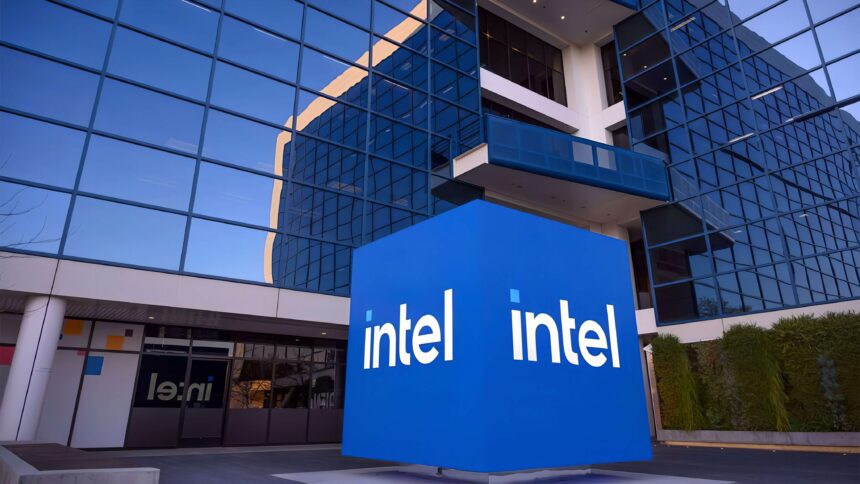
Intel has decided not to sell or spin off its Networking and Communications (NEX) division, choosing instead to retain the business after completing an internal review of its strategic options. The shift in direction comes after months of speculation that the chipmaker was preparing to offload the unit to generate capital amid ongoing financial pressure.
An Intel spokesperson confirmed the decision, emphasizing the advantages of keeping NEX within the company. “After a thorough review of strategic options for NEX—including a potential standalone path—we determined the business is best positioned to succeed within Intel.
Keeping NEX in-house enables tighter integration between silicon, software and systems, strengthening customer offerings across AI, data centre, and edge. We remain focused on delivering for customers and creating long-term value,” the spokesperson told Tom’s Hardware.
While NEX lacks the mainstream visibility of Intel’s flagship client and server CPUs, it remains a core component of the company’s technology ecosystem. The division develops a wide portfolio of networking and edge products, including infrastructure processors (IPUs), Ethernet and Wi-Fi controllers, switching hardware, and programmable connectivity devices. Its technology supports an array of markets—from consumer PCs to telecommunications equipment and enterprise data centers.
NEX also houses a robust software stack designed for workload management, security, and remote system administration. The combination of hardware and software allows Intel to increase the overall value of its platforms. For example, a single Xeon-based server can include multiple Ethernet controllers, an IPU, and bundled software, expanding Intel’s revenue capture per system.
Potential Sale Would Have Provided Short-Term Cash
With declining performance in the client and data center segments, analysts speculated that selling NEX could have delivered a substantial cash infusion. The division’s growth has been modest, but its product mix and margins made it a viable candidate for monetization.
However, Intel recently strengthened its financial footing with a major funding package:
- $8.9 billion in government financing in exchange for an 8.9% stake,
- $2 billion from SoftBank Group, and
- $5 billion from Nvidia.
This influx helped alter Intel’s calculus, making the long-term benefits of retaining NEX more attractive than a near-term sale.
Limited Visibility Into NEX’s Current Financial Performance
Intel no longer reports NEX as a standalone business. In early 2025, the company reorganized its structure, folding NEX into the Client Computing Group (CCG) and Data Center & AI (DCAI) units. This makes it difficult to assess the division’s recent profitability.
The last time Intel disclosed NEX-specific figures was in Q4 2024, when the unit generated $1.6 billion in revenue and $300 million in operating income. Those numbers underscored NEX as a solid contributor, even if not a high-growth engine.
By keeping NEX within the company, Intel is signaling confidence that tightly integrated hardware and software platforms will be a central pillar of its rebound strategy. As AI, edge computing, and cloud infrastructure continue to expand, Intel appears committed to ensuring that its networking technologies remain a core part of the product stack rather than an asset to be sold off.
The decision highlights a broader strategic shift: prioritizing long-term platform strength over short-term liquidity, even in a challenging market environment.
- Nvidia Loses GPU Market Share to AMD as Intel Breaks 1% for First Time
- Intel’s Core Ultra 400K CPUs Target AMD X3D with Expanded bLLC Cache
- Intel Releases New Wi-Fi and Bluetooth Drivers for Windows 11 25H2










 division, choosing instead to retain the business)