
We’re living through a period of rapid change, especially in the world of artificial intelligence. For a while, the story was simple: Microsoft had taken the lead.
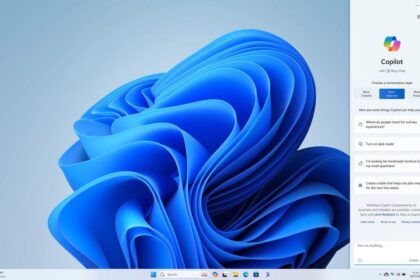
Its early bet on OpenAI gave it privileged access to models like GPT-4 and opened the door for Copilot to spread across almost every Microsoft product—Windows 11, Microsoft 365, Edge, Azure, and more.
Gemini picks up speed while Microsoft stumbles
But that head start hasn’t been used wisely. Microsoft rushed AI into places where it added little value, such as Notepad—an app known for being lightweight—or even Paint. Additionally, Microsoft is barely present in the smartphone world, where most people interact with AI on a daily basis.
The clearest example of this misstep was Recall, the Windows 11 feature that promised to “remember everything” by taking constant screenshots. The backlash over its privacy implications was so strong that Microsoft had to pull it back and redesign it, and it still hasn’t fully launched.
At the same time, Copilot’s rollout has been confusing. Names, pricing, and features have shifted repeatedly, leaving home users and businesses unsure what they’re actually getting. It hasn’t all been bad, but the whole strategy has felt messy.
In short, Microsoft’s early advantage in AI has faded because of rushed decisions, inconsistent integration, and a deep dependence on OpenAI—an organisation currently navigating its own internal turbulence.
Gemini 3 steps in front
While Microsoft and OpenAI were busy looking back at past wins, Google continued to refine Gemini—and eventually stopped keeping its progress quiet. According to an analysis by Windows Central, Gemini 3 now outperforms ChatGPT-5 in numerous benchmarks, ranging from writing tasks to multimodal work. And Google is executing on the areas where Microsoft hasn’t delivered:
- Bringing AI into Gmail, Docs, Calendar, and Meet with features that genuinely save time.
- Expanding Gemini across mobile through the Pixel line—something Microsoft simply cannot match.
- Developing specialised models like Nano Banana Pro for visuals and graphics, which some say are beginning to challenge tools like DALL·E.
At the same time, Google has strengthened its greatest advantage: Search. The major algorithm updates in March and June 2025 emphasised usefulness and elevated AI Overviews, which place AI-generated summaries directly in results.
When a company controls both the AI model and the main gateway to internet traffic, the dynamics of the race shift dramatically. That’s exactly what’s happening. Google, once seen as lagging behind, has managed to turn the tables.
OpenAI hits “code red”
Adding to the drama, reports say Sam Altman has issued an internal “code red.” Marketing plans, ad campaigns, and new agent features are temporarily shelved so the company can focus entirely on improving ChatGPT and closing the gap with Gemini.
OpenAI has burned enormous amounts of money but hasn’t managed to surpass Google’s latest models. That situation raises the possibility that the company may eventually become more tightly absorbed into Microsoft’s ecosystem.
And Microsoft? The shadow of Windows Phone returns
All of this has an uncomfortable parallel with the past. The situation resembles Microsoft’s failed attempt in the mobile market. Back then, it partnered with Nokia, arrived late, hesitated at crucial moments, and ultimately ceded the entire space to Android and iOS.
The similarities today are hard to ignore:
- Instead of owning the full AI stack, Microsoft depends on a partner whose priorities may not always align.
- Google controls every key platform—Android, Chrome, Search, Workspace, YouTube—and now has a leading model in Gemini 3.
- Microsoft dominates in PCs and enterprise, but without its own mobile platform, it cannot fully anchor its vision of Copilot as an “AI operating system.”
To avoid repeating old mistakes, Microsoft is trying to reduce its reliance on OpenAI. It’s developing its own models—like Mu for on-device use in Windows 11, the initial MAI family, and the lightweight agent Fara-7B.
It has also begun shifting closer to Anthropic’s Claude. However, the concern is that this pivot may have come too late, and that Microsoft could once again miss the next major platform shift—this time, the AI wave, which it has already reshaped its entire Windows strategy around.