
Last year, Merriam-Webster selected “slop” as its Word of the Year, defining it as low-quality digital material mass-produced by artificial intelligence. The choice reflected growing public unease with the flood of AI-generated content appearing across the internet as the technology rapidly advanced and spread worldwide.
Despite that scepticism, major figures in the technology industry are urging a shift away from what they see as overly pessimistic narratives surrounding artificial intelligence. Satya Nadella, chief executive of Microsoft, recently published a forward-looking blog post outlining his ambitions for AI in 2026.
In it, Nadella called on society to focus on the long-term potential of the technology rather than dwelling on criticism of what many deride as “AI slop.”
Microsoft’s aggressive push to embed AI across its products has not been without backlash. Online critics have mocked the company’s strategy with nicknames such as “Microslop,” suggesting that the integration has sometimes prioritised quantity over quality. Nadella, however, framed the moment as a transitional phase, arguing that skepticism is natural with any major technological shift and that broader acceptance will come as the tools mature.
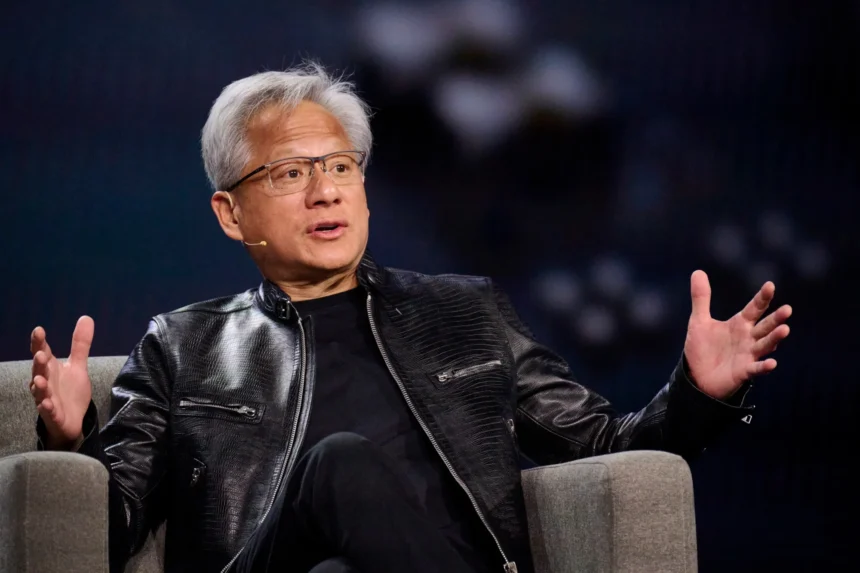
That view is shared by Jensen Huang, the head of NVIDIA, who recently addressed the issue during an appearance on the No Priors Podcast. Huang criticised what he described as a “doomer narrative” surrounding generative AI, saying it has fostered fear and misunderstanding rather than constructive debate.
According to Huang, theories portraying AI as an existential threat or an inevitable societal collapse are unhelpful. He argued that such framing distracts from the technology’s potential benefits, including advances in medicine, productivity, and economic opportunity. While acknowledging that neither blind optimism nor outright dismissal captures the full picture, Huang said persistent negativity risks slowing progress and shaping public policy in damaging ways.
“I think we’ve done a lot of damage with very well-respected people who have painted an end-of-the-world narrative,” Huang said, adding that science-fiction-driven fears do little to help governments, industry, or society make informed decisions.
Huang also appeared to distance himself from dire employment forecasts, implicitly rejecting comments from Dario Amodei, who has warned that AI could eliminate up to half of entry-level white-collar jobs within five years. Huang did not directly name Amodei but made clear he believes such predictions oversimplify a complex transition.

As AI continues to reshape industries and daily life, the divide between critics and advocates is becoming more pronounced. With influential leaders like Nadella and Huang calling for a reset in how the technology is discussed, the coming years are likely to see an intensifying battle not just over AI’s capabilities, but over the narrative that defines its role in society.