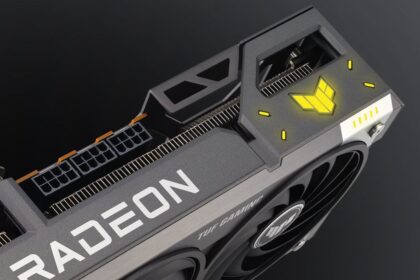

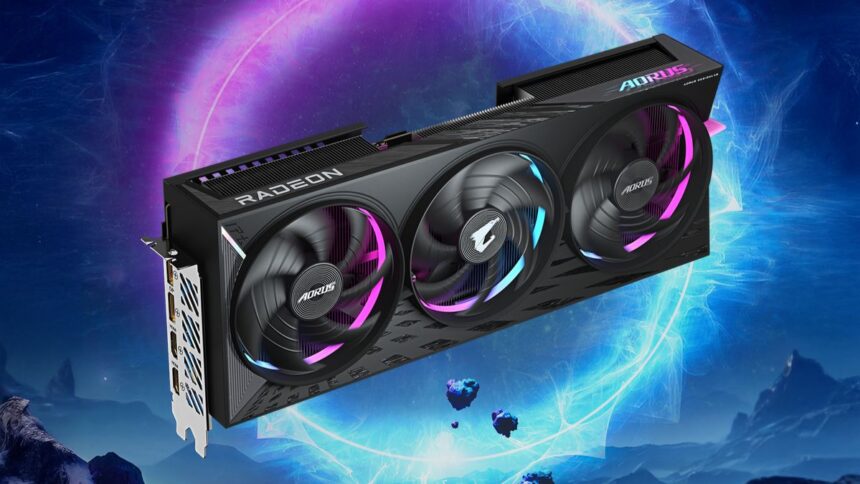
It’s taken over a year, but AMD’s latest graphics cards are finally showing up where it matters most—real-world usage. According to the latest Steam Hardware Survey, the Radeon RX 9070 has made a quiet debut, signalling early adoption of the RDNA 4 generation among PC gamers.
The numbers are still small, but the trend is worth watching.
RX 9070 Enters the Steam Charts—Slowly
In April’s survey results, the RX 9070—one of AMD’s more powerful cards in the RX 9000 lineup—appeared with a 0.18% share, placing it near the bottom of the list. Right behind it sits the GeForce RTX 5050 at 0.17%, marking its first appearance.
Interestingly, this isn’t the RX 9070’s first sighting. It briefly showed up in January at 0.16%, disappeared the following month, and then returned in March with the same figure before inching up again in April. That stop-and-start presence suggests gradual adoption rather than a strong launch surge.
NVIDIA Still Dominates
Despite AMD’s new entries, NVIDIA continues to lead by a wide margin. The GeForce RTX 3060 has reclaimed the top spot with 4.15%, overtaking the RTX 4060 in recent months.
AMD’s strongest dedicated GPU on the list is the Radeon RX 7800 XT, with 1.29% and 26th place. Meanwhile, integrated Radeon graphics contribute a larger combined share of 4.17%, highlighting AMD’s strength in APUs rather than discrete GPUs.
16GB VRAM Is Catching Up Fast
One of the more notable shifts in the survey comes from VRAM capacity. For years, 8GB graphics cards have dominated the market—but that grip is starting to loosen.
- 8GB GPUs dropped to 26.76%, down by 0.76% in April
- 16GB GPUs climbed to 23.51%, growing by nearly 2% in a single month
This rise is likely tied to newer mid-range GPUs like the GeForce RTX 4060 Ti, RTX 5060 Ti, and Radeon RX 9060 XT, many of which offer both 8GB and 16GB variants.
While Steam’s data doesn’t specify which memory configuration users own, the upward trend suggests gamers are gradually moving toward higher VRAM capacities—especially as modern games demand more memory.
System Memory and Resolution Trends
Beyond GPUs, the survey reveals broader shifts in PC hardware:
- 16GB RAM still leads with 40.86%, though its share is declining
- 32GB RAM is rapidly catching up at 37.55%, showing strong growth
Display resolution trends remain consistent:
- 1080p dominates at 52.21%
- 1440p follows with 21.41%
- 4K holds a smaller share at 5.09%
On the software side, Windows continues to dominate with 93.47%, while Linux trails at 4.52%.
What makes the rise of 16GB GPUs particularly interesting is that it comes despite earlier concerns about memory shortages. Reports from late 2025 suggested that 16GB graphics cards might become less common due to DRAM supply issues.
Yet, the Steam data tells a different story. Adoption is growing—not shrinking—indicating that demand for higher VRAM may be outweighing supply constraints.
AMD’s RX 9000 series may not be making a dramatic entrance, but its gradual appearance in Steam’s data suggests steady, organic adoption. At the same time, the broader market is evolving—gamers are upgrading memory, experimenting with higher resolutions, and slowly moving toward more powerful hardware.