
At the start of 2026, Alphabet briefly overtook Apple in market value for the first time in years-an event with little technical importance but notable symbolic weight. Much of that shift has been linked to Alphabet’s growing influence in artificial intelligence, including its quiet but consequential partnership with Apple.
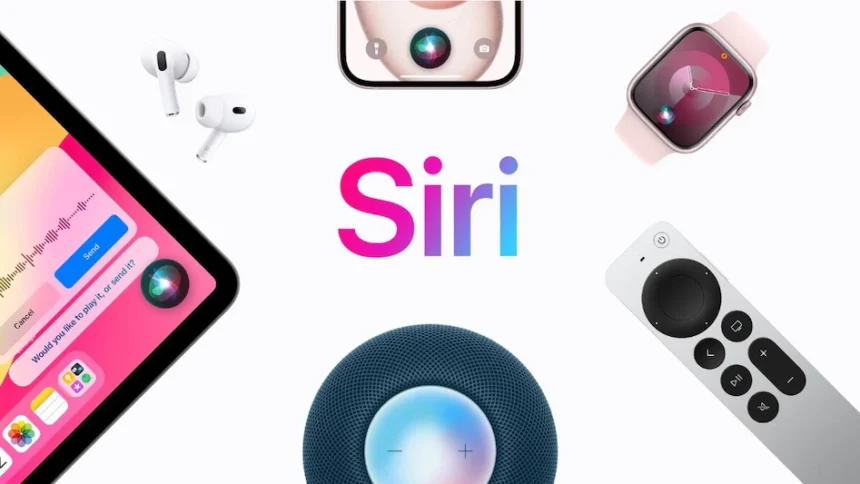
Now, according to a new report, Apple is preparing to reveal the first tangible result of that collaboration: a dramatically revamped version of Siri.
Bloomberg’s Mark Gurman reports that Apple is only weeks away from demonstrating the next generation of its voice assistant, likely during a dedicated company event expected as early as next month. Internally, the project is referred to as “Apple Foundation Models version 10,” though it is powered by a Google-developed AI model.
Apple reportedly has no plans to disclose that underlying technology to users, instead positioning the upgrade as a purely Apple-driven evolution of Siri.
If the reports are accurate, the new Siri represents a major shift from its current incarnation. Long criticised for limited usefulness beyond basic commands, Siri has struggled to keep pace with conversational AI tools such as ChatGPT, Gemini, and Claude.
While functional as a smart home controller, the assistant has often felt disconnected from the broader context of users’ device use, frequently defaulting to rigid responses or vague error messages.
The upcoming version, however, is described as far more capable. Gurman notes that the new Siri will be able to draw on personal data and on-screen content to complete tasks, allowing it to respond with greater awareness and relevance. This contextual understanding could transform Siri from a reactive tool into a proactive productivity assistant-one that understands what a user is viewing, planning, or working on, and can assist accordingly.
In addition, the assistant is expected to support sustained, conversational interactions, enabling back-and-forth dialogue rather than isolated commands. That positions Siri as a more direct competitor to chatbot-style AI services, moving beyond its traditional role as a voice interface for simple actions. Apple has previously leaned on integrations with third-party AI tools, but this iteration appears intended to stand on its own.
Despite the significance of the Apple–Google partnership behind the scenes, the technology’s origin is unlikely to matter to most users. As Gurman points out, Apple’s reputation hinges on the experience it delivers, not the source of the underlying models.
If the new Siri feels meaningfully smarter and more helpful, Apple will reap the benefits. If not, the criticism will land squarely on Apple-while Google still walks away with its reported billion-dollar deal.
With expectations high and competition fierce, the forthcoming Siri demonstration may prove to be one of Apple’s most consequential AI moments to date.