

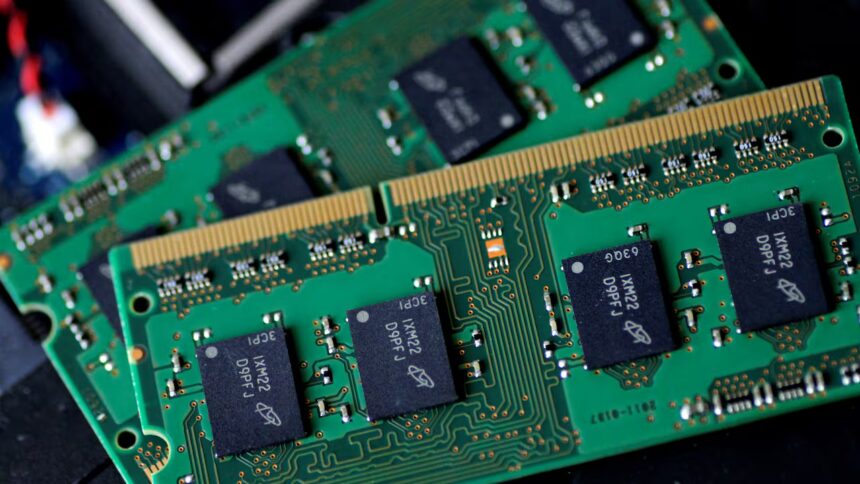
The global technology industry has spent months warning about shortages in memory, solid-state drives, and hard disks, largely driven by the explosive growth of artificial intelligence infrastructure. What was once seen as a problem confined to data centers is now rapidly becoming a broader economic concern, with new reports suggesting the fallout will extend far beyond traditional computing markets.
According to a recent report cited by The Wall Street Journal, as much as 70% of all memory produced worldwide in 2026 could be absorbed by data centers alone. This unprecedented concentration of supply is already reshaping manufacturing priorities and is expected to significantly affect sectors such as automotive production, televisions, and everyday consumer electronics.
Industry analysts warn that the situation could mirror the production disruptions seen during the COVID-19 pandemic, when shortages of key components caused factory shutdowns and long delivery delays.
Although cars and household electronics typically rely on older, lower-end memory chips, manufacturers have increasingly reduced or abandoned production of these legacy components in favour of higher-margin AI-focused products.
Counterpoint Research analyst MS Hwang described the situation bluntly, noting that companies seeking memory allocations must secure contracts far in advance. “You have to buy a plane ticket and negotiate allocations now,” Hwang said, adding that portions of global manufacturing capacity for 2028 have already been pre-sold.
The impact could be widespread. Televisions, Bluetooth speakers, set-top boxes, and smart home appliances all depend on memory components, even if in modest quantities. With profit margins already thin, a sharp increase in memory prices could force manufacturers to raise retail prices or reduce output altogether—assuming components can be sourced at all.
Unlike typical component price fluctuations, which tend to stabilise over time, analysts say this shortage reflects a structural shift. NVIDIA CEO Jensen Huang has suggested that memory could soon account for up to 10% of the total cost of most consumer electronics and as much as 30% of the bill of materials for smartphones.
Market research firms are already adjusting their forecasts. IDC has revised its 2026 outlook, projecting a 5% decline in smartphone shipments and a 9% drop in PC sales, citing constrained supply and rising costs.
TrendForce analyst Avril Wu described the situation as unprecedented, calling it “the craziest time ever” in her nearly two decades of tracking the memory industry.
With suppliers increasingly committing capacity to AI data centers, experts warn that the current shortage represents a long-term realignment rather than a temporary bottleneck. For consumers, that could mean higher prices and fewer choices across a wide range of products in the years ahead.