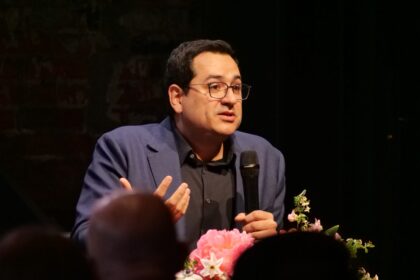

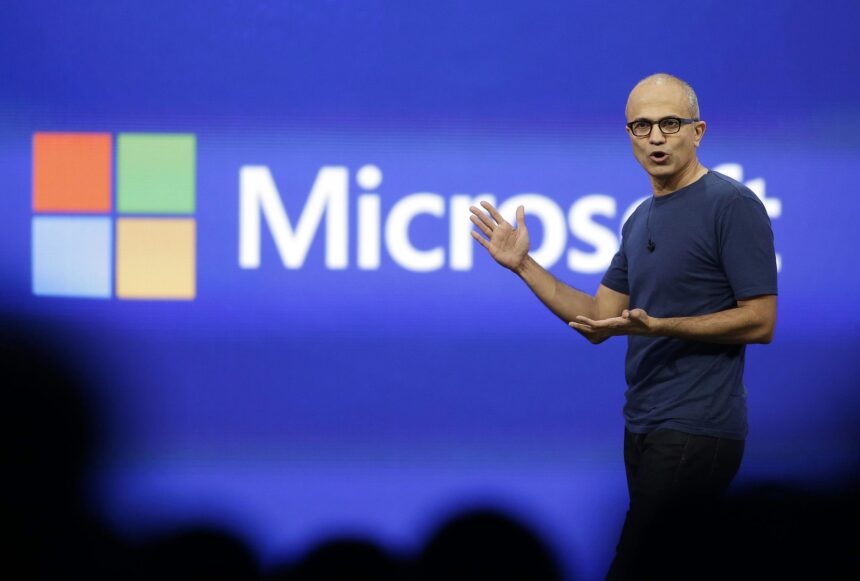
Microsoft CEO Satya Nadella has launched a public blog to reflect on the current state of artificial intelligence, starting with a blunt assessment of what he views as a growing problem: “AI slop.” The term refers to the flood of low-quality, repetitive, AI-generated content that now clogs social platforms, cloned websites, and even search results.
Nadella’s decision to publicly address the issue comes at a pivotal moment. As 2026 approaches, the technology industry is shifting its focus from flashy demonstrations to something more consequential: AI as everyday infrastructure. In Nadella’s view, the real impact of artificial intelligence will not come from spectacle, but from systems that quietly and reliably do useful work.
For Microsoft, this shift has been years in the making. The company’s evolution from cloud computing with Azure, to productivity software through Microsoft 365, is now leading to what it sees as the next phase: moving from standalone applications to AI-driven agents.
From content overload to purposeful systems
Rather than focusing on debates over whether AI produces “junk” or “art,” Nadella argues that the more important question is what kind of systems are built on top of the technology. His answer centers on AI agents-software designed not just to respond, but to act.
Unlike chatbots that generate text on demand, agents are meant to understand objectives, access tools and data, operate within defined boundaries, and carry out tasks with minimal supervision. In Microsoft’s vision, Copilot evolves from a helpful prompt-based assistant into a persistent digital worker embedded across Windows, Microsoft Office, and Microsoft Teams, complete with context, memory, and permissions.
A strategy still facing scrutiny
The ambition is clear, but so are the challenges. Microsoft’s Copilot tools have drawn mixed reactions, praised at times for their capabilities and criticized at others for inconsistent integration, generic outputs, and occasional factual errors. These shortcomings are not necessarily a matter of computing power, but of cohesion-how well the pieces work together as a system.
Nadella’s remarks appear to acknowledge this gap. By shifting the narrative away from individual AI models and toward end-to-end systems, Microsoft is signaling an internal recalibration: less emphasis on showcasing model strength, and more on delivering reliable, integrated experiences.
A familiar gamble for Microsoft
If successful, the strategy could redefine Microsoft’s role once again. Windows, long regarded as a mature operating system, could reemerge as a platform centred around intelligent agents rather than static applications. That outcome, however, is far from guaranteed.
What is clear is that Microsoft recognizes the growing frustration with low-value AI output and sees quality, not volume, as the next competitive frontier. Whether the company can turn that vision into consistently better software remains an open question-but one that will shape how AI is experienced by millions of users in the years ahead.