

For generations of gamers, buying a new game meant bringing home a physical product. You could walk into a store, compare prices, ask for recommendations, pick up a used copy, lend a game to a friend, or sell it when you were finished. A disc or cartridge was not just a way to install a game. It was something tangible that you could keep, trade, collect, and revisit years later.
That model is changing.
The gaming industry has been steadily moving toward digital distribution, and the three biggest console manufacturers are pushing that transition in different ways. Sony is moving toward a future with less reliance on physical PlayStation releases, Nintendo is expanding its use of Game-Key Cards, and Microsoft is exploring ways to connect physical Xbox purchases with digital libraries.
For the companies behind these platforms, the advantages are obvious. Digital distribution can reduce manufacturing and shipping costs, simplify inventory management, and give platform holders much greater control over how games are sold.
For players, however, the picture is more complicated.
The disappearance of physical games could affect much more than the shelves at your local game store. It could change how much games cost, whether you can lend or resell them, how easily you can access older titles, what happens when online services disappear, and how much control you actually have over something you paid for.
And that is the uncomfortable part of the transition.
What happens when buying a game no longer means owning a physical copy of it?
You Know That Game That Was on Sale? Forget About It.
One of the biggest advantages of physical gaming has always been competition between retailers.
If a game launched at a high price, you did not necessarily have to buy it at launch. You could wait for a sale, look for a cheaper retailer, purchase a used copy, or wait until stores started clearing their inventory.
That flexibility is particularly important for players who cannot afford to pay full price for every major release.
Digital storefronts also have sales, of course. PlayStation, Xbox, and Nintendo regularly discount games, sometimes by significant amounts. But the situation changes when the digital storefront becomes the primary or sole place to purchase a particular game.
If there is no physical version competing with the digital store, the platform holder has considerably more control over the price.
That does not mean every digital game will automatically become expensive. Competition between platforms, publishers, sales events, regional pricing, and consumer demand will continue to influence prices.
The concern is what happens when those alternatives become less common.
A player who wants a particular game may eventually have no choice but to purchase it through the platform’s own store.
And when there is only one place to buy something, the seller has much more control over the price.
Borrow a Game? That Could Become a Thing of the Past
For older generations of gamers, lending a game was completely normal.
You finished a title and gave the disc to a friend. A family member wanted to try it, so you handed over the cartridge. Someone wanted to play a game before buying it, so they borrowed your copy for a few days.
Physical media made this incredibly simple because the game existed as a tangible object.
Digital purchases work differently.
When you buy a digital game, access is generally linked to your platform account and governed by the service’s terms. You are not simply transferring a physical object from one person to another.
That distinction becomes increasingly important as physical releases disappear.
A digital game cannot normally be handed to a friend in the same way as a disc. You may have access to account-sharing or family features on certain platforms, but those are controlled by the platform itself rather than being equivalent to freely lending a physical copy.
The same problem applies to resale.
With a physical game, you can finish playing it and sell your copy. Someone else can then purchase that used copy and play it.
A digital license generally does not work that way.
The game remains attached to your account, which means the traditional second-hand market becomes much harder to replicate.
Game Bargains Could Become Harder to Find
The second-hand market has always been one of the best ways for gamers to find inexpensive titles.
A game that launched for a high price can eventually become affordable when enough copies enter the used market. Older games can sometimes be found for a fraction of their original retail price, particularly when retailers or collectors are trying to clear stock.
The same applies to physical collector’s editions.
Steelbooks, art books, cards, special packaging, statues, and other physical bonuses are part of an ecosystem that simply cannot exist in the same way with a digital-only release.
For collectors, that represents a significant loss.
There is also another problem: availability.
Publishers increasingly rely on remasters and remakes to bring older games back to the market. While these releases can introduce classic games to new audiences, they do not necessarily replace the original experience.
Sometimes the original version becomes difficult to purchase.
If the original physical copies disappear from stores and the digital version is delisted, players can eventually find themselves with very few legitimate ways to access an older game.
That is why those cheap physical games sitting on store shelves today may be more valuable than they appear.
If you find a game for R$30 or R$50 and you have been waiting to play it, buying it while it is readily available may be worth considering.
They Control the Store, and That Means They Control the Price
The discussion becomes even more complicated when pricing models become more sophisticated.
Dynamic pricing is already used in many industries, and gaming companies have shown increasing interest in experimenting with different ways of pricing products and services.
The concern is not simply that games may become more expensive.
It is the possibility of increasingly personalized pricing.
In a highly digital ecosystem, companies can potentially use information connected to an account, region, purchasing history, library, or other factors to understand how individual customers interact with their store.
That raises an important question:
Should two people looking at the same game necessarily see the same price?
If pricing becomes personalized, transparency becomes extremely important. Consumers need to understand why a price is being offered to them and whether different customers are being treated differently.
Without clear rules, players may have little idea why one person receives a discount while another sees a higher price.
The more control a platform has over distribution, the more important consumer protections become.
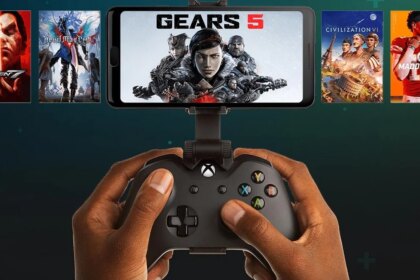
Ready to Connect Your Console to Your Phone?
There is another issue that tends to get overlooked when people talk about an all-digital gaming future: internet access.
Modern consoles already depend heavily on online services. Games receive updates, accounts are authenticated, licenses are checked, and many titles require an internet connection for certain features.
Physical media can sometimes provide an additional layer of independence.
That becomes particularly noticeable when you travel.
Imagine taking your console to a location with unreliable internet access. With a digital-only library, access to some games may depend on whether the console can authenticate your license or connect to the required services.
In that situation, a smartphone hotspot could become the solution.
But that brings its own problems.
You need mobile coverage. You need enough data. You need a suitable plan. You also need the game and console to function correctly with the available connection.
For people living in areas with unreliable broadband or mobile networks, this is not a minor inconvenience.
An increasingly digital gaming ecosystem assumes that players will have reliable internet access.
Not everyone does.
The Game Is Literally Not Yours
This is the point at which the debate over digital gaming becomes more philosophical.
When you purchase a physical game, you receive a physical copy that you can possess independently of a digital storefront.
Digital games are different.
A digital purchase generally gives you a license to access the software under the platform’s terms. That license is connected to your account and can be affected by account restrictions, platform policies, licensing agreements, and the continued availability of the service.
That does not mean companies routinely remove games from people’s libraries without reason. But it does mean digital ownership does not provide exactly the same control as physical ownership.
The history of gaming already contains examples that demonstrate the problem.
Concord, The Crew, and Driveclub have all been discussed in the context of games becoming unavailable after release.
When a game is removed from sale, future customers may lose the ability to purchase it. When online services are shut down, the situation can become even more serious if the game depends on those services to function.
A physical copy cannot solve every preservation problem, especially when a game requires servers to operate.
But it gives players something tangible that remains in their possession.
That distinction becomes increasingly important as more games become dependent on digital infrastructure.
The End of Physical Game Stores
There is also a cultural side to the decline of physical games.
Think about the local game store.
For many players, it was more than a place to buy software. It was somewhere to discover games, talk to other players, compare prices, trade old titles, find accessories, and occasionally participate in tournaments or promotional events.
You could walk into a store without knowing exactly what you wanted and leave with something completely unexpected.
Digital storefronts cannot completely reproduce that experience.
They can recommend games through algorithms, highlight promotions, and show trailers, but browsing a physical shelf is fundamentally different.
As physical game sales decline, retailers have to change their business models. Companies such as GameStop have already expanded beyond the traditional model of simply selling new games.
That transformation reflects a broader reality.
When physical games disappear, dedicated game stores have fewer reasons to exist in their traditional form.
And once those stores disappear, rebuilding that physical gaming culture may be extremely difficult.
Preservation Could Suffer Too
Perhaps the most important argument for physical media has nothing to do with convenience.
It is preservation.
Video games are part of cultural history. They represent the technology, art, music, storytelling, and design philosophies of their time.
Yet games can be surprisingly difficult to preserve.
A title may depend on a particular console, server, operating system, storefront, license, or online authentication system. When one of those components disappears, accessing the original game can become difficult.
Physical copies provide an important preservation resource.
Collectors, museums, archives, libraries, and preservation groups can maintain physical games long after publishers stop selling them.
That does not guarantee permanent access. Discs can deteriorate, hardware can fail, and older games may require obsolete systems.
But the existence of a physical copy gives preservationists something tangible to work with.
A completely digital game that disappears from a storefront and depends on servers can present a much bigger challenge.
This is why the end of physical media is about more than nostalgia.
It is also about whether future generations will be able to experience the history of gaming.
The End Will Come, and You May Miss It
The gaming industry is clearly moving toward a more digital future.
Whether physical media disappears completely, however, remains a much bigger question.
There will likely continue to be collectors, enthusiasts, retailers, and players who prefer physical games. Some markets may retain physical releases longer than others, and certain publishers may continue producing discs or cartridges for specific titles.
But the direction of travel is difficult to ignore.
Digital distribution gives platform holders greater control and can reduce many of the costs associated with manufacturing, shipping, and storing physical products.
For consumers, the trade-off is convenience in exchange for some of the freedoms that physical media provided.
You may download a game instantly, but you cannot necessarily lend it.
You may have hundreds of games in your library, but you do not necessarily have physical copies that can survive independently of the platform.
You may receive frequent digital discounts, but you lose the ability to shop across a large second-hand market.
And when a game disappears from a digital storefront, finding another copy may not be as simple as visiting a used-game store.
Will Gamers Actually Fight Back?
Players have already expressed frustration about the industry’s increasing reliance on digital distribution. Petitions, social-media campaigns, boycotts, criticism of subscription services, and calls for stronger consumer protections are all ways communities can make their opinions known.
But companies ultimately respond to economic incentives.
If players continue to purchase digital games, subscriptions, downloadable content, and digital-only hardware at increasingly high rates, the industry will have little financial incentive to reverse course.
That does not mean consumers have no influence.
The strongest influence remains purchasing behaviour.
Players can choose whether to buy a game at launch, wait for a discount, purchase a physical copy when one is available, support preservation efforts, or continue subscribing to a particular service.
The gaming industry is ultimately a business.
If consumers consistently demonstrate that ownership, preservation, resale, and offline access matter to them, companies have a reason to respond.
If consumers accept the opposite, the industry will continue moving in that direction.
Gaming Is Becoming More Like a Service
The shift away from physical games is happening alongside two other major changes in the industry: the increasing service-based nature of games and the growing importance of short-form, algorithm-driven content.
Games are no longer always sold as individual products that are released, completed, and left alone.
Live-service games, seasonal content, subscriptions, battle passes, digital stores, and constant updates have transformed the relationship between players and publishers.
At the same time, gaming culture is increasingly shaped by platforms such as TikTok, YouTube, and social media, where games compete for attention in short, rapidly changing content cycles.
The result is an industry where the game itself is increasingly connected to a wider digital ecosystem.
That ecosystem offers enormous convenience.
But it also gives companies more control.
And that is ultimately why the end of physical gaming deserves more discussion than simply asking whether players prefer discs or downloads.
The real question is whether the digital future can preserve the rights, freedom, affordability, and cultural history that physical games once provided.
Because once the shelves are empty, the stores are gone, and the last physical copies become collector’s items, bringing that system back may be far more difficult than anyone expects.