
Artificial intelligence is expected to occupy an even more central role in people’s daily lives by 2026. What was once limited to chatbots and experimental tools is rapidly becoming embedded in devices, apps, operating systems, and work processes.
AI is no longer just about asking questions-it is about delegating actions, automating decisions, and augmenting human capabilities across personal and professional contexts.
Below are 6 major expectations for AI in 2026, explained in depth, with a focus on how this technology may reshape everyday life, work, and digital experiences.
1. Greater presence of AI in everyday life
AI has already transitioned from novelty to everyday utility, and this trend is expected to continue accelerating.
According to the study “How Often People Use ChatGPT Across 21 Countries” by Visual Capitalist, 18% of Americans interacted with ChatGPT almost every day in 2025, placing the United States among the countries with the highest daily chatbot usage globally, just behind India, according to the same survey data.
By 2026, this presence will be even more pronounced:
- AI will be embedded directly into smartphones, browsers, and operating systems
- Users will rely on AI for search, writing, planning, translation, and decision-making
- Assistants will feel less like apps and more like ambient digital companions
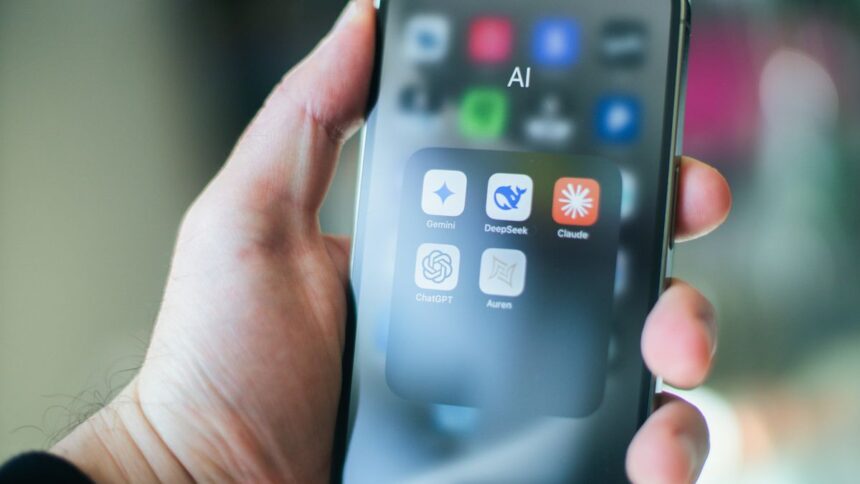
The arrival of Apple Intelligence, the expansion of Gemini on Android, and AI-powered browsers from OpenAI, Perplexity, and Opera reinforce this shift. AI will increasingly act as a personal assistant, capable of responding to context, habits, and preferences-often proactively rather than reactively.
2. Autonomous agents
One of the most transformative developments expected by 2026 is the rise of autonomous AI agents. Unlike traditional chatbots, agents are designed not just to answer questions but to perform multi-step actions on behalf of users.
Examples include:
- Organising calendars and training routines
- Creating shopping lists and placing orders
- Planning trips, comparing prices, and booking tickets
In the corporate world, tools like Microsoft 365 Copilot already allow users to generate presentations, analyse spreadsheets, and summarise documents using simple prompts. Meanwhile, ChatGPT Agent can browse the web, compare options, and assist with complex planning tasks.
As these agents mature, they will:
- Operate across multiple apps and platforms
- Make decisions based on user-defined goals
- Reduce the cognitive load of repetitive tasks
This marks a shift from AI as a tool to AI as a digital collaborator.
3. AI at work
AI adoption in the workplace is no longer speculative-it is strategic. A recent report by McKinsey & Company shows that nine out of ten companies plan to increase AI investments over the next three years.
Additionally, a global analysis by PwC highlights that:
- Revenue per worker grows three times faster in sectors most exposed to AI
- Skills in AI-driven roles are changing 66% faster than in other jobs
By 2026, AI is expected to:
- Automate routine and administrative tasks
- Enhance productivity through intelligent workflows
- Support decision-making with real-time insights
However, this acceleration also demands continuous upskilling. Workers will need to adapt quickly, focusing on creativity, critical thinking, and AI literacy to remain competitive in an AI-augmented job market.
4. AI-powered devices
AI is expected to move beyond smartphones and laptops into a new generation of dedicated AI-first devices. Among the most anticipated developments is a hardware product from OpenAI designed around ChatGPT, although no official release date has been confirmed.
Beyond this, AI will increasingly be embedded in:
- Cars, with Gemini debuting on Android Auto
- Smart glasses capable of real-time translation and visual assistance
- Home appliances such as refrigerators and washing machines with built-in intelligence
These devices will allow users to interact with AI hands-free and contextually, even without a phone nearby. At the same time, this expansion raises important concerns around data security, surveillance, and privacy, which will likely become central topics in public and regulatory debates.
5. More AI-generated content
By 2026, AI-generated content-text, images, audio, and video-will be ubiquitous. Tools are becoming faster, more realistic, and easier to use, even for non-technical users.
Recent advances include:
- Models capable of generating photorealistic images with readable text
- Platforms that combine creation, editing, and sharing in one place
One standout example is Sora 2, which not only enables high-quality video generation but also functions as a social sharing environment where users can explore and remix content.
While this technology empowers designers, marketers, educators, and creators, it also intensifies concerns about:
- Copyright and intellectual property
- Deepfakes and misinformation
- Violent or manipulated media
As a result, regulation, watermarking, and ethical guidelines will become increasingly important.
6. Beyond chatbots
Although chatbots remain the most visible face of AI, they are only one piece of a much larger ecosystem. By 2026, AI will be deeply integrated into specialised applications across industries.
Examples include:
- Travel planning apps that build full itineraries
- Food delivery platforms that anticipate preferences
- Image and video editors powered almost entirely by AI
In healthcare and wellness, AI is also expected to play a bigger role. The iPhone Health app, for instance, may gain advanced AI features that analyse data from wearables to provide personalised fitness guidance, health insights, and habit recommendations.
This evolution points to a future where AI operates quietly in the background, enhancing experiences rather than demanding constant interaction.
By 2026, artificial intelligence will no longer feel like a separate technology-it will be woven into daily routines, professional workflows, and physical devices. The challenge will not be access to AI, but learning how to use it responsibly, creatively, and effectively in a world where intelligence is increasingly augmented by machines.