
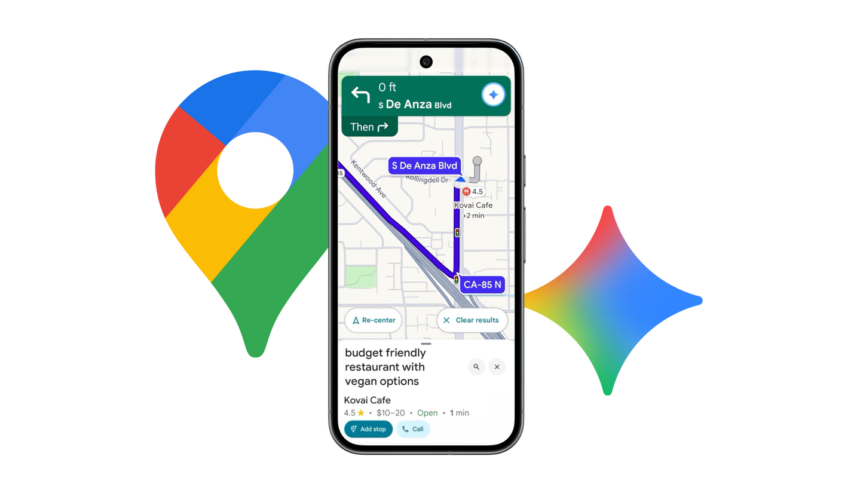
Google is extending the reach of its Gemini-powered navigation assistant in Maps, bringing conversational, hands-free support to pedestrians and cyclists for the first time. Previously limited to driving, the AI feature is now rolling out across all supported regions and platforms, including both Android and iOS devices.
The expansion marks a shift in how Google envisions navigation assistance. While in-car guidance has long been the focus of smart navigation tools, walking and cycling often demand greater situational awareness and quicker access to contextual information. With Gemini now active outside the car, Google aims to make Maps more responsive to how people actually move through cities.
Context-Aware Help on the Move
For users exploring unfamiliar neighbourhoods on foot, Gemini can now answer location-based questions in real time. Simple voice prompts, such as asking which neighbourhood you are currently in, can trigger immediate, context-aware responses. Follow-up questions-like requesting nearby highly rated restaurants or notable landmarks-draw directly from Google Maps’ live database, offering relevant suggestions without the need to stop and type.
This hands-free approach is designed to keep users engaged with their surroundings while still allowing them to access useful information. Rather than interrupting a walk to search manually, users can rely on spoken queries and responses tailored to their current location and route.

Safer Assistance for Cyclists
Cyclists also gain access to Gemini’s navigation features, with an emphasis on safety and minimal distraction. Voice commands let riders check estimated arrival times, confirm upcoming appointments, or handle simple communication tasks without taking their hands off the handlebars.
With user permission, Gemini can send messages, update calendars, and handle other actions in connected apps. For example, a cyclist running late can dictate a quick message to a contact while staying focused on the road ahead. Google notes that these integrations require explicit consent, ensuring users retain control over how the assistant interacts with personal data.
Global Rollout Across Platforms
The update is being deployed globally, wherever Gemini is already supported, and does not require a specific mode of transportation to be selected beyond walking or cycling in Google Maps. This broad rollout reflects Google’s intention to make AI-assisted navigation a standard feature rather than a driving-only convenience.
By extending Gemini beyond vehicle navigation, Google is positioning Maps as a more adaptive, real-time companion for everyday movement. Whether on foot, on a bike, or behind the wheel, the company is betting that conversational AI will become a central part of how users interact with navigation tools.
- Share Your Current Location via Google Maps
- How to Use Street View on Google Maps
- Can I Recover Deleted Google location history?