
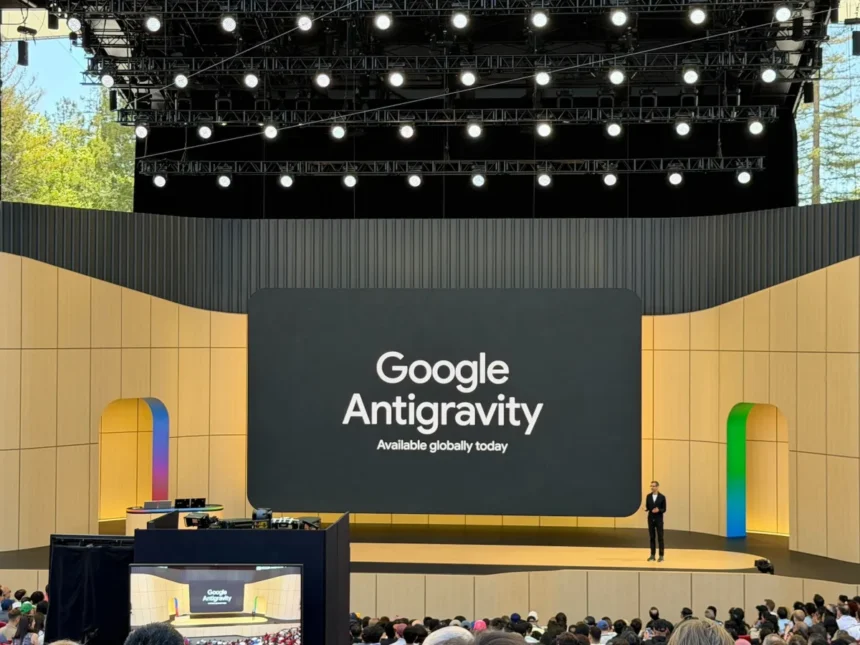
Google is giving Windows developers more attention with its latest AI development push. The company is working on better native Windows support for Antigravity, its AI agent-focused programming platform, and has specifically confirmed that Windows Subsystem for Linux (WSL) support is in development.
Rody Davis, who works on the Antigravity and Google DeepMind teams, confirmed the plans in a recent discussion, saying the team is working on “WSL and better native Windows support.” He also indicated that Google wants to take the time needed to implement the features properly.
The move could be significant for developers who use Windows as their primary desktop platform but depend heavily on Linux-based development tools.
Antigravity Is Expanding Beyond Basic AI Coding
Antigravity 2.0 is Google’s standalone AI development environment for Windows, macOS and Linux. Instead of simply generating code from prompts, the platform is built around AI agents that can work on projects, execute commands and carry out development tasks with a degree of autonomy.
Google has been expanding those capabilities quickly.
Recent additions include an integrated terminal, Git support, remote access to agent sessions and extensions for development environments, including Visual Studio, Visual Studio Code, JetBrains tools and Xcode.
The Windows version, however, still has room for improvement, particularly for developers who rely on WSL.
WSL Could Become a Major Part of Antigravity
WSL has become a key component of modern Windows development because it gives users access to Linux distributions and tools without requiring a separate operating system.
For Antigravity, deeper WSL integration could allow its AI agents to work directly with files, commands, build systems and development utilities inside a Linux environment running through Windows.
That would make the platform considerably more useful for projects where the development workflow depends on Linux-specific tooling.
Google has not explained exactly how its planned WSL integration will work. The company has also not said whether “better native Windows support” involves a major redesign of the application or changes to its underlying Windows implementation.
For now, the details remain limited.
Google Isn’t Alone in Targeting WSL
The growing interest in WSL reflects a broader shift in how AI coding tools are being designed for Windows.
GitHub Copilot has also been experimenting with WSL support, allowing some of its agent-based workflows to operate inside Linux environments.
That makes WSL increasingly relevant as AI coding agents become more capable. Developers are no longer simply asking AI to suggest a few lines of code. These systems can increasingly inspect projects, run commands, modify files, execute builds and interact with development environments.
Giving those agents access to the same Linux-based tools developers already use could therefore become an important part of the Windows development experience.
Google’s decision to invest more heavily in Windows support also highlights how important Microsoft’s platform remains to the developer ecosystem.
Antigravity is competing in an increasingly crowded market that includes tools such as Codex and AI-powered features built into established development environments. Better WSL integration could help Google make Antigravity more practical for developers who primarily work on Windows.
For now, Google has confirmed the direction but not the final implementation. Whether that eventually results in deeper system integration or simply a better experience inside WSL remains to be seen.