
Microsoft is preparing a new class of Windows 11 devices designed specifically for developers, aiming to reduce the time and effort typically required to set up a new PC for software development.
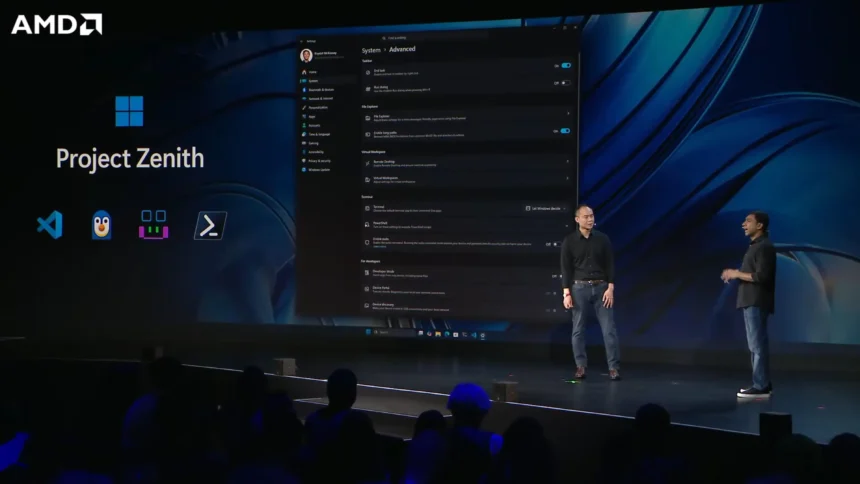
Revealed at IFA 2026, Project Zenith is Microsoft’s codename for a developer-focused hardware and software configuration. Rather than introducing another edition of Windows 11, the project establishes hardware requirements and changes how the operating system is configured before a device reaches the customer.
Zenith systems are expected to continue using standard Windows 11 Home or Windows 11 Pro licenses, depending on the manufacturer. The difference lies in the hardware specifications and the configuration Microsoft applies before the PC is shipped.
Microsoft is establishing minimum hardware requirements for devices that qualify for the Zenith configuration. Systems will need at least 64GB of unified memory and a memory bandwidth of 250GB/s or more.
The requirements are intended to ensure that developers have enough performance for modern software development workloads, particularly as local artificial intelligence becomes a larger part of application development.
Devices that do not meet those requirements will continue to ship with the standard Windows 11 configuration.
Windows 11 With Fewer Setup Steps
One of the main goals behind Project Zenith is to eliminate much of the initial configuration work developers typically face after buying or deploying a new Windows PC.
Developers have increasingly criticized the amount of time needed to prepare Windows machines for development. Depending on the software stack and company requirements, setting up a new system can involve installing development tools, changing system preferences and removing unwanted distractions before work can begin.
Zenith attempts to address that problem at the factory.
Qualifying PCs will come with development software such as Visual Studio and GitHub Copilot pre-installed. Microsoft is also changing several Windows defaults to create a workspace that is more suitable for developers immediately after setup.
File Explorer, for example, will show file extensions and hidden files by default. The full path will also be displayed in the title bar, while the details pane and long-path support will already be enabled.
Microsoft is also disabling several features that can create unnecessary distractions. Recently used files and folders, along with sync provider suggestions, will be turned off. Search and Start will have Command Palette enabled, while Start menu tips and account-related notifications will be disabled.
Although these changes may appear relatively minor, they could save developers considerable setup time, particularly when organizations need to prepare large numbers of machines.
Existing PCs Can Be Configured the Same Way
Developers do not necessarily need to purchase a Zenith-certified PC to benefit from Microsoft’s configuration changes.
The same Windows settings can be applied manually to an existing Windows 11 machine. Doing so requires additional setup, but it allows developers to recreate much of the Zenith experience without replacing their current hardware.
The hardware requirements, however, cannot be added through software configuration alone.
AMD Systems Will Lead the Launch
Microsoft says the first Project Zenith devices will be based on AMD’s Ryzen AI Halo processors. Other hardware platforms are expected to join the program later, with Nvidia’s RTX Spark platform also expected to become part of the ecosystem.
Microsoft has not yet disclosed which PC manufacturers will produce the first Zenith systems or provided a specific release date for the devices.
Project Zenith comes as Microsoft looks to strengthen Windows’ position among developers at a time when local AI workloads are becoming increasingly important. By combining capable hardware with development tools and a more focused Windows configuration, the company is attempting to make a new Windows PC usable for development with far less preparation.
For developers who regularly spend hours configuring new machines, Project Zenith could be a more meaningful change than its relatively simple Windows settings might initially suggest.