
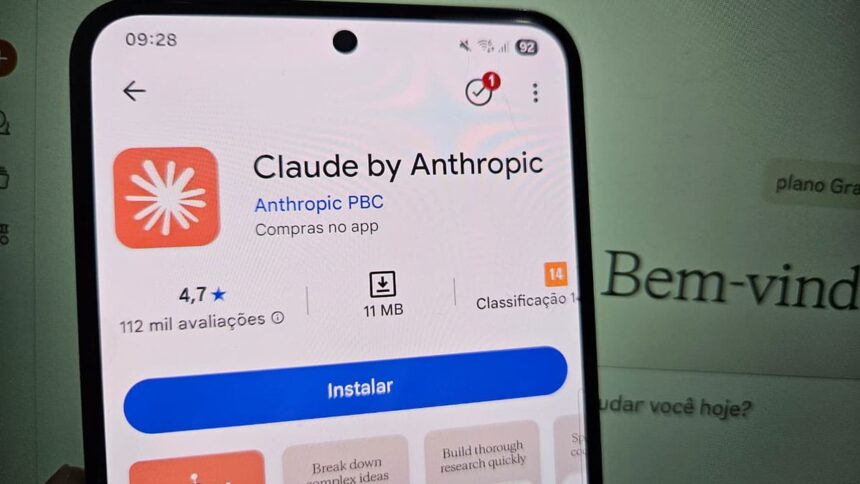
Anthropic has introduced Claude Opus 4.6, its most advanced artificial intelligence model to date. Built to handle demanding professional workloads, Opus 4.6 focuses on deep reasoning, software development, and the ability to work with massive amounts of information while maintaining accuracy and consistency over long sessions.
What is Claude Opus 4.6?
Claude Opus 4.6 is designed for complex, multi-step work that requires careful analysis and long-term context. Unlike lighter models meant for quick responses, this version is built to support extended tasks such as large research projects, detailed technical analysis, enterprise workflows, and full development cycles.
One of its standout features is a context window of up to 1 million tokens. This allows the model to read and process extremely large inputs-such as full codebases, lengthy contracts, research archives, or entire document collections-without losing track of earlier information.
Another key capability is adaptive reasoning. The model automatically adjusts how deeply it analyses a problem based on the task. Simple requests receive quick answers, while complex problems trigger more detailed, structured thinking. This makes it suitable for managing long projects from beginning to end while keeping outputs consistent and relevant.
Key differences and improvements
Claude Opus 4.6 introduces several upgrades that set it apart from earlier versions:
Handles long and complex workflows
The model is built to stay reliable during extended interactions. It can follow multi-stage instructions, track progress across conversations, and support projects that require ongoing refinement without losing coherence.
Massive context capacity
With a context window of up to 1 million tokens, Opus 4.6 can:
- Review entire software repositories
- Analyze large legal or financial documents
- Compare multiple reports at once
- Work with extensive research materials in a single session
This reduces the need to split information across multiple prompts.
Adaptive thinking
Instead of applying the same reasoning depth to every request, the model adjusts automatically. For complex tasks, it breaks down problems, evaluates multiple possibilities, and produces structured solutions. For simpler tasks, it responds quickly and efficiently.
Strong performance in technical tasks
Opus 4.6 delivers improved results in:
- Programming and debugging
- Data analysis and modeling
- Logical and mathematical reasoning
- Scientific and technical problem-solving
In internal and external benchmarks, it performs better than earlier Claude models, particularly in professional and research-focused scenarios.
How to use Claude Opus 4.6
The model is available through several platforms, depending on your needs:
- Claude web interface at claude.ai
- Anthropic API for developers building applications
- Cloud platforms such as Amazon (via Bedrock) and Google (via Vertex AI)
- Claude Code for development workflows
Anthropic is also testing integrations with productivity tools such as Excel and PowerPoint. These features are currently in preview for Max, Team, and Enterprise users and are aimed at helping professionals automate analysis, reporting, and presentation tasks.
Is Claude Opus 4.6 free?
No, Opus 4.6 is not available on a free plan. Access through the Claude website requires a Pro, Max, Team, or Enterprise subscription.
For API users, pricing is based on token usage. Sessions that use the extended 1-million-token context window cost more because they require more computing resources.
Who is it built for?
Claude Opus 4.6 is aimed at users who need a dependable AI partner for demanding work, including:
- Software engineers and technical teams
- Data analysts and researchers
- Legal, financial, and enterprise professionals
- Organizations managing large document workflows
- Teams running long, structured projects
With its ability to handle large-scale information, maintain long-term context, and adapt its reasoning depth, Opus 4.6 is positioned as a high-end model for serious professional use rather than casual tasks.
- Anthropic Pledges to Keep Claude Ad-Free as Rival Chatbots Embrace Advertising
- Artificial Intelligence and Its Impact on Human Creativity
- What are Claude’s artifacts