

The AMD Strix Halo APUs are currently among the most powerful, featuring Zen 5 cores, RDNA 3.5 graphics, and XDNA 2 AI accelerators. While these chips have been designed for high-performance laptops, they are now making their way to desktop PCs.
AMD CEO Lisa Su confirmed this exciting news during a recent conversation with Asus China on Bilibili. When Tony Yu, Asus China’s General Manager, asked whether Strix Halo CPUs would be coming to desktops, Su simply responded: “Yes, of course”-without providing further details.
While this confirms Strix Halo’s transition to desktops, it likely won’t happen traditionally. Let’s take a closer look at what this means.
CPUS Strix Halo in Mini PCs
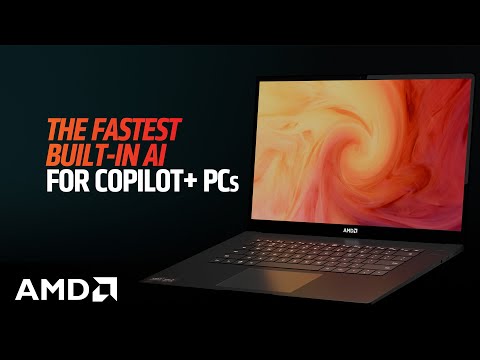
Since Strix Halo processors are designed for laptops, they are soldered onto the motherboard rather than a traditional AM5 socket, making direct compatibility with standard desktop builds impossible. Instead, these powerful chips are more likely to appear in mini PCs from brands like Minisforum and Framework-the latter have already launched Ryzen AI 300-based small PCs.
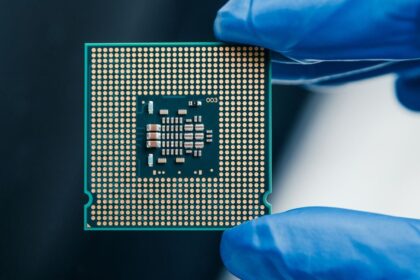
Adapting a mobile CPU for desktop use is not a simple process. The entire chip layout and encapsulation would need to be redesigned, making it almost like developing a new processor from scratch. On top of that, there are more complex technical challenges involved in transitioning a laptop APU to a desktop-ready format.
Current Best Desktop APU Option
The best APU solution for desktops remains the Ryzen 7 8700G, featuring Zen 4 cores and RDNA 3 graphics. Its Radeon 780M iGPU delivers performance comparable to a GTX 1650, making 1080p gaming possible even in demanding titles.
How Strix Halo Compares
One of AMD’s most powerful mobile APUs, the Ryzen AI Max+ Pro 395, boasts:
- 40 RDNA 3.5 Compute Units → Capable deliver 60 FPS in high settings at 1080p in many modern games.
- 16 Zen 5 Cores → Ensuring top-tier processing power.
- XDNA 2 AI Accelerators → Enhancing AI-based tasks and workloads.
If Strix Halo APUs do make their way into mini PCs or custom small form-factor desktops, they could offer unparalleled performance in a compact and efficient package. However, a full-fledged desktop variant would require significant modifications, making it an interesting development.