
Apple continues to expand its lineup of custom Silicon chips, making it increasingly difficult for buyers to understand the differences between each generation. While the M3 and M4 chips both deliver major performance gains over the M2, they target different devices and use cases rather than competing directly.
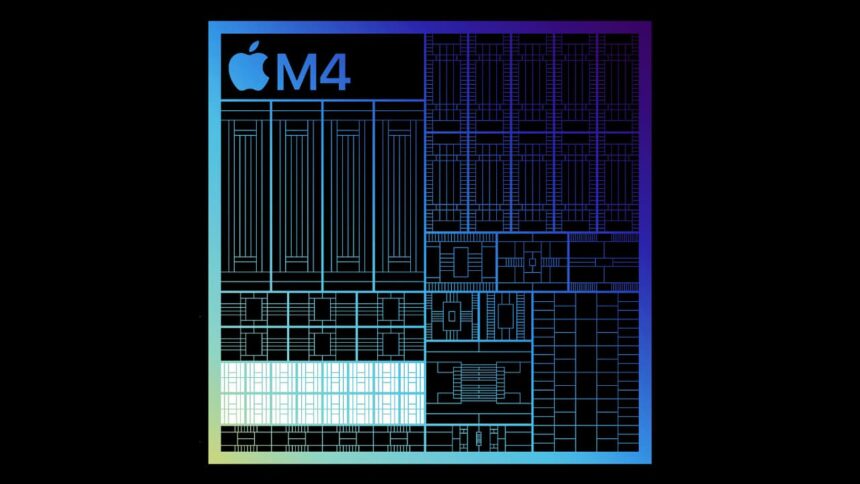
The M4 chip powers the 2024 iPad Pro lineup and focuses on improving tablet performance, graphics, and artificial intelligence workloads. It supports up to 16GB of unified memory and brings significant improvements for creative apps, multitasking, and demanding workflows.
The M3 family, introduced across Apple’s 2023 Mac lineup, includes the M3, M3 Pro, and M3 Max. These chips offer higher performance options for professional users, with support for up to 128GB of unified memory on the M3 Max. Apple positions the M3 series for intensive workloads such as video editing, software development, 3D rendering, and gaming.
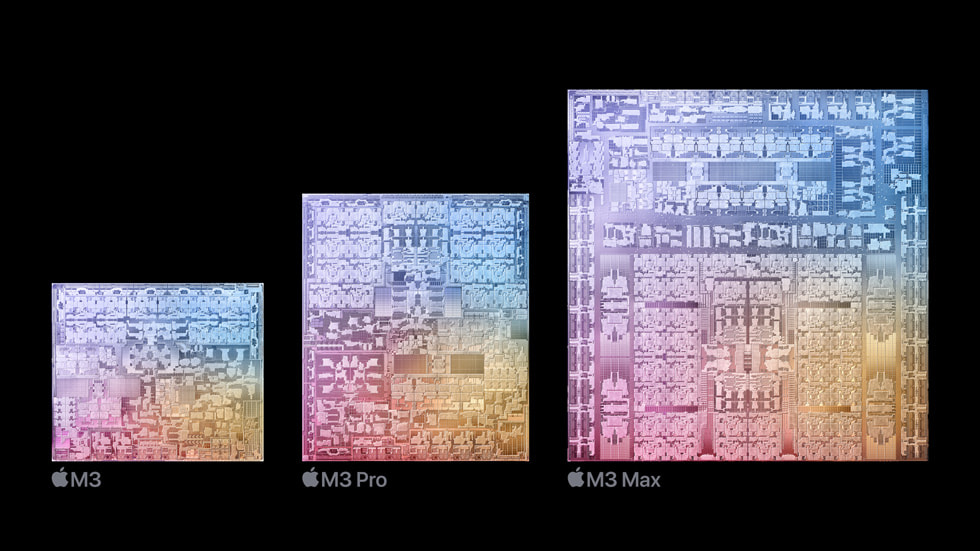
Since Apple does not currently offer an M3-powered iPad or an M4-powered Mac, consumers cannot directly choose between the two chips without first deciding on the type of device they want.
Device Availability
Apple equips the M4 chip exclusively in the 11-inch and 13-inch 2024 iPad Pro models.
The M3 series powers several Mac devices, including the 13-inch and 15-inch MacBook Air, 14-inch and 16-inch MacBook Pro, and the 24-inch iMac. The Mac mini and Mac Pro continue to use M2-series processors.
Buyers should also note that the MacBook Air remains available with either the M2 or M3 chip, while the M3 Pro and M3 Max are exclusive to the MacBook Pro lineup.
Performance and Memory
Apple designed both chip generations as successors to the M2, delivering noticeable improvements in speed and efficiency.
The M4 features 28 billion transistors, compared with 25 billion in the standard M3. The M3 Pro increases that number to 37 billion, while the M3 Max reaches 92 billion, providing substantially greater computing power for professional workloads.
Memory capacity also separates the two families. The M4 supports up to 16GB of unified memory, while the standard M3 ranges from 8GB to 16GB. Users who choose the M3 Max can configure systems with up to 128GB, making it a better fit for memory-intensive tasks.
Apple says the M4 delivers up to four times faster professional rendering than the M2, while the M3 family offers up to 15% better overall performance than comparable M2 models.
CPU and GPU Comparison
The M4 includes a 10-core CPU and 10-core GPU, providing a balanced combination of computing and graphics performance.
The standard M3 features an 8-core CPU paired with a 10-core GPU. Performance increases significantly with the higher-end models.
- M3 Pro: Up to a 12-core CPU and 10-core GPU
- M3 Max: Up to a 16-core CPU and 40-core GPU
For professional users handling complex video editing, 3D graphics, or software development, the M3 Max offers considerably more processing power than the M4.
AI Performance
Artificial intelligence is one of the biggest improvements in the M4 generation.
Apple says the M4’s Neural Engine can perform up to 38 trillion operations per second, making it the company’s fastest AI processor to date. This enables faster machine learning, image processing, and AI-assisted features on the iPad Pro.
The M3 Neural Engine reaches up to 18 trillion operations per second, which remains powerful for everyday AI tasks but falls well behind the M4 in raw processing capability.
The M3 and M4 chips serve different segments of Apple’s ecosystem rather than replacing one another.
The M4 focuses on delivering exceptional tablet performance with faster AI processing, improved graphics, and better efficiency for the iPad Pro.
The M3 family remains the stronger option for users who need desktop-class computing power. The M3 Pro and especially the M3 Max offer significantly higher CPU, GPU, and memory capabilities, making them better suited for demanding professional workloads.
For most everyday users, both chips provide excellent performance and represent substantial upgrades over the M2. The right choice ultimately depends on whether you need the portability and touch-first experience of the iPad Pro or the expanded capabilities of Apple’s Mac lineup.