

Apple’s iPhone lineup now includes two very different premium options: the conventional iPhone 18 Pro and the new foldable iPhone Duo. While the iPhone 18 Pro continues Apple’s familiar Pro design, the Duo introduces a foldable form factor, a larger internal display, and a different approach to how an iPhone is used.
The two models share Apple’s new A20 Pro chip and several other hardware features, but they are designed for very different users. The iPhone 18 Pro focuses heavily on cameras, sustained performance, and the traditional smartphone experience. The iPhone Duo puts more emphasis on its foldable display, portability when unfolded, and new ways to use the device.
So how do the iPhone 18 Pro and iPhone Duo compare? Here’s a detailed look at their design, displays, performance, battery life, cameras, security features, and specifications.
iPhone 18 Pro vs iPhone Duo: Design
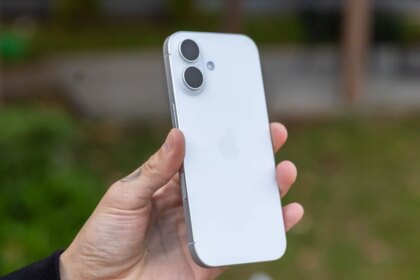
The iPhone 18 Pro retains the design language of its predecessor, with Apple’s familiar Pro-series appearance and a conventional smartphone body. The iPhone Duo takes a completely different route with a foldable design and a much wider shape when closed.
The Duo measures 117.8mm tall and 84.1mm wide when folded. It is 11.3mm thick in that configuration. Once opened, the device measures just 5.2mm thick, giving it a considerably slimmer profile than its folded dimensions suggest.
The iPhone 18 Pro measures 150mm tall and weighs 211 grams, while the iPhone 18 Pro Max weighs 249 grams. The iPhone Duo weighs 254 grams, making it only slightly heavier than the Pro Max despite its folding hardware.
For users who want a conventional phone that is easier to carry in a pocket, the smaller iPhone 18 Pro has a more compact overall design. The Duo, however, offers a much larger workspace once unfolded.
iPhone 18 Pro and iPhone Duo Colors
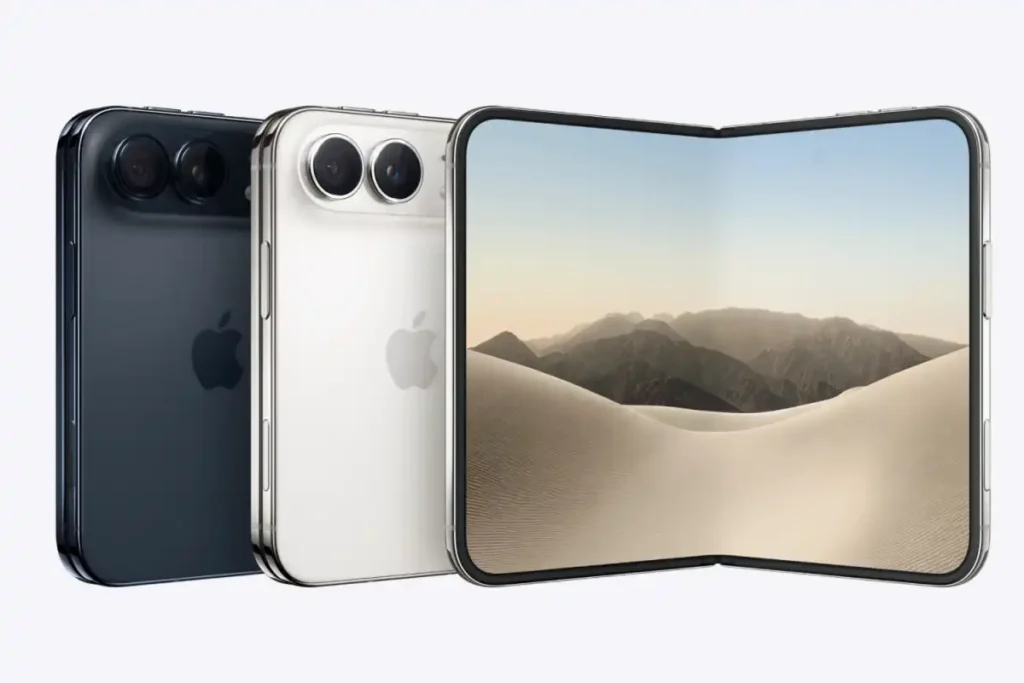
The iPhone 18 Pro is available in Black, Silver, Polar, and Burgundy. The iPhone Duo has a simpler selection with Night Sky and Starry White finishes.
The Duo also uses a titanium housing, while the iPhone 18 Pro models feature aluminium frames with Ceramic Shield 2 on the front.
Display: iPhone Duo has the Bigger Advantage
The display is one of the biggest differences between these two iPhones.
The iPhone 18 Pro has a 6.3-inch Super Retina XDR display, while the iPhone 18 Pro Max has a 6.9-inch Super Retina XDR display. Both use OLED panels with ProMotion refresh rates of up to 120Hz, Always-On functionality, HDR support, and a wide P3 color gamut.
The iPhone Duo uses two displays. Its outer screen measures 5.4 inches, while the internal foldable screen expands to 7.6 inches.
The larger inner display uses a 3:2 aspect ratio, giving it a shape closer to that of a small tablet or book than to a traditional smartphone. That extra screen area can be useful for multitasking, watching videos, browsing, and apps that benefit from a larger workspace.
However, the external 5.4-inch display is relatively small. Since users will often interact with the phone while it is folded, this could make everyday tasks feel more constrained than on the iPhone 18 Pro.
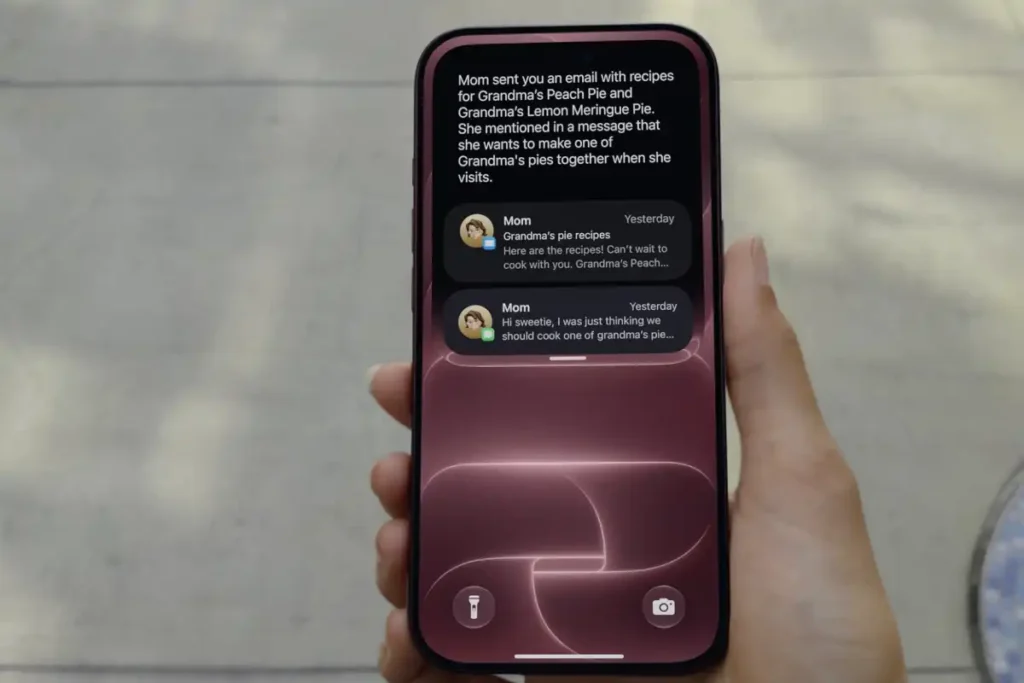
All three models can reach up to 3,000 nits of outdoor brightness and support wide color reproduction.
The Duo also uses a matte nanotexture finish on its internal display. Besides reducing reflections, the finish helps make the center crease less distracting.
Apple Pencil Support
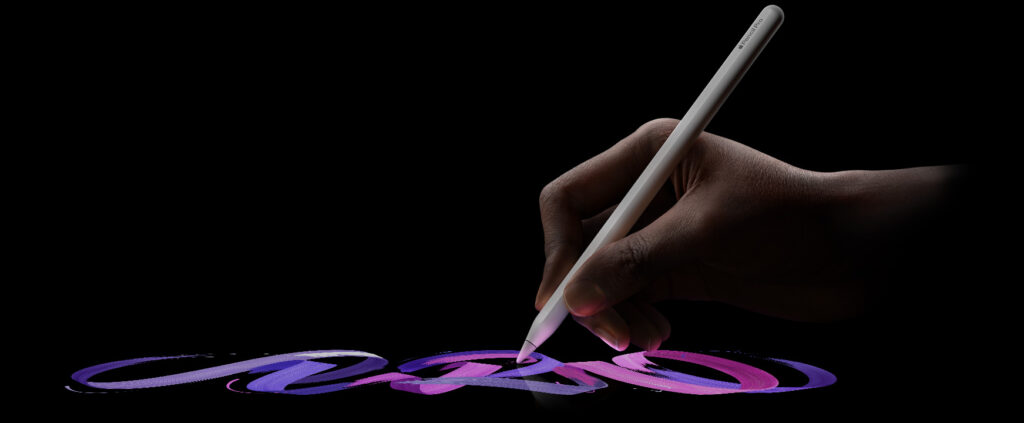
Another difference is stylus support. The iPhone Duo is expected to support the Apple Pencil, whereas the iPhone 18 Pro does not.
A20 Pro Performance
Performance is broadly similar across the iPhone 18 Pro, iPhone 18 Pro Max, and iPhone Duo because all three use Apple’s A20 Pro chip.
The A20 Pro is based on a 2nm manufacturing process and is expected to deliver higher performance while improving power efficiency. CPU performance is reported to be up to 20% faster than the previous A19 Pro.
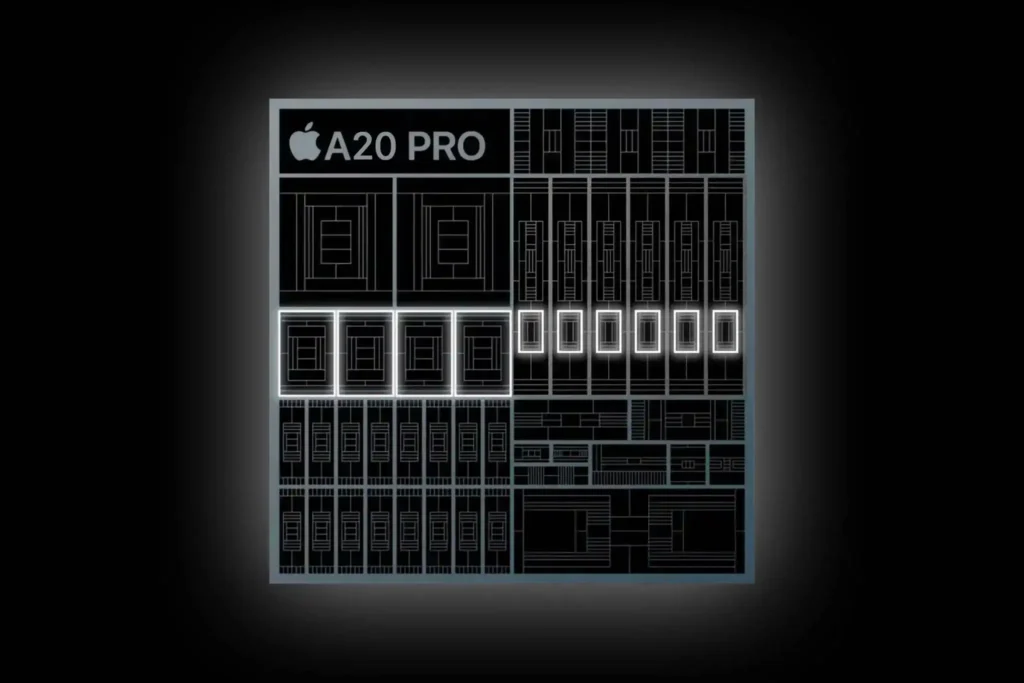
The chip also includes a seven-core GPU with Neural Accelerators, compared with the iPhone 17 Pro’s six graphics cores.
All three phones use a vapour cooling system. Sustained performance could still vary across models because cooling efficiency depends in part on internal design and available space. Long-duration testing will be needed to determine how the thinner Duo handles demanding workloads.
Battery Life
Battery performance varies considerably depending on the model and, in the case of the iPhone Duo, the display you use. The iPhone 18 Pro is rated for up to 36 hours of video playback, while the iPhone 18 Pro Max reaches up to 43 hours.
The Duo can deliver up to 44 hours of battery life when using its external display. However, the larger internal screen is rated for up to 31 hours of video playback. This means the Duo’s battery life can vary significantly depending on how often you unfold the phone and use the larger display.
All three models support wireless charging through Qi2 and MagSafe.
Camera Comparison
The camera system is where the iPhone 18 Pro has a clear hardware advantage over the iPhone Duo.
The iPhone 18 Pro features a three-camera rear system consisting of a 48MP Fusion main camera, a 48MP ultra-wide camera, and a 48MP Fusion telephoto camera with 4x optical zoom.
The Duo has two rear cameras: a 48MP Fusion main camera and a 48MP ultra-wide camera. It does not include a dedicated telephoto lens, relying instead on digital zoom for 2x magnification.
Variable Aperture on the iPhone 18 Pro
The iPhone 18 Pro introduces a variable-aperture main camera with four selectable settings:
- f/1.48
- f/1.8
- f/2.8
- f/4.0
The wider f/1.48 aperture allows more light into the camera than the f/1.7 aperture found on the iPhone 17 Pro. The Duo’s main camera uses an f/1.6 aperture.
Apple also claims improvements of up to 50% in photography and Night mode performance compared with the iPhone 17 Pro.
The iPhone 18 Pro additionally offers more advanced image stabilization and a four-microphone setup for audio recording.
Pro Photography and Video Features
The iPhone 18 Pro also has several professional camera features that are missing from the Duo.
The Pro model supports:
- ProRAW
- Spatial photos
- Apple Reference Image
- SynthID
- ProRes RAW
- Apple Log2
- Genlock
The Duo does not support these professional imaging and video formats.
For photographers and video creators, the iPhone 18 Pro therefore offers a considerably more complete camera package.
Front Camera
The iPhone 18 Pro uses an 18MP Center Stage front camera with an f/1.9 aperture.
The iPhone Duo takes a different approach because of its two-screen design. It has a 12MP Center Stage camera on the outer display and a separate FaceTime camera beneath the internal display.
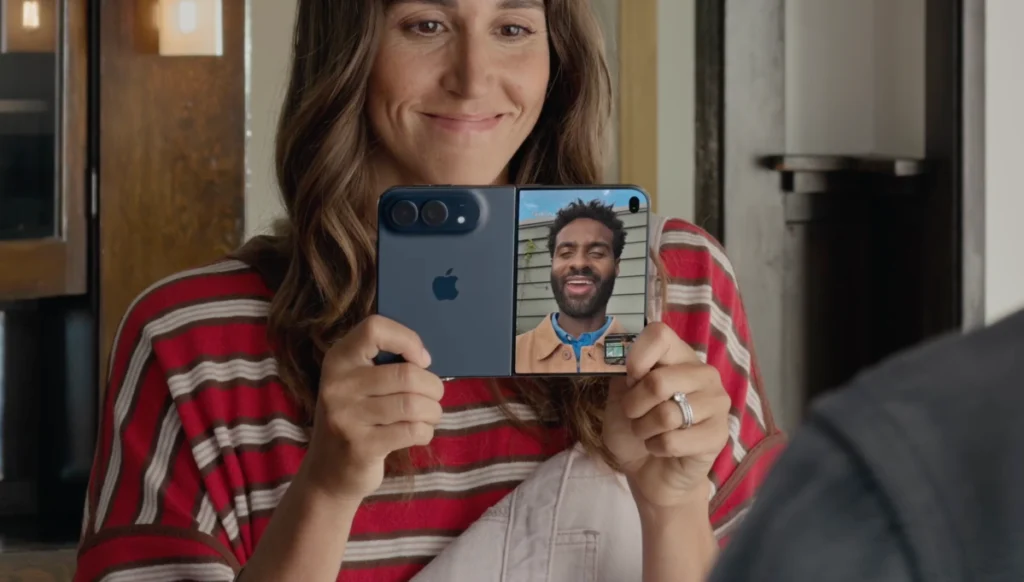
The Duo also adds features such as Duo Preview, Eye-Catcher, and Smart Photo for group shots and other creative uses.
However, the front-camera hardware is less advanced than that of the iPhone 18 Pro, and the Duo does not support ProRes for front-camera recording.
Face ID vs Touch ID
Apple continues to use Face ID on the iPhone 18 Pro and iPhone 18 Pro Max. The iPhone Duo instead uses Touch ID through a fingerprint sensor. The change is largely connected to the technical requirements of the foldable design.
The Duo still offers familiar security and unlocking options, but users moving from a Face ID iPhone will notice the difference immediately.
iPhone 18 Pro vs iPhone Duo: Specifications
| Feature | iPhone 18 Pro | iPhone 18 Pro Max | iPhone Duo |
|---|---|---|---|
| Starting storage | 256GB | 256GB | 256GB |
| Storage options | 256GB, 512GB, 1TB, 2TB | 256GB, 512GB, 1TB, 2TB | 256GB, 512GB, 1TB, 2TB |
| Price, 256GB | €1,449 | €1,599 | €2,299 |
| Price, 512GB | €1,699 | €1,849 | €2,549 |
| Price, 1TB | €2,199 | €2,349 | €3,049 |
| Price, 2TB | €2,949 | €3,099 | €3,799 |
| Display | 6.3-inch OLED | 6.9-inch OLED | 5.4-inch outer, 7.6-inch inner |
| Refresh rate | Up to 120Hz | Up to 120Hz | Up to 120Hz |
| Chip | A20 Pro | A20 Pro | A20 Pro |
| Rear cameras | Triple camera | Triple camera | Dual camera |
| Main camera | 48MP, variable aperture | 48MP, variable aperture | 48MP, f/1.6 |
| Telephoto | 48MP, 4x | 48MP, 4x | No dedicated telephoto |
| Front camera | 18MP | 18MP | 12MP outer, under-display inner camera |
| Security | Face ID | Face ID | Touch ID |
| Wi-Fi | Wi-Fi 7 | Wi-Fi 7 | Wi-Fi 7 |
| USB | USB-C, USB 3 | USB-C, USB 3 | USB-C, USB 3 |
| Cellular | 5G/LTE | 5G/LTE | 5G/LTE |
| Weight | 211g | 249g | 254g |
| Water resistance | IP68 | IP68 | IP68 |
| Battery video playback | Up to 36 hours | Up to 43 hours | Up to 44 hours outer, 31 hours inner |
iPhone 18 Pro vs iPhone Duo: Which One Fits You?
The iPhone 18 Pro and iPhone Duo are aimed at different types of users.
The iPhone 18 Pro is built around a traditional smartphone design with a stronger camera system, dedicated telephoto hardware, advanced professional photo and video features, and Face ID.
The iPhone Duo is Apple’s more experimental option. Its biggest advantage is the 7.6-inch internal display, which provides significantly more screen space than a standard iPhone. The foldable design also gives it a different form factor that cannot be replicated by the Pro models.
The trade-offs are equally clear. The Duo is considerably more expensive, weighs 254 grams, has a smaller 5.4-inch external display, and lacks the dedicated telephoto camera found on the iPhone 18 Pro.
Battery life also depends heavily on how the Duo is used. Its outer display can deliver up to 44 hours of video playback, but the larger internal screen is rated for up to 31 hours.
For users focused on photography, video recording, and traditional smartphone hardware, the iPhone 18 Pro provides a more feature-rich camera setup. For users who want a foldable iPhone and value a much larger screen, the iPhone Duo offers a fundamentally different experience.
The right choice ultimately depends on which features matter most. Buyers prioritising cameras and professional video tools have more hardware to work with on the iPhone 18 Pro. Those interested in a foldable phone and a larger screen have a very different option in the iPhone Duo.