
Changing your desktop background is one of the easiest ways to personalise a Windows computer. You can use a favourite photo, download a new wallpaper, choose one of Microsoft’s built-in backgrounds, or create a slideshow that automatically changes throughout the day.
Whether you’re using Windows 11 or Windows 10, changing the desktop wallpaper takes only a few steps.
In this guide, you’ll learn how to change the desktop background in Windows, how to use your own picture, adjust wallpaper positioning, set a slideshow, change the background color, and troubleshoot common desktop background problems.
How to Change Desktop Background in Windows 11
Windows 11 makes it easy to change your desktop wallpaper through Settings.
1. Change the Background Through Settings
Follow these steps:
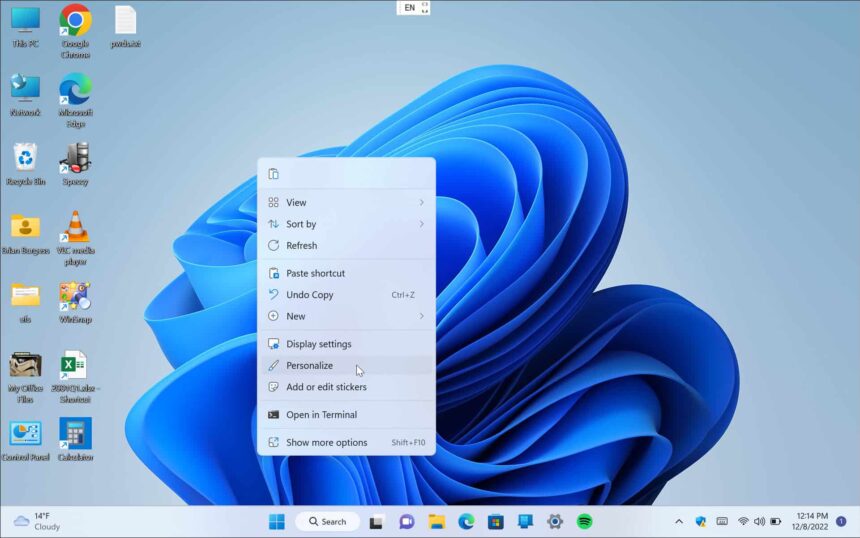
- Right-click an empty area of your desktop.
- Select Personalize.
- Select Background.
- Find the Personalize your background option.
- Choose Picture, Solid color, Slideshow, or another available option.
- Select your preferred image or color.
Your desktop background should change immediately.
This is the easiest method for most Windows 11 users.
2. Use a Picture Directly
If you already have an image saved on your computer, you can change the wallpaper without browsing through the Settings app.
- Open File Explorer.
- Navigate to the folder containing your picture.
- Right-click the image.
- Select Set as desktop background.
Windows will immediately use the selected image as your desktop wallpaper.
This method is particularly convenient when you’ve downloaded a new wallpaper or want to use a personal photograph.
How to Change Desktop Background in Windows 10
The process is slightly different in Windows 10, but the basic steps are very similar.
Change the Background Through Settings
- Right-click an empty area of the desktop.
- Select Personalize.
- Select Background from the left-hand menu.
- Under Background, choose Picture, Solid color, or Slideshow.
- Select your preferred image, color, or folder.
Windows 10 will apply your new desktop background.
Set a Picture Directly From File Explorer
You can also change the wallpaper directly from an image file.
- Open File Explorer.
- Find the image you want to use.
- Right-click it.
- Select Set as desktop background.
This works well when you already have the wallpaper saved locally.
Note: Microsoft ended standard support for Windows 10 on October 14, 2025. If you’re still using Windows 10, consider upgrading to a supported version of Windows if your PC is compatible.
How to Use Your Own Picture as a Windows Wallpaper
Windows allows you to use almost any suitable image as your desktop background.
You can use:
- Family photos
- Travel pictures
- Nature photography
- Personal artwork
- Downloaded wallpapers
- Company branding
- Gaming wallpapers
- Abstract images
- Screenshots
- Custom graphics
To use your own picture:
- Open Settings.
- Go to Personalization.
- Select Background.
- Choose Picture.
- Select Browse photos or the equivalent image-selection option.
- Find your image.
- Select the picture.
Windows will apply it to the desktop.
What Image Size Is Best for a Windows Wallpaper?
For the best results, use an image that is close to your monitor’s native resolution.
For example:
- Full HD monitor: 1920 × 1080
- QHD monitor: 2560 × 1440
- 4K monitor: 3840 × 2160
Using an image with a much lower resolution can make the wallpaper appear blurry or pixelated.
For ultrawide monitors, use an image that matches the monitor’s aspect ratio when possible.
A high-resolution image that matches your display’s aspect ratio usually produces the best-looking wallpaper.
How to Change Desktop Background to a Solid Color
You don’t have to use a picture.
Windows also allows you to use a simple solid color as your desktop background.
To do this:
- Open Settings.
- Select Personalization.
- Select Background.
- Find the background customization option.
- Choose Solid color.
- Select the color you want.
A solid background can make desktop icons easier to see and can provide a cleaner appearance.
You can choose a darker color if you prefer a minimalist desktop.
How to Set a Slideshow as Your Desktop Background
A slideshow automatically changes your desktop wallpaper at a specified interval.
This is a great option if you have a folder full of photographs or wallpapers.
Set Up a Windows Wallpaper Slideshow
- Open Settings.
- Go to Personalization.
- Select Background.
- Choose Slideshow.
- Select Browse.
- Choose the folder containing your pictures.
- Select how frequently the picture should change.
Depending on your Windows version, you may also be able to enable options such as shuffling the pictures or allowing the slideshow to continue when the device is running on battery power.
How Often Can the Wallpaper Change?
Available slideshow intervals can vary depending on the Windows version.
You may see options ranging from a few minutes to longer intervals.
For example, you could configure the wallpaper to change every:
- 1 minute
- 10 minutes
- 30 minutes
- 1 hour
- 6 hours
- 1 day
A slideshow is ideal if you don’t want to use the same wallpaper every day.
How to Change the Desktop Background Without Activating Windows
Windows may limit some personalization options when it has not been activated. However, you can often set a picture directly from File Explorer.
- Find the image you want, right-click it, and select:
- Set as desktop background
The available personalisation features may still depend on the activation status and Windows edition.
If your computer displays an activation message, the better long-term solution is to activate Windows using a legitimate license rather than relying on workarounds.
How to Change Wallpaper on Multiple Monitors
If you’re using two or more monitors, Windows gives you additional wallpaper options.
You can use the same wallpaper across all displays or assign different pictures to individual monitors.
To customise your multi-monitor background:
- Open Settings.
- Go to Personalization.
- Select Background.
- Choose your pictures.
- Use the available monitor-specific options to assign images where supported.
You can create a different visual style for each screen.
For example:
- Monitor 1: Landscape wallpaper
- Monitor 2: Minimalist wallpaper
- Monitor 3: Solid color
This can also make it easier to visually distinguish different displays.
How to Change Desktop Background From a Web Browser
If you find an image online and want to use it as your wallpaper, you should first save an appropriately licensed copy to your computer.
Then:
- Download or save the image.
- Open the folder where it was saved.
- Right-click the image.
- Select Set as desktop background.
Always check the licensing terms before using images for commercial purposes.
For personal desktop customisation, you can also use wallpapers from reputable sources that specifically provide images for personal use.
How to Automatically Change Wallpaper Every Day
Windows’ built-in slideshow feature is the simplest way to automatically rotate wallpapers.
- Create a folder containing the images you want to use.
- For example: Pictures → Wallpapers
- Then select that folder when setting up your slideshow.
- Windows will rotate through the images automatically.
- For a more organized setup, you can create separate folders such as:
- Nature
- Space
- Cars
- Gaming
- Travel
- Minimal
- Seasonal
This makes it easier to create different wallpaper collections.
How to Remove a Desktop Background
If you want to stop using a custom picture, open:
Settings → Personalization → Background
Then select another background type.
You can choose:
- A different picture
- Solid color
- Slideshow
Windows will replace the existing desktop wallpaper with your new selection.
FAQ
How do I change the desktop background in Windows 11?
Right-click an empty area of the desktop and select Personalize. Then choose Background and select a picture, solid color, or slideshow.
How do I change the wallpaper in Windows 10?
Right-click the desktop, select Personalize, and then select Background. Choose a picture, a solid colour, or a slideshow.
How do I set my own picture as the Windows background?
Open the image in File Explorer, right-click it, and select Set as desktop background. You can also select the image through Settings → Personalization → Background.
What is the best resolution for a Windows wallpaper?
The best resolution generally matches your monitor’s native resolution. For example, use 1920 × 1080 for a Full HD display or 3840 × 2160 for a 4K display.
Can Windows automatically change my wallpaper?
Yes. Choose Slideshow under Settings → Personalization → Background, select a folder of images, and choose the desired change interval.
Can I use different wallpapers on two monitors?
Yes. Windows supports different background configurations for multi-monitor setups. You can assign different images to individual displays where the available Windows settings support this.
Why can’t I change my Windows desktop background?
Possible causes include Windows activation restrictions, organisation policies, an unavailable image file, or a temporary Windows problem. Restarting the PC and checking Settings → Personalization → Background are good first steps.
How do I make my Windows wallpaper fit the screen?
Open the Background settings and choose the appropriate picture-fit option, such as Fill, Fit, Stretch, Tile, or Center, depending on the result you want.