
For much of the past decade, Windows on ARM has existed in an awkward middle ground—long promoted as the future of efficient computing, yet still held back by limited software support.
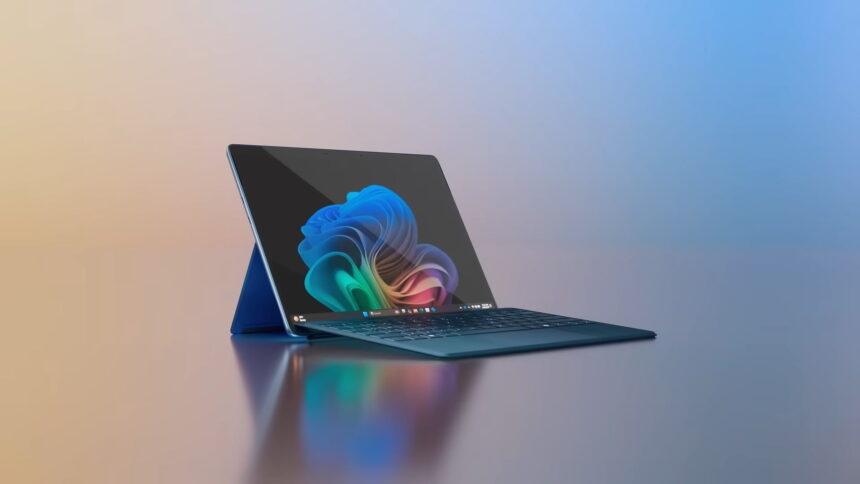
Early devices such as the Surface Pro X showcased the promise of ARM processors: silent operation, thin designs, and strong battery life. However, the same problem kept resurfacing—key applications either ran poorly or were unavailable altogether.
Now, Microsoft appears to be preparing a more forceful push to finally break that cycle, with an internal initiative known as Project Strong ARMed.
A software-first approach to ARM adoption
Rather than unveiling the project at a major event, Microsoft has quietly revealed its intentions through a job listing tied to the initiative. The role focuses on building AI-powered software engineering agents designed to automatically port applications from x64 to ARM64 architectures. The scope extends beyond Windows, with references to cross-platform scenarios such as Windows-to-Linux migrations.
Porting software means rewriting or adapting applications so they run natively on a different processor architecture. In the case of ARM, native support typically delivers better performance, lower power consumption, and fewer compatibility issues compared to emulation.
While Windows 11 on ARM already supports x86 and x64 applications through emulation—and recent updates, such as version 24H2, have improved efficiency—there are inherent technical limitations. Drivers and kernel-level components cannot be emulated and must be built specifically for ARM64. That gap has remained a major obstacle for broader adoption.
From emulation to native performance
Microsoft has spent years converting core parts of Windows to run natively on ARM, a process that has steadily improved system stability and performance. With much of the operating system groundwork now in place, the company’s focus appears to be shifting outward—toward developers.
Project Strong ARMed aims to lower the barrier for software makers by automating large parts of the porting process. According to the job description, AI agents would not only adapt codebases but also generate pull requests, accelerating the transition of applications and services to ARM64.
Tied to Copilot+ PCs and cloud ambitions
The timing is notable. Microsoft’s ARM push is no longer limited to lightweight laptops. New Copilot+ PC devices rely heavily on ARM-based chips, and ARM processors are also gaining traction in the cloud.
Within Azure, Microsoft has been expanding its ARM footprint with custom silicon such as the Cobalt processors. The Strong ARMed initiative explicitly references accelerating the adoption of Azure Cobalt 100 and 200, suggesting a unified strategy across consumer devices and enterprise infrastructure.
ARM has also been gaining momentum at developer conferences, where Microsoft and its partners have highlighted real-world deployments and tools designed to speed up migration from traditional x86 systems.
A decisive moment for Windows on ARM
Windows on ARM has long promised efficiency and longevity, but struggled to deliver a complete experience due to software gaps. Project Strong ARMed indicates Microsoft now sees automation and AI-assisted development as the missing piece.
If successful, the initiative could mark a turning point—shifting Windows on ARM from a niche option to a fully supported platform across laptops, desktops, and cloud services. For developers and users alike, the message is clear: Microsoft no longer wants ARM to be “the future someday,” but a viable default much sooner.