
The latest battle in artificial intelligence is not just about smarter models or faster agents. Tech companies are increasingly giving their AI assistants colourful personalities, friendly names and cartoon-like appearances to make autonomous AI feel more familiar to everyday users.
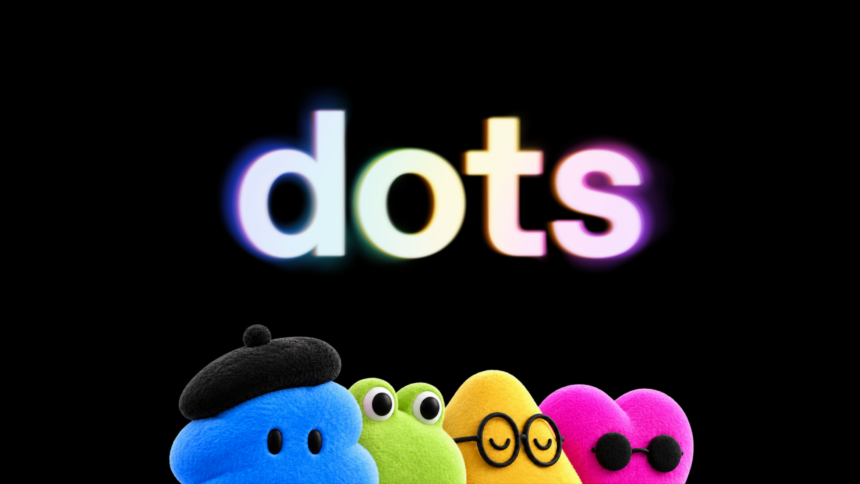
OpenAI introduced “Dots” this week, a collection of customizable AI companions designed to work on tasks in the background. The launch comes shortly after Meta introduced Jolly, the mascot for its Muse AI agent. Meta is also preparing a Tamagotchi-inspired wearable called Charm, which will serve as another way for users to interact with Muse.
The trend may look like a simple branding exercise, but there is a larger reason behind the sudden popularity of cute AI characters.
AI agents need more trust than traditional chatbots
The technology behind these products is significantly different from conventional chatbots.
A typical chatbot waits for a user to ask a question before responding. AI agents are designed to take action on their own. They can potentially organize schedules, examine emails, research products, manage files and perform other tasks with limited user intervention.
That greater independence also means agents may require access to much more personal information.
An assistant that manages your calendar needs access to your appointments. One that handles email needs access to your inbox. An agent helping with documents, shopping or finances may require access to files, accounts and other sensitive information.
For many users, handing that level of access to an AI system is a major leap of trust.
This is where the friendly mascot comes in.
Cute characters can make AI feel less intimidating
Technology companies have used anthropomorphic characters for decades. Microsoft’s Clippy became one of the most recognisable digital assistants of the 1990s, while Duolingo has turned its green owl into a major part of its online identity.
The latest AI mascots are taking that idea further.
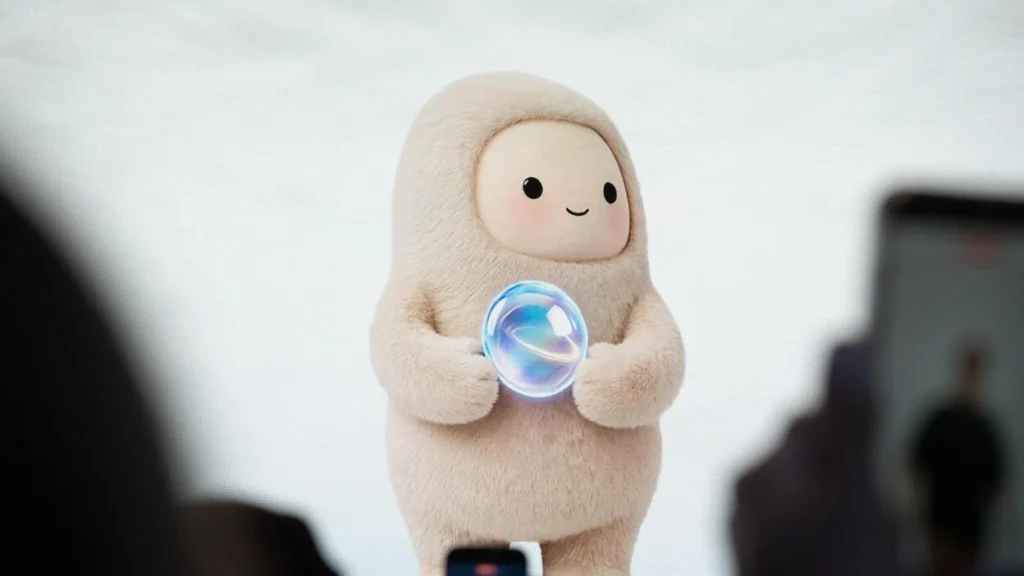
OpenAI’s Dots and Meta’s Jolly are designed to feel less like pieces of software and more like personalised companions. Users can customise their appearance and interact with them repeatedly, potentially creating a stronger sense of familiarity than they would with a traditional text-based assistant.
Research has found that people can form emotional connections with objects and systems that display human-like characteristics. For AI companies, that behavior could make complicated technology easier to approach.
Instead of asking users to trust an invisible system with access to their personal information, companies can present the technology through a character that feels approachable and familiar.
Personalization could also keep users inside an ecosystem
The relationship between users and AI companions could become even more important as these systems become persistent.
If a user spends months customizing an AI character, teaching it preferences and relying on it to complete everyday tasks, switching to another service may become less attractive.
That creates a potential form of ecosystem loyalty.
The more information an agent knows about a user and the more personalised its behaviour becomes, the more difficult it may feel to start over with another platform. A familiar AI companion could therefore become more than a visual mascot. It could become part of the reason a user stays with a particular company’s products and services.
That does not mean companies are deliberately creating manipulative AI companions, but the business incentive is clear. The more comfortable people become with agents, the more likely they may be to use them regularly.
Big AI companies still have plenty of room to grow
The push for friendlier AI comes at a time when the technology industry is trying to expand AI adoption beyond early users.
Around half of U.S. adults now use AI chatbots, according to a Pew Research survey published in June, but only about a quarter use them every day. Microsoft has also reported that AI usage among the global working-age population reached 18.8% during the second quarter of 2026.
Those figures suggest that a large portion of the potential market has yet to become regular AI users.
Making AI agents feel more accessible could help companies reach people who remain uncomfortable with traditional AI interfaces. A colorful character may be easier to understand and engage with than a blank chat window that expects users to know how to communicate with an advanced model.
The stakes are higher when AI can act on your behalf
The appeal of a friendly AI companion also comes with an important caveat.
An agent that simply answers questions generally has limited access to a user’s digital life. An autonomous agent can require considerably more.
Depending on the service, users may eventually be asked to connect email accounts, calendars, cloud storage, personal files, shopping accounts or financial information. That access can allow an AI to perform useful tasks, but it also increases the consequences of mistakes, security failures or unclear data practices.
A cute appearance does not change those risks.
Users may feel more comfortable interacting with an AI because it looks like a character rather than a piece of enterprise software, but the underlying system can still have extensive access to personal information.
The AI mascot race is only beginning
OpenAI and Meta are not alone in trying to make AI more personable. The broader technology industry is moving toward AI systems that remain active in the background rather than waiting for individual commands.
As those systems become more capable, their relationship with users will become increasingly important. Companies need people not only to try AI, but to trust it enough to give it access to their digital lives.
That makes the rise of Dots, Jolly and similar characters more significant than a simple branding trend.
AI agents may eventually become everyday digital assistants, but getting people comfortable enough to hand those assistants real responsibility could be one of the industry’s biggest challenges. For companies building these systems, a friendly face may be one way of making that transition easier.