

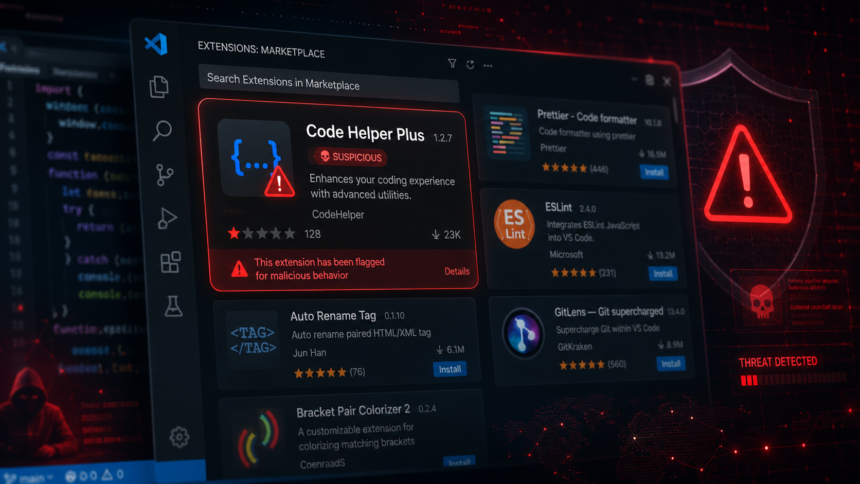
GitHub has disclosed a security incident involving a compromised Visual Studio Code extension that may have exposed access to nearly 4,000 internal repositories, raising fresh concerns over the security of developer tools and software supply chains.
The breach reportedly began after a GitHub employee unknowingly installed a trojanized extension from the public Visual Studio Code Marketplace. Once executed on the developer’s machine, the malicious software allegedly gained access to local credentials, authentication tokens, and background development workflows.
Although GitHub said it detected and contained the intrusion before it escalated further, attackers reportedly accessed around 3,800 internal repositories. In response, the company initiated a large-scale rotation of sensitive credentials and access tokens to reduce the risk of further compromise.
No Customer Data Impacted, Says GitHub
GitHub has stated that its ongoing investigation found no evidence of unauthorised access to customer repositories or data belonging to external organisations. According to the company, the breach affected only internal development infrastructure.
Even so, cybersecurity experts warn that access to internal source code can still create significant long-term risks. Threat actors may attempt to uncover hidden vulnerabilities or identify weaknesses that could later be exploited in targeted attacks, including previously unknown security flaws.
Developer Workstations Become a Growing Target
The incident highlights an increasing concern in cybersecurity: developer environments are becoming prime attack targets.
Visual Studio Code has become one of the most widely used development platforms globally, but its open extension marketplace has also introduced new risks. Security researchers have repeatedly warned about malicious or impersonated extensions appearing on public marketplaces.
Among the key concerns are insufficient vetting of extensions and excessive permissions requested by some plugins. Many extensions require broad access to local files, Git credentials, and system resources, creating opportunities for attackers if a malicious package slips through moderation.
Security professionals argue that organizations should strengthen internal controls rather than abandon widely used development tools.
Recommended measures include limiting approved extensions through private marketplaces, enforcing allowlists for verified plugins, and monitoring developer systems for exposed secrets such as API keys, passwords, or production credentials stored locally.
The incident also reinforces the growing importance of “Zero Trust” security strategies, where every application and access request is continuously verified, even within internal systems.