
Companies have typically grown by relying on spreadsheets, standalone programs, and legacy processes that, for the most part, worked. The problem arises when the business becomes more complex, with an increase in employees, suppliers, clients, and regulations. At that point, coordinating information stops being an administrative task and becomes a strategic challenge. That’s where ERP software is becoming increasingly necessary.
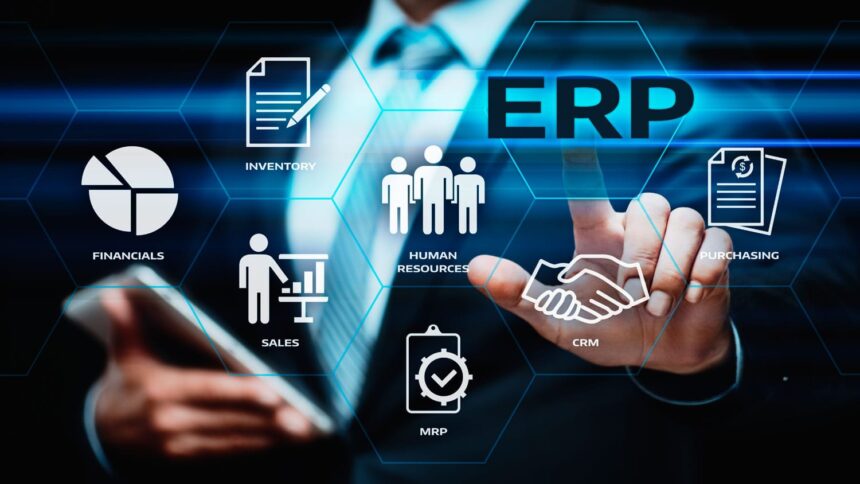
An ERP is a form of organising the company from within, connecting areas that have traditionally worked in parallel and offering a coherent vision of the business in real time. It is worth highlighting as one of the main values of an ERP its ability to integrate processes such as internal organisation, payroll, accounting, invoicing, stock control…
Everything is part of the same digital ecosystem and has a direct impact on decision-making. When data flows between departments, information stops arriving late or incomplete. The finance department knows what is happening in the sales department or the human resources department has a clear vision of labor costs and productivity, to give just a couple of examples.
Human resources beyond payroll
Traditionally, the personnel department has been viewed as an administrative area, but a modern ERP breaks that idea and turns human resources management into a strategic axis that connects labour data, performance, training, and planning.
When HR processes HH. They are integrated into the company’s general system, coherence is achieved, and payrolls are calculated using real and updated information. Absences and shifts automatically impact planning, and those responsible have a clear vision of the team structure and its evolution.
Furthermore, this approach facilitates regulatory compliance and traceability. In an increasingly regulated work environment, having tools that centralise information provides peace of mind and legal security, complying with the law in an orderly and verifiable manner.
Administration and finances with reliable data
The administrative part is usually one of the most benefited by the implementation of an ERP. Billing, accounting and financial control. They stop depending on manual processes or disconnected tools, avoiding a large number of errors, automating key tasks without losing control. Invoices are generated from real operations, collections and payments are reflected immediately and accounting closings are streamlined because the information is already structured from the beginning.
All this automated work will improve efficiency and increase the reliability of the data. When management needs to understand the company’s financial situation, they don’t have to wait for someone to crunch the numbers, because the data is there, updated and organised in a coherent way.
Stock control as a competitive advantage
The inventory management It is another of the critical points where an ERP demonstrates its usefulness. Especially in companies with multiple references, suppliers or sales channels.
An integrated system allows us to know at all times what is in storage, what is compromised and what needs to be replaced. This reduces stockouts and improves the relationship with suppliers and customers.
Beyond the economic savingsthere is a clear operational benefit, since the team works with reliable information. Sales does not promise what does not exist and purchasing does not act blindly. Everything responds to real-time data, updated continuously.
Regulatory compliance and internal control
In recent years, companies have faced an increasingly complex regulatory framework, encompassing data protection, time control, and mandatory internal communication channels.
In this context, ERP becomes a key tool for compliance. Centralizing processes facilitates audits, reviews and internal controls. A clear example is the integration of Mandatory Whistleblowing Channel, which allows organisations to comply with current regulations in a structured and transparent way, without improvisations or isolated solutions.
This type of functionality reinforces the culture of compliance and reduces legal risks. Additionally, it conveys to both employees and third parties that the company takes corporate ethics seriously.
Technology designed to grow
Thinking that an ERP limits flexibility is a common mistake. The reality is just the opposite, since current systems are designed to adapt to business growth and changes.
New product lines, increased employee numbers, international expansion, or regulatory changes can be managed from the same platform. The key is in choose a scalable solution well aligned with the company’s strategy.
From a technology perspective, this fits with a modern view of enterprise software. Less scattered tools and more integrated platforms, fewer patches and more solid architecture.
For all the strengths that have been pointed out throughout this article, reducing an ERP to management software is an understatement. In practice, it acts as the nervous system of the company. Connect areas, organize processes and convert data into a reliable basis for deciding.
Well-applied technology does not replace people. It provides them with better tools to work more effectively. And in that, a well-implemented ERP remains one of the most important decisions a company can make today.