
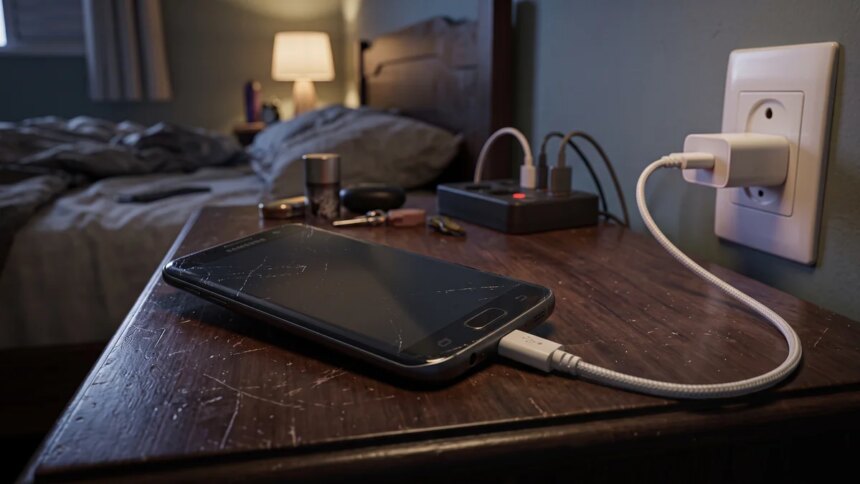
Have you ever hesitated to plug an old phone into a 45W or 65W charger because you were worried it might be too powerful?
It’s a common concern. Many people assume that if an older smartphone was designed for a lower charging speed, connecting it to a high-wattage charger could overload the battery or cause permanent damage.
In most cases, that’s not how modern smartphone charging works.
The wattage printed on a charger represents the maximum power it can deliver, not the amount of power it automatically sends to every device. The phone and charger work together to determine how much power can safely be used.
So, if your older phone supports only 10W or 15W charging, connecting it to a compatible 45W or 65W charger does not mean the phone will suddenly receive 45W or 65W.
A 65W Charger Doesn’t Force 65W Into Your Phone
The easiest way to understand this is to think of the charger’s wattage as its maximum capacity.
A 65W charger can provide up to 65W when a compatible device requests it. If your phone is designed to accept only 15W, it will generally draw only the amount supported by its charging system.
Modern charging standards use communication between the charger and device to determine the appropriate voltage and current.
This means you can generally connect a high-wattage charger to a phone that supports a lower charging speed without forcing excessive power into the device.
For example:
- A 65W charger can charge a 15W phone.
- A 45W charger can charge a 10W phone.
- A 100W charger can charge a compatible lower-power device.
The phone’s charging circuitry controls the input rather than simply accepting whatever maximum wattage is printed on the charger.
What Happens With an Older Phone?
If your older smartphone doesn’t support modern fast-charging standards, it may simply charge at its normal supported speed.
Plugging the phone into a more powerful charger doesn’t automatically give it faster charging.
For example, if a phone supports a maximum charging rate of 10W, connecting it to a 65W charger won’t turn it into a 65W fast-charging device.
The phone will continue to operate within the limits of its charging hardware.
In some cases, the phone and charger may also fall back to a more basic charging mode if they don’t share a compatible fast-charging protocol.
Can Fast Charging Damage a Phone Battery?
Fast charging itself isn’t automatically harmful to a modern smartphone battery.
Most current smartphones use lithium-ion or lithium-polymer batteries, which are designed to work with sophisticated charging systems that regulate voltage, current and temperature.
However, batteries naturally degrade over time.
Battery capacity gradually decreases because of factors such as:
- Charge cycles
- Age
- High temperatures
- Prolonged exposure to high charge levels
- Charging and discharging habits
Fast charging can generate more heat under certain conditions, and excessive heat is one of the bigger concerns for long-term battery health.
That doesn’t mean you should avoid fast charging altogether. It means that temperature management and the quality of the charging system matter more than the number printed on the charger.
Does Fast Charging Cause the Battery to “Get Addicted”?
No.
You may have heard claims that regularly using fast charging makes a phone battery “addicted” to fast charging or causes it to lose the ability to charge normally.
Modern lithium-ion batteries don’t develop the old-fashioned memory effect associated with some older rechargeable battery technologies.
Your phone doesn’t become dependent on a particular charger wattage.
You can use a slower charger after regularly using a fast charger, and the battery will continue to charge normally.
Can I Use Someone Else’s 45W or 65W Charger?
Generally, yes, provided the charger and cable are compatible and meet appropriate safety standards.
If someone lends you a modern 45W or 65W charger, your older phone won’t automatically receive the full rated power.
The phone will request or draw the amount its charging system supports.
However, compatibility is important. A charger from a reputable manufacturer that follows established charging standards is a much safer choice than an unknown or counterfeit accessory.
The Charger Quality Matters More Than the Wattage
The biggest mistake is focusing only on the wattage number.
A high-quality 65W charger from a reputable manufacturer can be safer than a cheap, poorly manufactured 10W charger.
Poor-quality or counterfeit chargers may have inadequate electrical protection and can potentially cause:
- Excessive heating
- Voltage instability
- Charging interruptions
- Damage to the device
- Electrical safety hazards
For that reason, use chargers and cables from reputable manufacturers and, where possible, accessories recommended or certified for your device.
What About the Charging Cable?
The cable matters too.
Some charging standards require cables capable of handling particular power levels. A damaged, low-quality or unsuitable cable can create problems even when the charger itself is perfectly safe.
Inspect your cable for:
- Frayed or exposed wires
- Damaged connectors
- Loose connections
- Discoloration
- Excessive heating
- Intermittent charging
If a cable becomes unusually hot or shows visible damage, replace it rather than continue using it.
Heat Is a Bigger Concern Than Charger Wattage
If you’re worried about battery health, pay attention to temperature.
Charging naturally produces some heat, and fast charging can produce more under certain conditions. Excessive heat can accelerate battery degradation.
Try to avoid charging your phone:
- In direct sunlight
- Inside a hot car
- Under a pillow or blanket
- In areas where heat cannot escape
- While running demanding games for long periods
If the phone becomes unusually hot while charging, give it some time to cool down and check whether the charger, cable or phone is causing the problem.
What If My Phone Doesn’t Support Fast Charging?
Nothing unusual happens.
Suppose your older phone supports a maximum of 10W and you connect it to a 65W charger. The charger can deliver up to 65W, but the phone still operates within its own charging limits.
The result is simply normal charging at the speed the phone supports.
In other words, a more powerful charger doesn’t upgrade the charging hardware inside an old phone.
Does a Higher-Wattage Charger Charge an Old Phone Faster?
Not necessarily.
The phone determines how much power it can accept. If its charging hardware is limited to a lower wattage, using a more powerful charger won’t bypass that limitation.
For example, connecting a 65W charger to a phone that supports 15W charging won’t make the phone charge at 65W.
To take advantage of higher charging speeds, both the phone and charger need to support the appropriate charging technology.
How to Safely Use a Powerful Charger With an Older Phone
If you’re using a high-wattage charger with an older smartphone, follow a few basic precautions:
- Use a reputable charger. Avoid counterfeit or suspiciously cheap accessories.
- Check compatibility. Make sure the charger supports an appropriate charging standard for your phone.
- Use a suitable cable. Replace cables that are damaged or become unusually hot.
- Keep the phone cool. Avoid charging in direct sunlight or poorly ventilated locations.
- Watch for unusual behavior. Stop using an accessory if you notice burning smells, excessive heat, damaged connectors or repeated charging interruptions.
So, Can a 45W or 65W Charger Damage an Old Phone?
In normal circumstances, no.
A charger rated at 45W or 65W does not automatically force that amount of power into every phone connected to it. The phone’s charging system determines how much power it can safely accept, while compatible charging standards allow the device and charger to negotiate appropriate charging conditions.
The bigger concerns are charger quality, compatibility, damaged cables and excessive heat.
So, if you have an older phone and someone offers you a 45W or 65W charger, you generally don’t need to worry about the wattage alone. If the charger is genuine, compatible and in good condition, the phone should draw only the power its charging system is designed to handle.
A 65W charger doesn’t mean your old phone will receive 65W. The phone controls its charging requirements.
For battery longevity, focus less on the maximum wattage printed on the charger and more on using reliable accessories, keeping the phone cool and replacing damaged chargers or cables.
If your phone supports only slower charging, a more powerful charger won’t necessarily make it charge faster, but it also shouldn’t damage the battery simply because it has a higher wattage rating.