
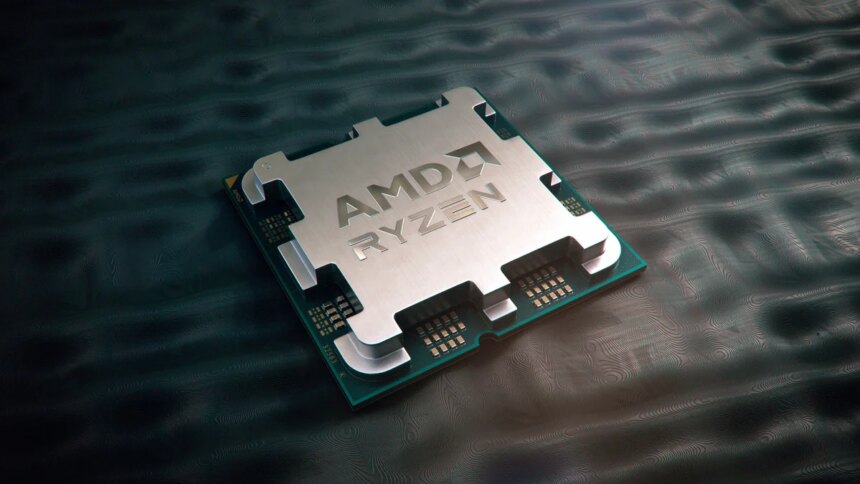
AMD has crossed a major milestone in its long-running battle with Intel, capturing more than 30% of the global x86 processor market nearly a decade after the launch of its Ryzen family.
According to market research firm Mercury Research, AMD held 30.3% of x86 CPU shipments in the second quarter of 2026, leaving Intel with 69.7%. The figures cover processors shipped for both desktop and mobile systems.
The latest numbers mark a significant turnaround for AMD, which entered the Ryzen era in 2017 after years of struggling to compete with Intel in processor performance and market share.
Desktop remains AMD’s strongest segment
AMD’s gains were particularly strong in desktop processors. The company reached a 34.9% share of the desktop CPU market in the second quarter, up by nearly three percentage points from the same period a year earlier.
Intel remained ahead with 65.1% of desktop shipments, but the narrowing gap highlights AMD’s continued progress in the segment.
AMD’s desktop unit shipments declined by around 1% compared with the previous quarter. However, the company still recorded higher revenue from desktop processors, helped by an increase in the average selling price of its chips.
Mobile market share rises sharply
AMD also continued to gain ground in notebooks and other mobile systems.
The company held 28.9% of the mobile x86 CPU market during the quarter, representing an increase of about 8 percentage points from the same period last year.
When desktop and mobile shipments are combined, AMD’s overall x86 market share reached 30.3%, representing an increase of more than six percentage points over the past year.
The figures indicate that AMD’s expansion is no longer limited to desktop enthusiasts. Its Ryzen processors are becoming increasingly competitive in laptops, where Intel has traditionally maintained a strong position.
Ryzen marks a major turnaround for AMD
AMD’s progress has taken nearly ten years to reach this point.
Before Ryzen, the company struggled to challenge Intel’s dominance, particularly during the later years of its FX processor lineup. The introduction of the Zen architecture changed that trajectory by bringing significant improvements in performance and efficiency.
AMD subsequently expanded the Zen family through successive Ryzen generations, while its chiplet-based design helped the company scale processor configurations and improve manufacturing efficiency.
That strategy has gradually translated into higher market share across both consumer and commercial systems.
Intel faces renewed pressure
The latest Mercury Research figures add to the pressure facing Intel as it works to recover lost ground in the PC processor market.
Intel is simultaneously restructuring its manufacturing operations and attempting to strengthen its processor roadmap after several difficult years. AMD’s continued market-share gains make that recovery more challenging, particularly as Ryzen has established a strong position among desktop buyers.
The competition is also expanding beyond the traditional AMD versus Intel battle.
Both companies have an interest in maintaining the x86 architecture’s position in Windows PCs as Arm-based processors gain attention. Qualcomm’s Snapdragon platforms have already brought Arm-based Windows laptops into the mainstream, while Nvidia is also preparing new hardware aimed at the Windows PC market.
AMD still trails Intel by a substantial margin, with Intel controlling nearly 70% of the x86 CPU market according to the latest figures. However, crossing the 30% threshold represents a significant change from AMD’s position before Ryzen.
The company’s challenge now is to maintain that momentum as Intel attempts to regain market share and Arm-based processors become a more serious competitor in Windows PCs.
For AMD, the latest figures show just how far the company has come since 2017. What began as an effort to rebuild its processor business has developed into a sustained challenge to Intel’s long-standing dominance of the x86 market.