
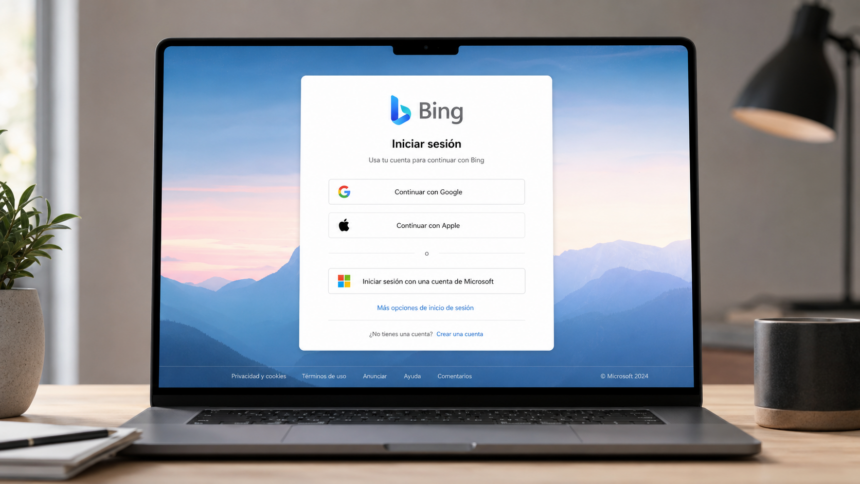
Microsoft has introduced a significant change to its Bing sign-in process, allowing users to access the search engine with their Google Account or Apple ID instead of requiring a Microsoft account. The move marks a notable shift in the company’s long-standing approach of encouraging users to remain within its own ecosystem.
The new sign-in options are now available on Bing.com, where users can choose to continue with either Google or Apple alongside the traditional Microsoft account login. The update was first reported by Windows Latest, with Microsoft confirming the feature and stating that it is intended to simplify access to personalised Bing experiences and Microsoft Rewards.
Previously, users typically needed a Microsoft account to take advantage of Bing’s personalized features and reward program. While some earlier sign-in methods accepted Gmail addresses, they often prompted users to create a Microsoft account behind the scenes. With the latest update, Google and Apple function as independent identity providers, allowing users to authenticate directly without generating a Microsoft account.
The change also extends to Microsoft Rewards, the company’s loyalty program that offers points for using Bing and other Microsoft services. Users who sign in with a Google account can now earn and redeem reward points without creating a Microsoft account, potentially making the program more accessible to people who primarily use Google’s ecosystem.
In addition to Rewards, users signing in through Google or Apple can access a range of Bing services, including AI-powered tools, translation, news, maps, shopping, travel features and image creation. The update reflects Microsoft’s efforts to make Bing operate more like an independent web service rather than one tied exclusively to its own account system.
The decision follows Microsoft’s recent testing of Google account sign-in support for the Edge browser, suggesting a broader strategy to reduce barriers for users interested in its products. By allowing existing Google and Apple credentials, the company is aiming to make services such as Bing and Copilot easier to adopt without requiring users to switch ecosystems.
The latest change represents a more flexible approach to user access at a time when competition among AI-powered search services continues to intensify. Instead of insisting on Microsoft account registration, the company is focusing on making its services available through identity providers that many users already rely on.
While Microsoft continues to promote its own ecosystem through products such as Copilot and Microsoft Rewards, the introduction of Google and Apple sign-in options signals a willingness to prioritize convenience over exclusivity. Whether the move leads to broader adoption of Bing remains to be seen, but it removes one of the most common obstacles for new users considering Microsoft’s search platform.