
Robinhood CEO Vlad Tenev believes artificial intelligence is on track to transform retail investing, predicting that AI agents will eventually be capable of performing nearly every task currently handled by human traders.
Speaking in an interview with CNBC, Tenev outlined his vision for agentic AI in financial markets, describing a future where everyday investors gain access to sophisticated trading capabilities that have traditionally been reserved for institutional firms.
According to Tenev, the next generation of AI-powered trading tools will allow users to delegate investment decisions and market actions to intelligent software capable of executing complex financial strategies.
He noted that institutional investors have relied on automated trading systems for years, but those technologies have largely remained inaccessible to individual investors.
Tenev said Robinhood’s long-term goal is to bridge that gap by giving retail traders access to the same computational power and automation used by professional trading firms.
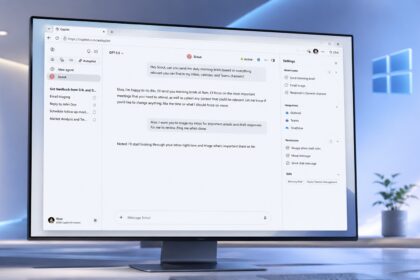
Robinhood introduced its first agentic AI features in May, enabling AI assistants to execute stock trades and make purchases on behalf of users within predefined parameters.
Automation Already Dominates Financial Markets
Tenev pointed out that algorithmic and AI-assisted trading already account for a significant share of activity across global financial markets.
Drawing on his own experience in institutional trading before founding Robinhood, he explained that many market participants already depend heavily on automated systems to execute transactions at high speed.
He believes advances in agentic AI will eventually extend similar capabilities to millions of individual investors.
Robinhood continues to broaden its international presence alongside its investment in AI technology.
The company recently announced plans to introduce cryptocurrency trading services in the United Kingdom as part of a broader European expansion strategy.
The move follows a period of renewed momentum for the company after retail trading activity strengthened alongside improving market conditions.
Market Performance Shows Signs of Recovery
Earlier this year, Robinhood reported first-quarter earnings that fell short of analyst expectations as cryptocurrency market volatility reduced trading activity.
Since then, financial markets have stabilized, supported by easing geopolitical tensions and stronger performance in equity markets, helping improve retail investor participation.
Robinhood shares rose sharply following the company’s latest announcements, lifting its market valuation to approximately $98 billion. Despite the recent gains, the stock remains lower for the year.
Government Partnership and Business Restructuring
Robinhood is also preparing to serve as broker and trustee for the upcoming Trump Accounts initiative through a partnership involving the U.S. Treasury and BNY Mellon.
Tenev said the company aims to build a consumer-friendly platform for the program, emphasizing ease of use for participants.
According to Robinhood, the platform now serves nearly 28 million customers across 38 countries spanning three continents.
Earlier this month, the company reduced its workforce by approximately 10 percent as part of an efficiency initiative.
In a message shared with employees, Tenev said Robinhood’s business remains in a strong position but stressed the importance of maintaining a lean organizational structure capable of moving quickly as the company continues to expand its AI and financial services offerings.
AI Becomes a Key Focus for Retail Investing
Robinhood’s investment in agentic AI reflects a broader trend across the technology industry, where companies are developing systems capable of completing increasingly complex tasks with limited human intervention.
If the technology continues to mature as expected, AI-powered trading assistants could become a central feature of retail investing, offering individuals access to advanced market tools that were once available only to large financial institutions.