
Microsoft appears to have explored a radical redesign of Windows centered on artificial intelligence, following the leak of an internal project that reimagines the operating system as a lightweight, web-based platform powered by Copilot.
The experimental concept, known internally as Project Aion, offers a glimpse into how Microsoft has been evaluating the future of Windows by moving away from decades of legacy architecture. While the company has not confirmed any plans to release the project, the leaked prototype suggests Microsoft is continuing to investigate AI-driven operating system experiences.
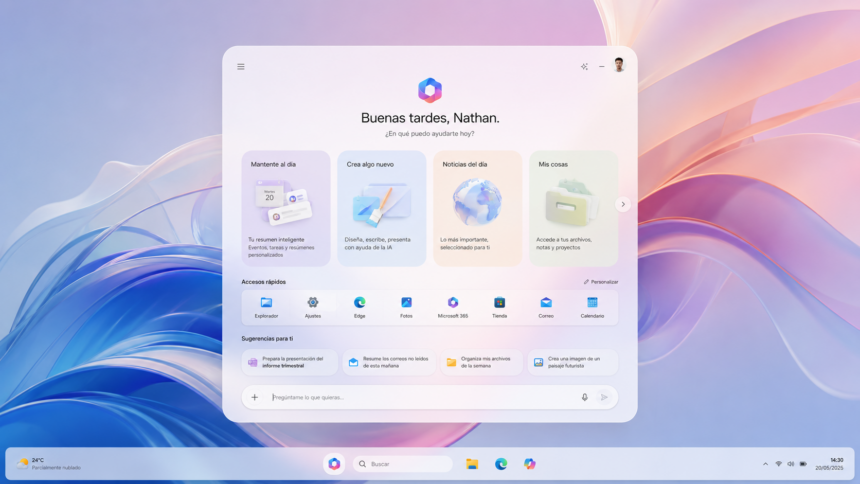
According to a leaked internal demonstration recorded in 2024 and reported by Windows Central, Project Aion was built on a streamlined version of Windows referred to as Win3. The prototype features a redesigned desktop interface with a simplified taskbar and a Copilot-powered Start menu that places AI at the center of the user experience.
Unlike traditional versions of Windows, the experimental platform does not support native Win32 applications. Instead, it relies primarily on web applications and online services. Users requiring conventional desktop software would connect to a Cloud PC via Windows 365, enabling applications to run remotely rather than locally.

By removing legacy Windows components, the concept aims to deliver faster software updates, improved security, reduced system complexity and better power efficiency. However, this approach would also represent one of the biggest shifts in Windows’ history, with heavy reliance on cloud services and web technologies.
At the core of the interface is a multimodal Copilot assistant capable of performing a wide range of tasks. Users can search for files, launch applications, browse the web, and issue natural-language commands from a single AI-powered interface. The prototype also includes a feature called Spaces, which groups related apps and websites into organized workspaces that can be quickly reopened from the taskbar or Start menu.
Although the concept has drawn comparisons to Microsoft’s previous attempts to modernise Windows, including Windows 10X, there is no indication that Project Aion will become a commercial product. Reports suggest the project may have originated as an internal experiment or hackathon initiative, and Microsoft has not commented on the leaked footage.
The ideas behind Aion also appear to align with Project Solara, another Microsoft initiative focused on agentic AI experiences capable of generating interfaces dynamically based on user requests. Together, the projects point to Microsoft’s broader effort to integrate AI more deeply into the Windows experience.
Despite the technological ambition, the concept is likely to divide opinion. An operating system built around AI and web technologies could simplify maintenance and enhance cloud integration, but it also raises concerns about dependence on internet connectivity, compatibility with existing software and the practicality of replacing traditional desktop workflows. Whether Project Aion remains an internal experiment or influences future Windows releases, it highlights Microsoft’s ongoing efforts to redefine personal computing in the AI era.