
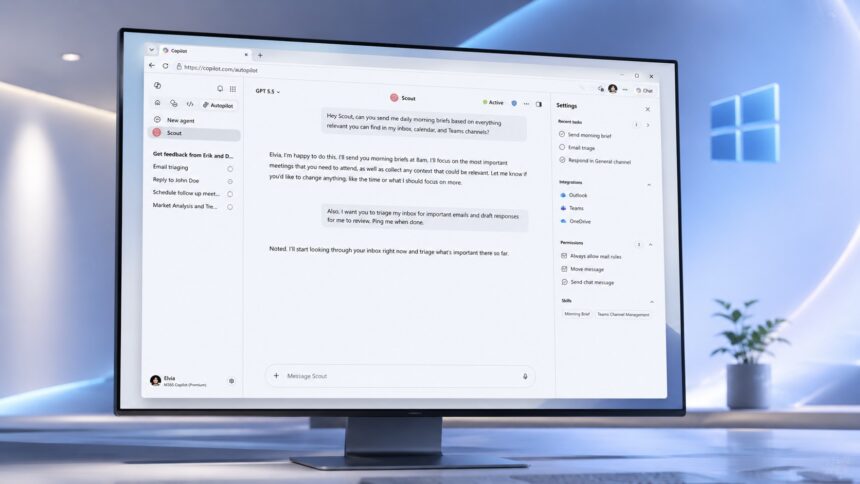
The company introduces a new software and hardware initiative aimed at bringing AI agents beyond traditional PCs and smartphones, with enterprise users at the center of its strategy.
At its Build 2026 developer conference, Microsoft introduced Project Solara, a new platform designed to support a generation of devices built specifically around artificial intelligence agents. Rather than creating a successor to Windows, the company is positioning Solara as a foundation for intelligent, agent-first hardware that can operate across a variety of environments and industries.
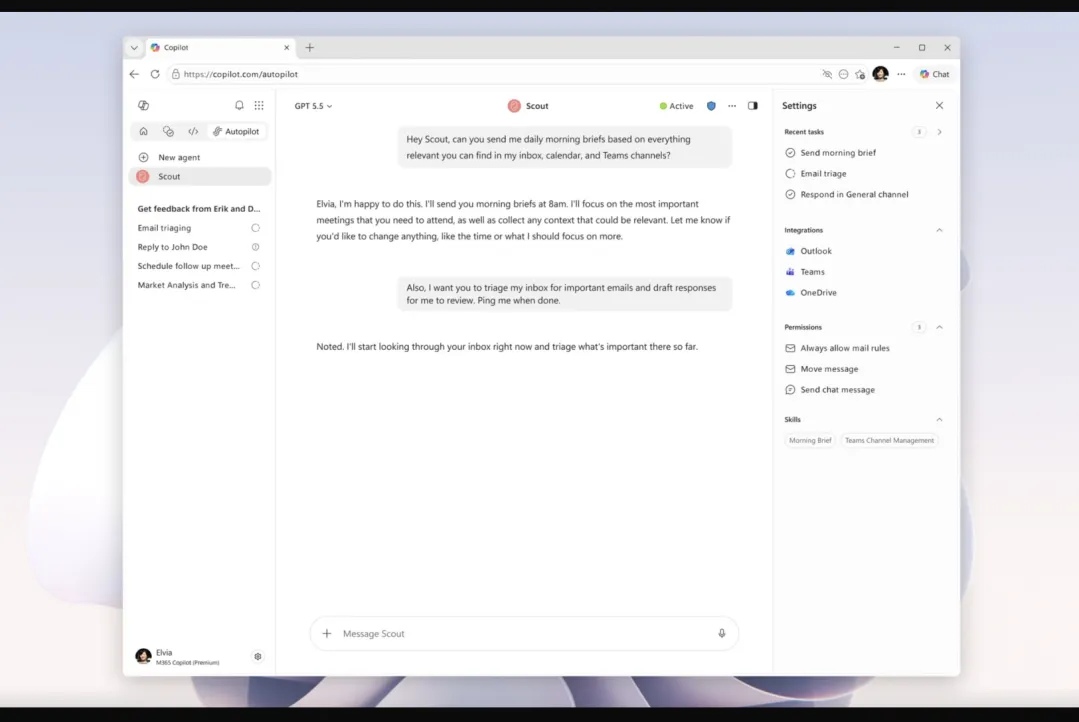
The announcement marks a significant shift in Microsoft’s vision for computing. Instead of relying on applications and traditional interfaces, Project Solara focuses on interactions driven by AI agents that can understand context, respond to voice commands, and perform tasks across services and connected devices.
A Platform Built for the AI Era
Microsoft describes Project Solara as a platform where intelligence becomes the primary method of interaction. The company believes the future of computing will move away from manually navigating apps and menus toward systems that allow users to simply invoke AI assistance when needed.
Unlike Windows, Project Solara is built on the Microsoft Device Ecosystem Platform, which utilizes the Android Open Source Project (AOSP) as its underlying framework. This approach enables manufacturers to create lightweight, energy-efficient devices while maintaining enterprise-grade security and management capabilities.
The platform integrates key Microsoft services, including Intune device management, Entra ID identity services, Windows Hello for Business authentication, privacy controls, and centralized IT administration tools.
Two Prototype Devices Showcase the Vision
To demonstrate the platform’s potential, Microsoft revealed two reference device concepts.
The first is a desktop-oriented device featuring a touchscreen display, facial recognition technology, privacy-focused hardware controls, long-range microphones, ultra-wideband presence detection, and USB-C connectivity. The device can operate independently, function alongside a Windows PC, or connect to Windows 365 cloud services through an external monitor.
The second concept targets frontline and mobile workers. Designed as a wearable smart badge, the device includes a touchscreen, fingerprint authentication, integrated camera, microphones, speaker system, wireless connectivity, GPS capabilities, and 5G support powered by Qualcomm hardware.
Microsoft says the wearable device is intended to help employees quickly access information, record workplace interactions, manage tasks, and communicate with AI agents without requiring a laptop or smartphone.
Solving the AI Hardware Challenge
Project Solara represents Microsoft’s effort to address a challenge that has affected several AI-focused hardware products in recent years. While many devices have demonstrated impressive AI capabilities, few have succeeded in establishing practical business use cases or providing robust management tools for enterprise customers.
To overcome this, Microsoft has built Project Solara around three core principles: enterprise readiness, agent-driven user experiences, and extensibility. Organisations will be able to deploy Microsoft’s own AI agents or develop custom solutions tailored to their specific operational needs.
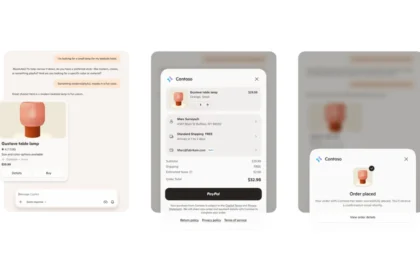
Another key component is Microsoft’s new “just-in-time UI” system. The technology allows interfaces to dynamically adapt based on the device, context, and user requirements without requiring developers to redesign applications for every screen size or form factor.
Industry Partners and Pilot Programs
Microsoft confirmed that Qualcomm will provide silicon for the wearable reference design, while MediaTek will power the desktop-focused concept. The company expects manufacturers to use these reference platforms as a starting point for creating industry-specific devices across healthcare, retail, financial services, legal operations, manufacturing, and field service sectors.
The project remains in its early stages, but Microsoft plans to begin private pilot programs with several major organizations, including Best Buy, CVS Health, Levi’s, Target, and AccuWeather.