
2026 Year has brought another wave of powerful processors from AMD and Intel, giving PC builders more options than ever. Yet one of the most common mistakes among gamers remains unchanged: overspending on a processor while neglecting the graphics card, or investing heavily in a GPU only to pair it with a CPU that cannot keep up.
Industry experts continue to emphasize that the best gaming performance comes from a balanced system rather than chasing the highest core counts, clock speeds, or synthetic benchmark results. Building a gaming PC requires careful coordination between components to avoid bottlenecks and unnecessary spending.
AMD Maintains Strong Position in Gaming
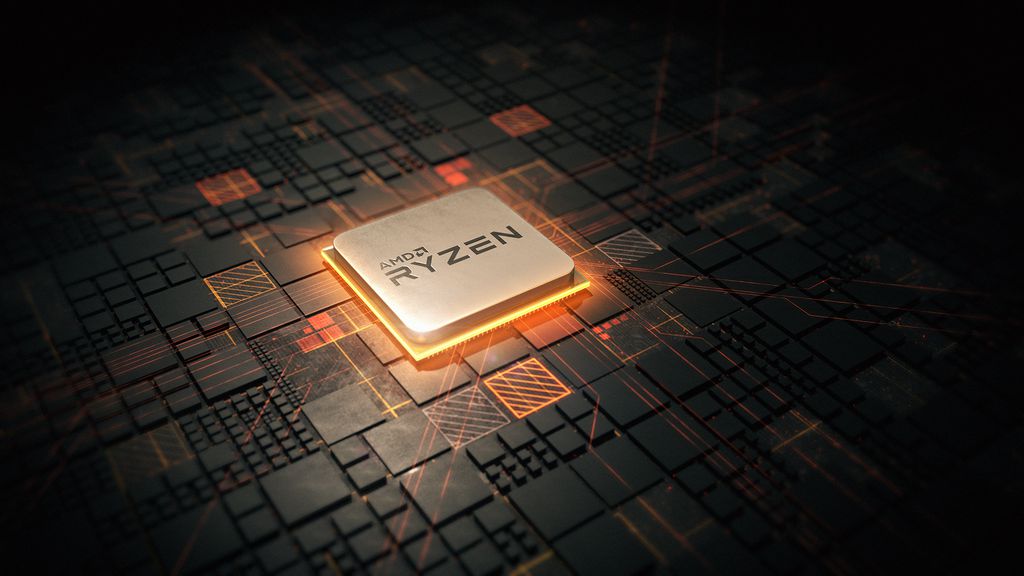
AMD continues to lead the gaming processor market with its 3D V-Cache technology, which has proven highly effective in delivering superior frame rates in cache-sensitive games. The Ryzen 7 9800X3D remains one of the most recommended gaming processors available, thanks to its combination of performance and value.
While AMD has introduced the newer Ryzen 7 9850X3D, performance gains over its predecessor remain relatively modest. Benchmark testing indicates improvements of around 4% in select scenarios, while several gaming workloads show little to no noticeable difference. As a result, the Ryzen 7 9800X3D remains the stronger value proposition for most gamers.
Intel Focuses on Efficiency and Multitasking
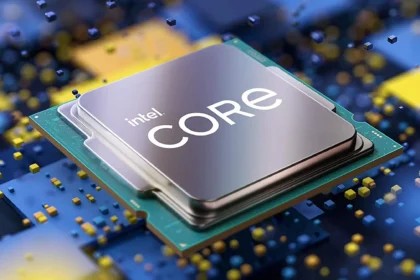
Intel’s Core Ultra 200 and 200 Plus processor families take a different approach. Built around a hybrid architecture that combines Performance cores and Efficiency cores, the lineup emphasizes power efficiency and improved multitasking capabilities.
The latest processors support DDR5-6400 memory and feature integrated neural processing units (NPUs). Certain Plus-series models also include Intel’s Binary Optimization Tool, which can improve gaming performance in specific titles. However, those gains vary by game and should not be considered a universal advantage.
Why AMD Appeals to Gamers
For users focused primarily on gaming, AMD’s Ryzen platform remains particularly attractive. The AM5 socket has already supported three processor generations, including the Ryzen 7000, 8000, and 9000 series, across 600-series and 800-series chipsets.
AMD recently reaffirmed support for the AM5 platform through at least 2029, providing users with a longer upgrade path and reducing the need for motherboard replacements in future CPU upgrades.
A major reason behind AMD’s gaming success is its 3D V-Cache technology, which stacks cache memory vertically to increase gaming performance in processor-intensive titles. However, experts note that the benefits become less significant at higher resolutions such as 1440p and 4K, where the graphics card typically becomes the primary performance limitation.
In these scenarios, allocating additional budget toward a more capable graphics card often results in larger performance gains than upgrading from a standard Ryzen processor to an X3D model.
Intel’s Strength Beyond Gaming
Although AMD dominates many gaming benchmarks, Intel continues to appeal to users who combine gaming with demanding productivity workloads.
Tasks such as live streaming, professional video editing, 3D rendering, and content creation benefit from Intel’s hybrid architecture. The Performance cores handle resource-intensive foreground tasks, while the Efficiency cores manage background applications, helping maintain smoother overall system performance.
This design allows gamers to stream, record, and multitask more effectively without significantly impacting gameplay.
The Bottleneck Problem
Hardware specialists warn that the balance between processor and graphics card remains one of the most important factors when assembling a gaming PC.
Pairing a premium processor with an entry-level graphics card often results in wasted performance potential, particularly when gaming at higher resolutions where the GPU carries most of the workload. Conversely, an expensive graphics card can be held back by an outdated or underpowered processor, especially in competitive games that demand high frame rates.
For example, graphics cards such as the GeForce RTX 5070 Ti and Radeon RX 9070 XT require capable mid-to-high-end processors to perform optimally. Extremely powerful chips like the Ryzen 9 9950X3D or Core Ultra 9 285K may be excessive for such configurations, while older mainstream processors may struggle to keep pace.
Recommended Gaming PC Configurations
Entry-Level Balanced Build
For gamers targeting high-quality 1080p gaming and competitive esports titles, processors such as the Ryzen 5 9600, Ryzen 5 7600, or Intel Core Ultra 5 245K provide strong performance when paired with graphics cards like the GeForce RTX 5060 or Radeon RX 9060 XT.
These systems can also handle 1440p gaming with appropriate graphical adjustments.
Mid-Range Performance Build
Users seeking smooth 1440p gameplay should consider processors such as the Ryzen 7 9700X, Ryzen 9 9900X, or Intel Core Ultra 7 265K. These CPUs pair effectively with graphics solutions including the GeForce RTX 5070, Radeon RX 9070, and their respective higher-tier variants.
Such systems are also capable of delivering playable 4K experiences when supported by modern upscaling and frame-generation technologies.
High-End Gaming Configuration
For enthusiasts seeking top-tier gaming performance without unnecessary excess, the Ryzen 7 9800X3D and Intel Core Ultra 7 270K Plus stand out as strong choices. Combined with graphics cards such as the RTX 5080 or RTX 5090, these systems can comfortably handle demanding 4K gaming workloads, including advanced visual features like Path Tracing when paired with technologies such as DLSS.
Essential Checks Before Buying
Before purchasing components, builders should verify compatibility across the entire system. Key considerations include matching the processor socket with the motherboard, ensuring chipset compatibility, confirming BIOS support, and checking memory compatibility.
Power supply capacity should also be carefully evaluated to ensure stable operation under full system load.
Ryzen or Intel: Which One Should You Choose?
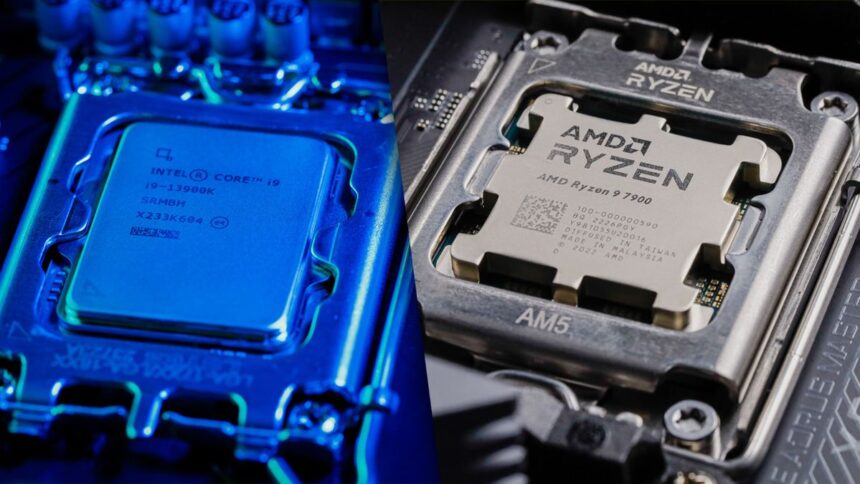
For gamers whose primary goal is achieving the highest possible frame rates and consistent gaming performance, AMD’s Ryzen X3D processors remain among the strongest options available in 2026. Their gaming-focused architecture and long-term platform support make them particularly appealing for dedicated gaming builds.
Meanwhile, Intel continues to offer compelling solutions for users who split their time between gaming and intensive professional workloads. Its hybrid architecture and multitasking capabilities offer advantages that extend well beyond gaming.
Ultimately, the best processor is not necessarily the most expensive one, but the one that complements the rest of the system and aligns with the user’s specific needs.