
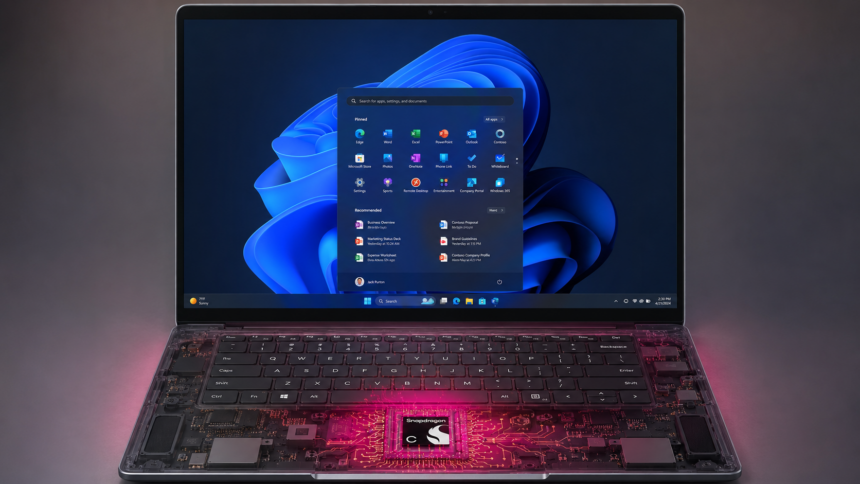
Qualcomm is preparing to expand its presence in the Windows PC market with the introduction of the Snapdragon C platform, a new ARM-based processor family designed for affordable laptops. The company is positioning the chip as a low-cost solution for students, home users, and businesses, with devices expected to reach the market at prices near $300.
Unlike the premium Snapdragon X and upcoming Snapdragon X2 series, Snapdragon C takes a different approach. Rather than relying on Qualcomm’s custom-developed Oryon CPU cores, the new platform uses Kryo cores derived from the company’s smartphone processors. The decision allows Qualcomm to reduce manufacturing costs while maintaining the power efficiency advantages associated with Arm architecture.
Fanless Design and Focus on Everyday Computing
The mobile-oriented design enables manufacturers to build thinner and completely silent laptops without requiring mechanical cooling systems. Companies such as Acer, HP and Lenovo are expected to adopt the platform in future entry-level notebooks.
Snapdragon C is aimed at routine computing tasks rather than demanding workloads. The platform is designed to handle web browsing, office applications, video conferencing, media streaming and other everyday activities while prioritizing battery life and low power consumption.
Despite its budget positioning, Qualcomm has integrated a dedicated neural processing unit (NPU) into the chip. The hardware can accelerate AI-assisted features such as image enhancement, webcam effects and microphone noise reduction directly on the device.
However, Qualcomm has confirmed that Snapdragon C will not qualify for Microsoft’s Copilot+ PC certification. The platform’s NPU falls short of the 40 TOPS performance requirement set by Microsoft for advanced on-device AI features in Windows 11.
A Response to Growing Competition
The launch comes as competition intensifies in the affordable computing segment. Reports suggest Qualcomm sees an opportunity to challenge the popularity of low-cost Chromebooks while also responding to growing interest in Arm-powered laptops following the arrival of newer MacBook models from Apple.
By offering lower-cost Arm-based Windows devices with all-day battery life, Qualcomm and its hardware partners hope to strengthen Windows’ position in education and small business markets, areas where inexpensive Chromebooks have maintained a strong presence for years.
Acer Aspire Go 15 Among First Devices
One of the first products expected to showcase the platform is the Acer Aspire Go 15. The laptop features a 15.6-inch display, 512GB SSD storage and Wi-Fi 6E connectivity.
However, early specifications have raised concerns regarding memory capacity. The device is expected to ship with a maximum of 8GB of RAM, a configuration that may limit performance when running multiple applications or relying on Windows 11’s emulation layer for software designed for x86 processors.
The memory limitation places additional pressure on Microsoft to continue improving Windows on Arm and optimise resource management. While Arm-based systems offer strong efficiency advantages, maintaining smooth performance on lower-end hardware remains critical for user experience.